
 Zhejiang Hongyan Electric Co., Ltd.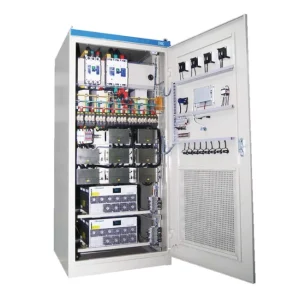
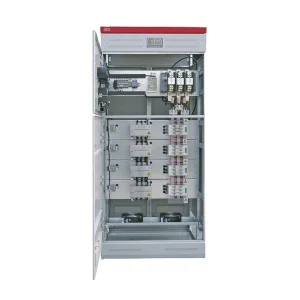
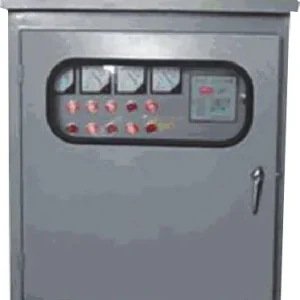
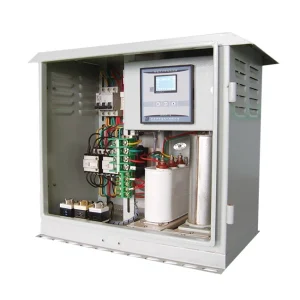
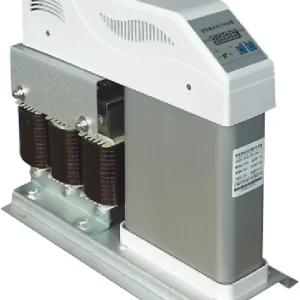
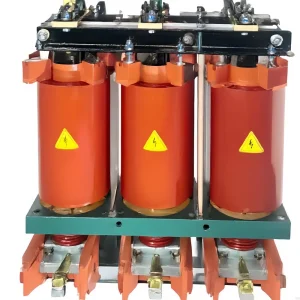
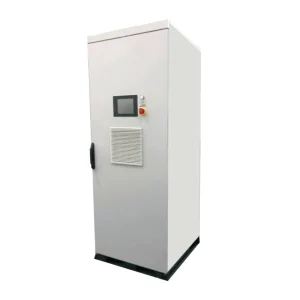
Solid-state transformer power quality improvement means a power-electronics converter that can condition bus voltage, while the solid-state unit CHYN sells only soft-starts a high-voltage motor. A line-frequency transformer still couples the waveform magnetically. Harmonics, reactive power, and a voltage sag stay with other hardware when those are the complaints.
During a crusher start, the dip lasts through acceleration and then eases. In a drive room, distorted current continues after every motor is already at speed. Those two complaints do not share one cabinet.
What a solid-state transformer changes on the bus
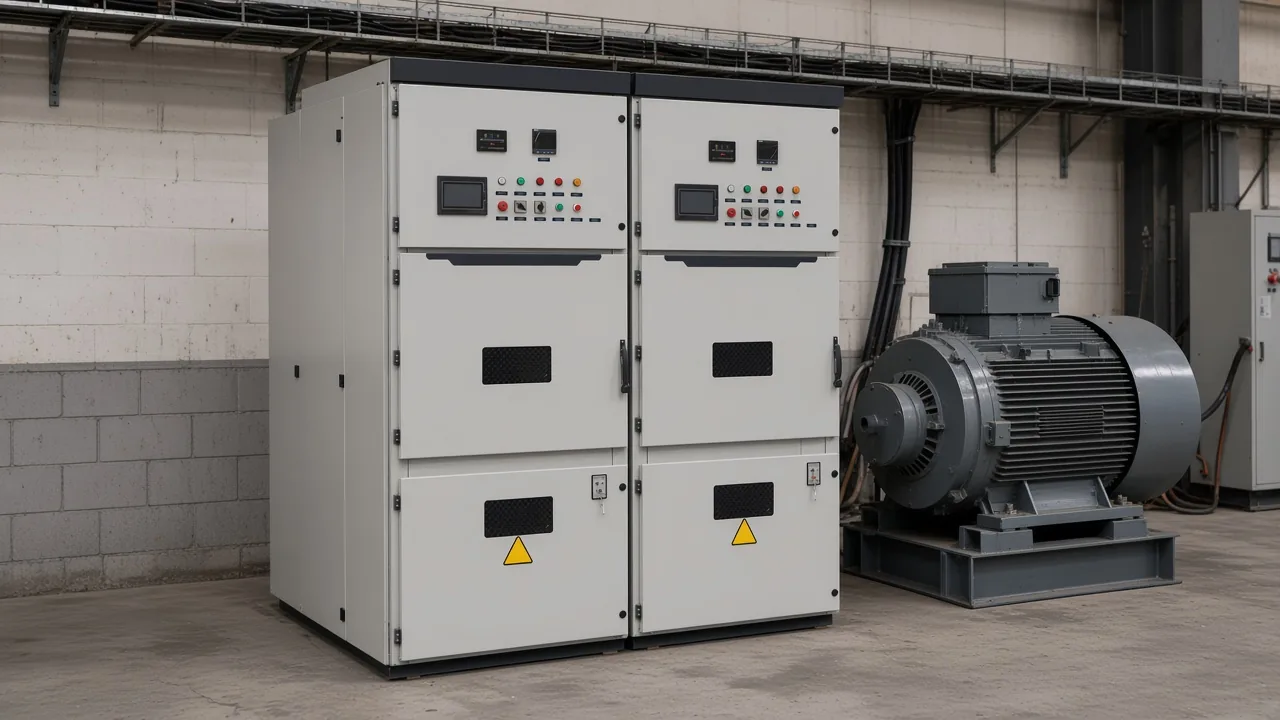
A solid-state transformer can actively regulate voltage and current by rebuilding the waveform in power electronics, instead of only coupling two windings on a passive core. Roadmap language calls active control of frequency and voltage one way the concept can improve power quality. High-frequency isolation is common in published architectures, and the same roadmap notes that this inner transformer is not mandatory in every design.
On a passive core, a sag or a distorted wave on one winding can appear on the other. The converter builds a new waveform, so the output need not be a copy of the input. That is the power-quality claim in the SST literature, and it belongs to a grid or distribution interface, not to a motor ramp.
Developed units have carried higher cost and lower reliability than a line-frequency transformer, so a one-to-one substation swap is a poor reading of the roadmap. Buyers who need a catalog item today still have to name the disturbance. The concept paper does not ship as a CHYN model.
Where plant hardware still owns the disturbance
Harmonic current, reactive current, and a short voltage sag remain separate jobs even when one SST paper lists all three. An active power filter measures load current and injects an opposing harmonic current. A static var generator supplies inductive or capacitive reactive current so voltage and power factor can settle on the low-voltage network.
Series support for a voltage sag sits in the feeder that feeds the sensitive line. It detects the dip and adds the missing voltage for the protected load. That series job is different from a shunt var cabinet and different from a motor ramp.
| Disturbance | Hardware that owns it | What changes for the plant |
|---|---|---|
| Harmonic current from drives and furnaces | Active power filter | The current waveform is corrected while loads keep running |
| Reactive current and power factor | Static var generator | Inductive or capacitive current is exchanged on the bus |
| Short voltage sag on a sensitive feeder | Series voltage restorer | Missing voltage is added for the protected load |
| Motor inrush during acceleration | Solid-state soft starter | Motor terminal voltage rises on a controlled ramp |
An SST mention of bidirectional power flow is a grid-interface idea. It describes power that can move either way through a converter. It does not size the low-voltage cabinet that already sits beside the drives.
Why the solid-state name on a motor starter is a different buy
Shop practice uses “solid state” for a thyristor ramp. The switches are SCRs. They raise voltage at the motor during acceleration so the line sees less inrush and a smaller voltage drop on the shared bus.
That talk never puts a medium-frequency transformer inside the starter. Heat in the SCRs, a bypass once the motor is at speed, and surge withstand are the points electricians argue. The argument is about starting, not about rebuilding a distribution waveform.
Once the bypass closes, the starter is out of the power path. Distorted current from the rest of the plant is still there. A buyer who searched a transformer phrase and landed on a starter page has to notice that fork before writing a specification.
How start current, harmonics, and reactive power split apart
Starting current is an acceleration event. It is large, it is brief, and it is tied to one machine coming up to speed. After acceleration, distorted current from drives and furnaces keeps flowing for the whole shift.
Out-of-phase current holds voltage and power factor while the plant works. A fan or a lightly loaded motor can draw it all shift. A welder or a drive can add both reactive current and harmonics at the same time, which is why one ramp rarely closes the whole work order.
| Plant event | When it shows up | Hardware that matches the event |
|---|---|---|
| Across-the-line start of a large motor | Seconds of acceleration | Solid-state soft starter on that motor |
| Distorted current after the motor is at speed | The whole shift | Active power filter on the bus |
| Low power factor with a stable waveform | Steady running load | Static var generator on the bus |
| Sensitive line drops out on a feeder dip | A short sag from elsewhere | Series voltage restorer on that feeder |
A soft start can ease the dip that one large motor would otherwise cause. It leaves a drive’s harmonic spectrum alone. It also leaves a process line exposed when some other feeder event pulls the voltage down.
Which product fits a high-voltage motor start
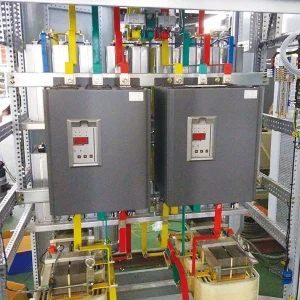
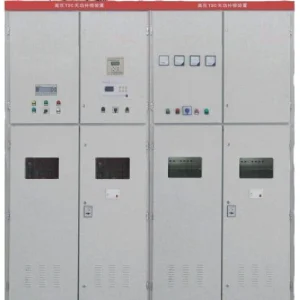
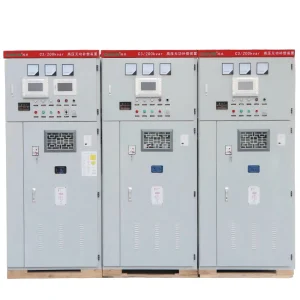
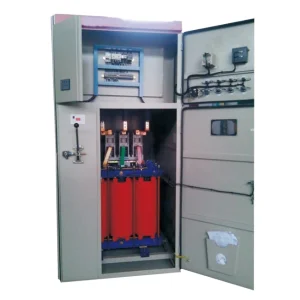
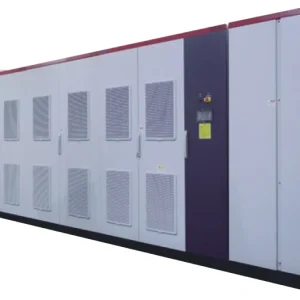
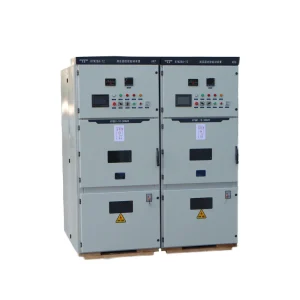
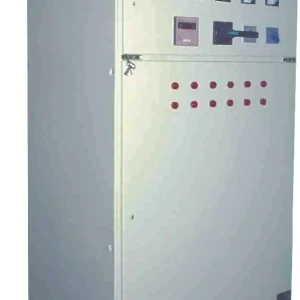
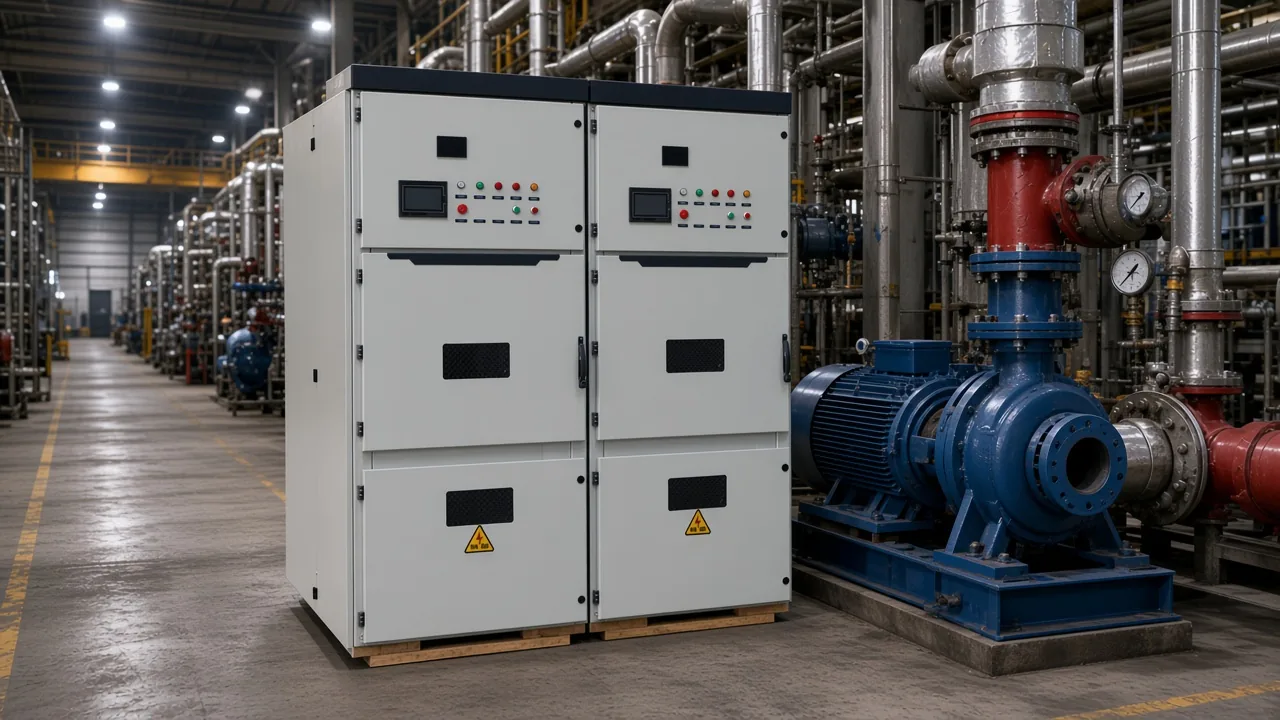
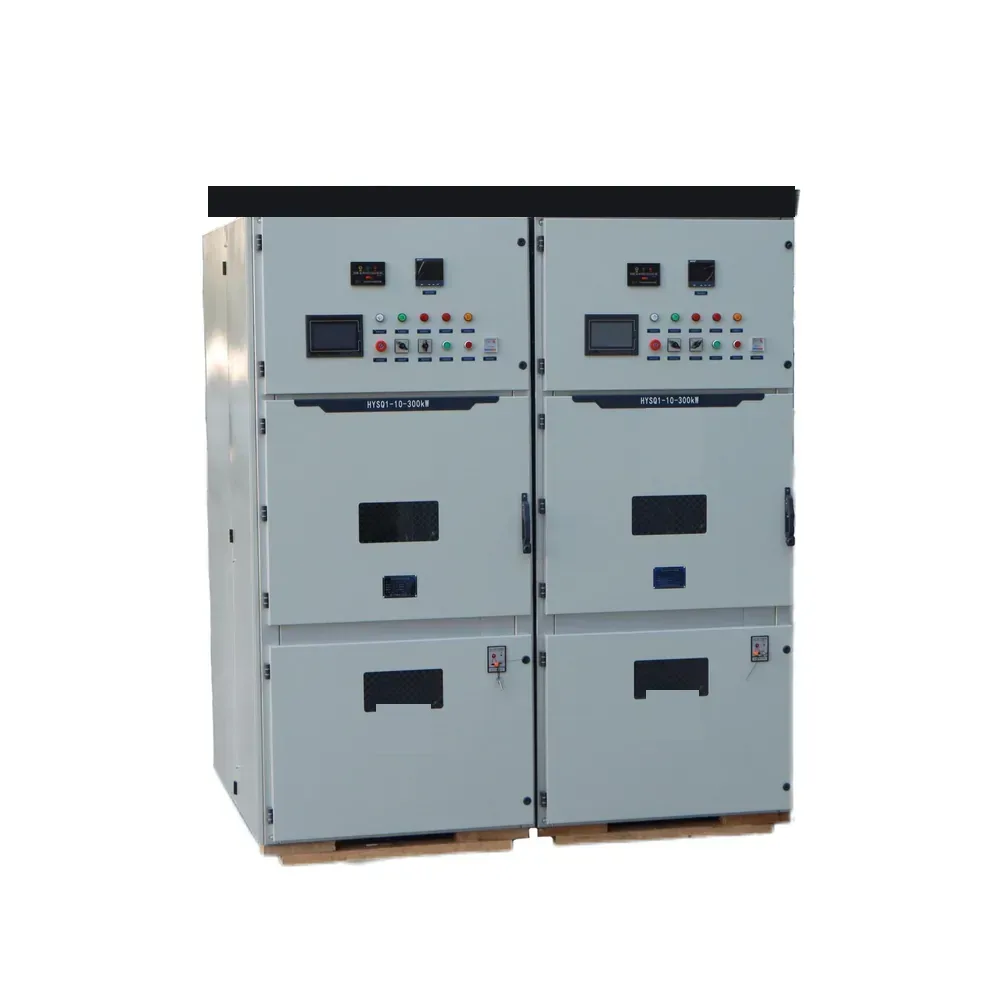
The solid-state unit CHYN sells for a high-voltage motor start is the HYSQ1 Series High Voltage Solid-State Soft Starter. HYSQ1 controls motor terminal voltage during acceleration to reduce starting current, voltage drop, and mechanical shock. The published applications are medium- and high-voltage squirrel-cage or synchronous motors on pumps, fans, compressors, crushers, and conveyors.
The published HYSQ1 page lists rated voltage classes of 3 kV, 6 kV, and 10 kV at 50 Hz.
HYSQ1 is not an SST, and it does not replace bus harmonic or var equipment. Specify it when the complaint is the start itself. If the waveform is still wrong after the motor is running, the next cabinet is a bus device, not a second starter.
When bus voltage, harmonics, or vars need other equipment
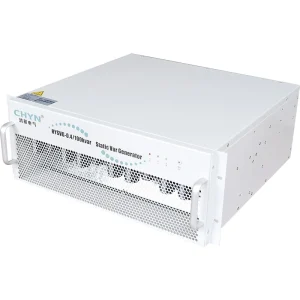
Ongoing reactive current points to the HYSVG static var generator. That unit supplies inductive or capacitive reactive current on a low-voltage network. Cranes, welders, and banks of drives are the usual reason the power factor wanders while the motors are already running.
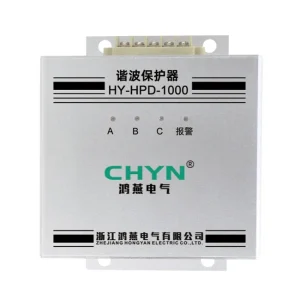
Distorted load current points to the HYAPF active power filter. It measures the load current and injects an opposing harmonic current so the upstream waveform cleans up. A starter bypass does not perform that injection.
A short voltage sag on a sensitive feeder points to HYDVR voltage sag mitigation. The restorer sits in series with the protected feeder and adds voltage when the incoming wave collapses for a short interval. It does not ramp a high-voltage motor, and the starter does not hold a process line through a sag that began somewhere else.
What a field trial still leaves open before procurement
A live trial can show that a converter will energize and move power, and it can still leave qualification open. Lightning, through-faults, standards, and years of service are the questions that sit behind a successful weekend on a feeder.
From the field: Investigators could move real power and operator-commanded reactive power on a trial unit, yet lightning and a through-fault stayed open — source: POWER Magazine field report on a live distribution feeder demonstration.
A reported live distribution feeder trial moved real power and operator-commanded reactive power, and it left lightning, through-fault behavior, standards, and service life open. Forum comments treat bidirectional power flow as a control problem and say calculating losses in power electronics is difficult. That combination is a reason to keep a line-frequency transformer in service until a specific converter job is actually being procured.
CHYN does not publish an SST model. A request that asks for a solid-state transformer will not match the starter page. Name the motor, the start complaint, and the published voltage class when the purchase is HYSQ1, and name the bus disturbance when the purchase is a filter, a var generator, or a sag restorer.
FAQ
Is a solid-state transformer the same purchase as a solid-state soft starter?
No. The transformer phrase refers to a power-electronics converter that can rebuild voltage. A solid-state soft starter is a thyristor ramp for one motor during acceleration.
Can a motor soft starter clean harmonics after the motor is at speed?
No. The ramp shapes terminal voltage while the motor accelerates, and a bypass often takes the semiconductors out of the circuit afterward. Harmonics that remain are a bus-filter job.
Does reactive-power equipment belong on the bus when the complaint is motor inrush?
Not as the first tool. Inrush during acceleration is a starter job on that motor. Reactive-power equipment belongs on the bus when power factor or voltage wanders during normal running.
What should cover a short voltage sag if the starter only limits inrush?
Series voltage support on the sensitive feeder. A starter can reduce the dip caused by its own motor. It does not add voltage when the sag comes from somewhere else on the supply.
Why do SST discussions mention harmonic isolation and power-factor correction?
Because the converter can rebuild the waveform and can exchange reactive current at a grid interface. Those are concept functions in the technical literature. They are not features printed as an HYSQ1 starter claim.
Does CHYN list a solid-state transformer model for sale?
No SST model is listed. The solid-state product in this decision is the HYSQ1 Series High Voltage Solid-State Soft Starter, and it starts motors.
What frequency does the published HYSQ1 starter page state?
The published HYSQ1 page lists rated voltage classes of 3 kV, 6 kV, and 10 kV at 50 Hz.
References
- Solid State Power Substation Technology Roadmap, U.S. Department of Energy, Office of Electricity.
- Solid-state transformer, encyclopedia definition of the power-electronic converter.
- Megawatt-class solid-state transformer demonstrated on a live feeder, POWER Magazine, 8 September 2026.
- How can DC-to-DC power transformers improve efficiency in power electronics?, Physics Forums.