
 Zhejiang Hongyan Electric Co., Ltd.
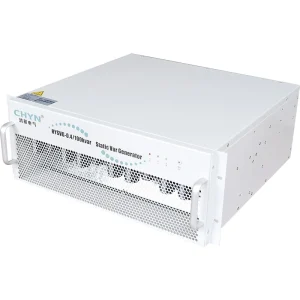
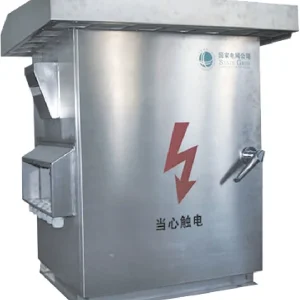
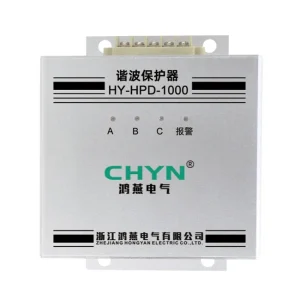
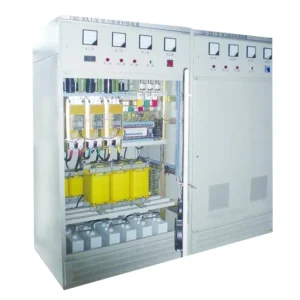
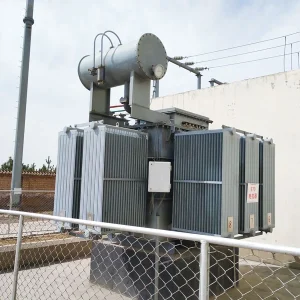
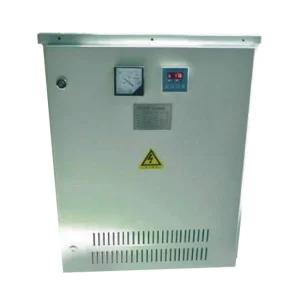
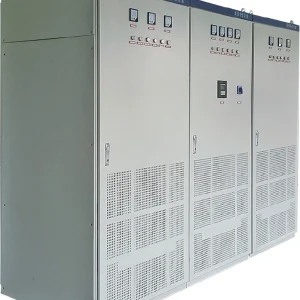
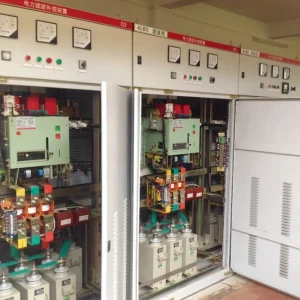
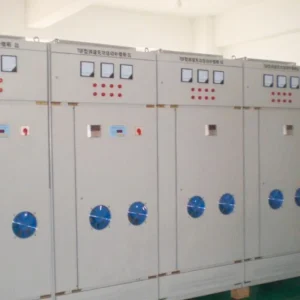
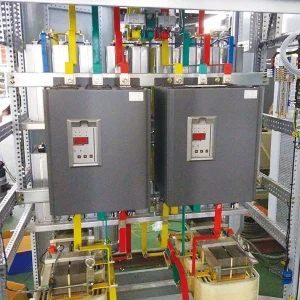
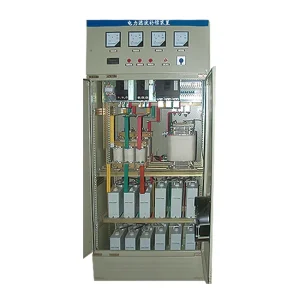
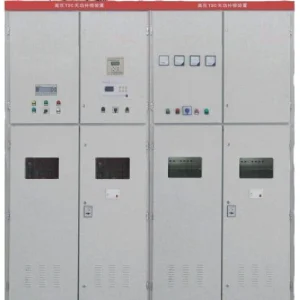
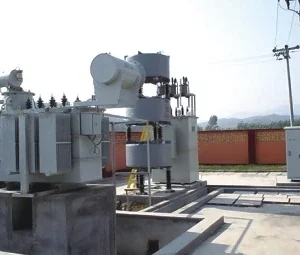
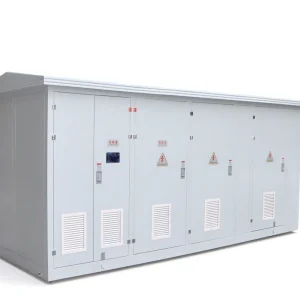
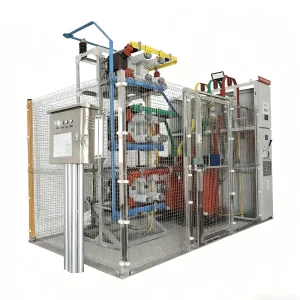
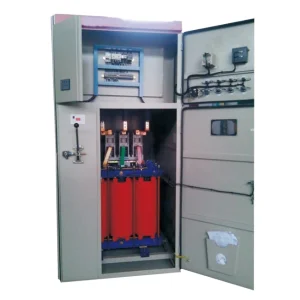
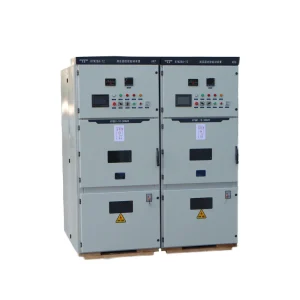
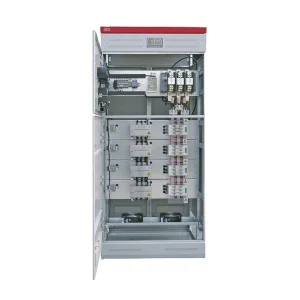
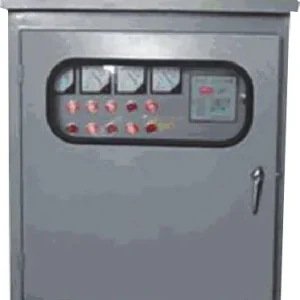
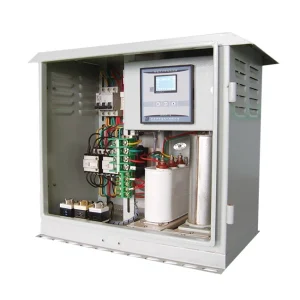
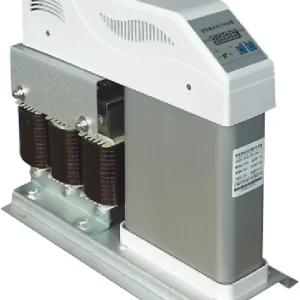
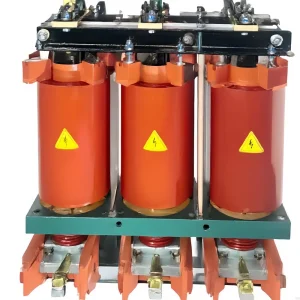
A variable impedance type static var generator is, in FACTS literature, a Static Var Compensator (SVC)-style shunt device that varies its effective reactance with a Thyristor-controlled reactor (TCR) and Thyristor-switched capacitor (TSC) branches. It is not automatically the same product as a modern industrial SVG built around a voltage-source converter. This article maps the naming, compares the two families, and shows when CHYN’s converter-type HYSVG Static Var Generator (SVG) is the practical next step.
What “Variable Impedance Type Static Var Generator” Means in Literature
In authoritative FACTS notes, a Static Var Compensator is described as a variable impedance type shunt-connected device used for voltage and reactive-power control.
That wording matters for procurement. When a specification repeats “variable impedance type,” it usually points to thyristor SVC topologies such as TCR, TSC, FC-TCR, or TSC-TCR, not to every catalog item labeled SVG.
Engineering papers also split the family in two: variable impedance type SVCs versus switching-converter type units that behave like STATCOMs. Keeping those labels separate prevents an RFQ from mixing a thyristor yard with a modular converter cabinet.
In plain language, the focus phrase names a machine that changes how much impedance it presents to the grid. A converter-type SVG instead synthesizes Reactive power (VAR) from a Voltage source converter (VSC) DC bus and power semiconductors, which is how plants improve Power factor without stepped capacitor banks alone.
How a Variable-Impedance SVC Uses TCR and TSC Branches
A variable-impedance SVC exchanges capacitive or inductive current by combining controllable reactor and capacitor branches rather than by synthesizing a converter voltage.
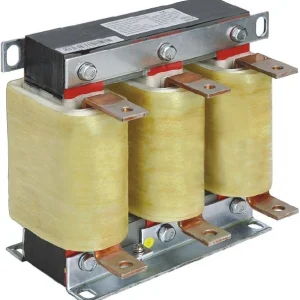
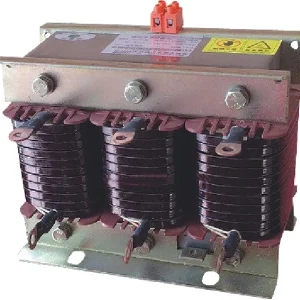
A thyristor controlled reactor is a shunt reactor in series with anti-parallel thyristors. Delaying the firing angle reduces reactor current and therefore reduces inductive VAR absorption; firing earlier increases absorption.
A thyristor-switched capacitor adds capacitive VARs in steps. It is switched on or off at suitable instants rather than phase-controlled like a TCR, because capacitor firing-angle control is not suitable the way reactor control is.
Academic treatments of SVC voltage-support behavior analyze TCR and TSC operation together as the makeup of the compensator. In the field, the complete SVC also includes controls, protection, and often filter branches around those power stages.
From the field: Utility and consulting engineers on technical forums still ask whether SVC and STATCOM units provide capacitive compensation, inductive compensation, or both. Mature answers emphasize that either mode can be required, while switched capacitor groups move in steps and reactor control can be stepless — source: Physics Forums discussion on SVC/STATCOM reactive support.
Variable-Impedance SVC vs STATCOM and Converter-Type SVG
A STATCOM uses a voltage source converter instead of the controllable reactors and switched capacitors that define a variable-impedance SVC.
That architecture change drives the static var compensator vs STATCOM decision. At the capacitive limit, an SVC’s reactive current falls as voltage falls, because the device is still an impedance. A STATCOM can maintain reactive current more effectively under low-voltage conditions because it behaves like a controllable current source behind a coupling reactance.
Educational summaries make the same point in system-planning language: SVC capability tracks voltage more like capacitors do, while STATCOM MVAR capability responds more linearly with voltage because the unit is current-limited.
Industrial catalogs often use static var generator for medium- and low-voltage converter products that share STATCOM-like VSC principles. That marketing label is useful, but it does not rewrite the literature meaning of “variable impedance type.”
| Topic | Variable-impedance SVC | STATCOM / converter-type SVG |
|---|---|---|
| Core idea | Vary shunt impedance with thyristors | Synthesize reactive current with a VSC |
| Typical branches | TCR, TSC, FC-TCR, filters | Converter, DC capacitor, coupling reactor/transformer |
| Low-voltage capacitive support | Current falls with voltage at the impedance limit | Current support holds up better by design intent |
| Naming trap | Matches “variable impedance type” wording | Often labeled SVG in industrial catalogs |
Harmonics, Filters, and Design Implications for Impedance-Type SVCs
TCR firing-angle control does not leave a perfect sine wave. Partial conduction creates harmonic currents that the power system must accept or filter.
Because of that mechanism, SVC applications usually require harmonic filters. The filters are not decorative; they are part of keeping the compensator from becoming a new power-quality problem while it solves voltage and VAR issues.
Converter-type SVG products still need electromagnetic design discipline, but they do not rely on the same thyristor phase-control branch that forces classic TCR filter banks. Treat filter scope as a topology question during design review, not as a generic “power quality accessory.”
Choosing Between Variable-Impedance SVC and Converter-Type SVG
Choose the topology from the job the network must do, not from whichever acronym appears first in a search result.
If the specification language, yard layout, and harmonic-filter plan are built around TCR/TSC impedance control, stay inside the variable-impedance SVC family. If the site needs continuous inductive and capacitive support on a low-voltage distribution bus, fast load following without capacitor switching transients, and modular expansion, evaluate a converter-type SVG.
Impact loads such as arc furnaces, welding, mine winders, and rolling mills appear repeatedly in reactive-power compensation education because their VAR swings and flicker are hard for slow or stepped banks alone. Forum threads about wind collector stations likewise treat SVC hardware as capacitors plus controls sized to plant MW and utility interconnection rules.
For a plant engineer comparing options, the practical checklist is short: required capacitive and inductive range, expected voltage dips, harmonic constraints, footprint, and whether the bid language said “variable impedance” or “converter/SVG/STATCOM.”
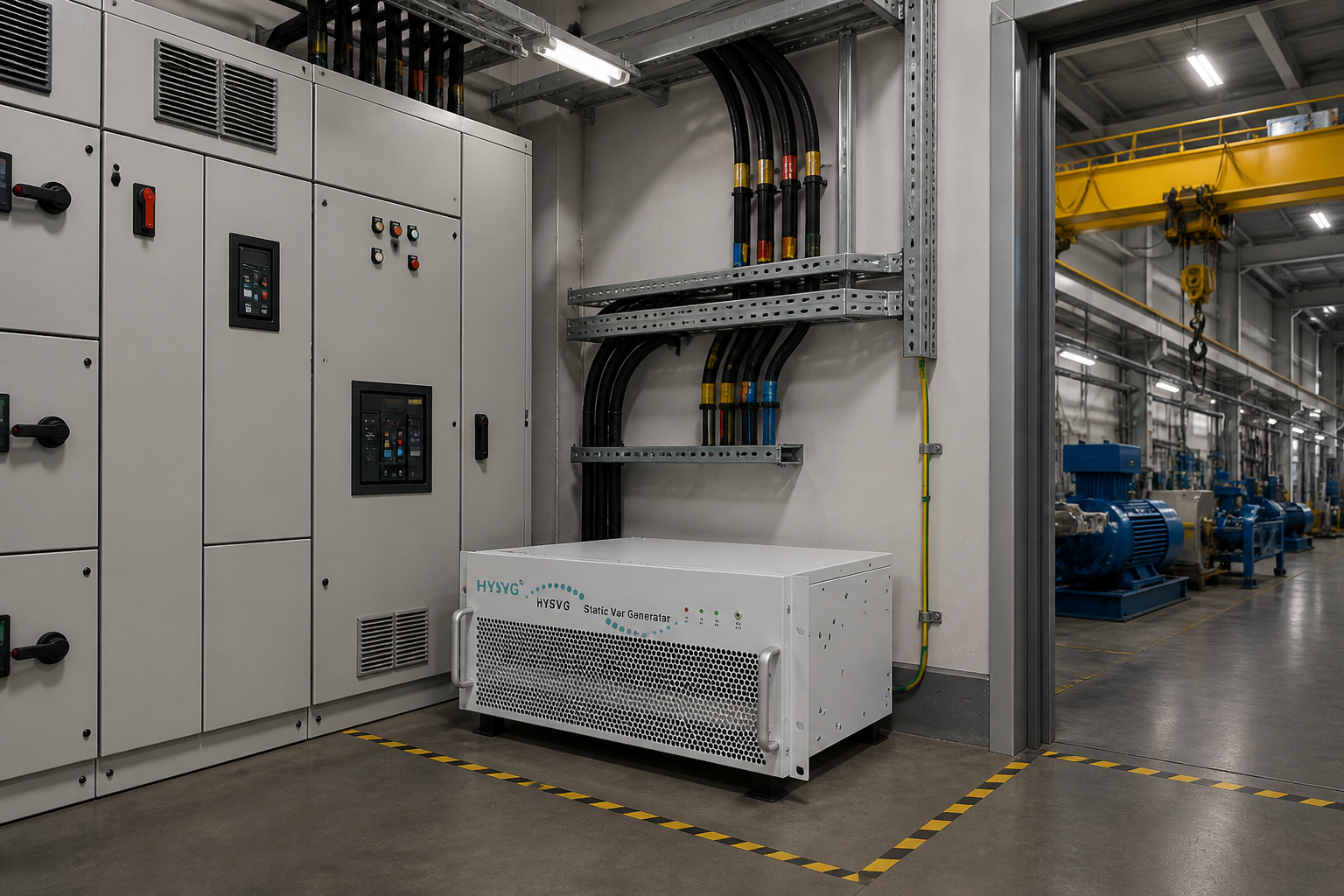
CHYN HYSVG Recommendation When You Need Converter-Type SVG Performance
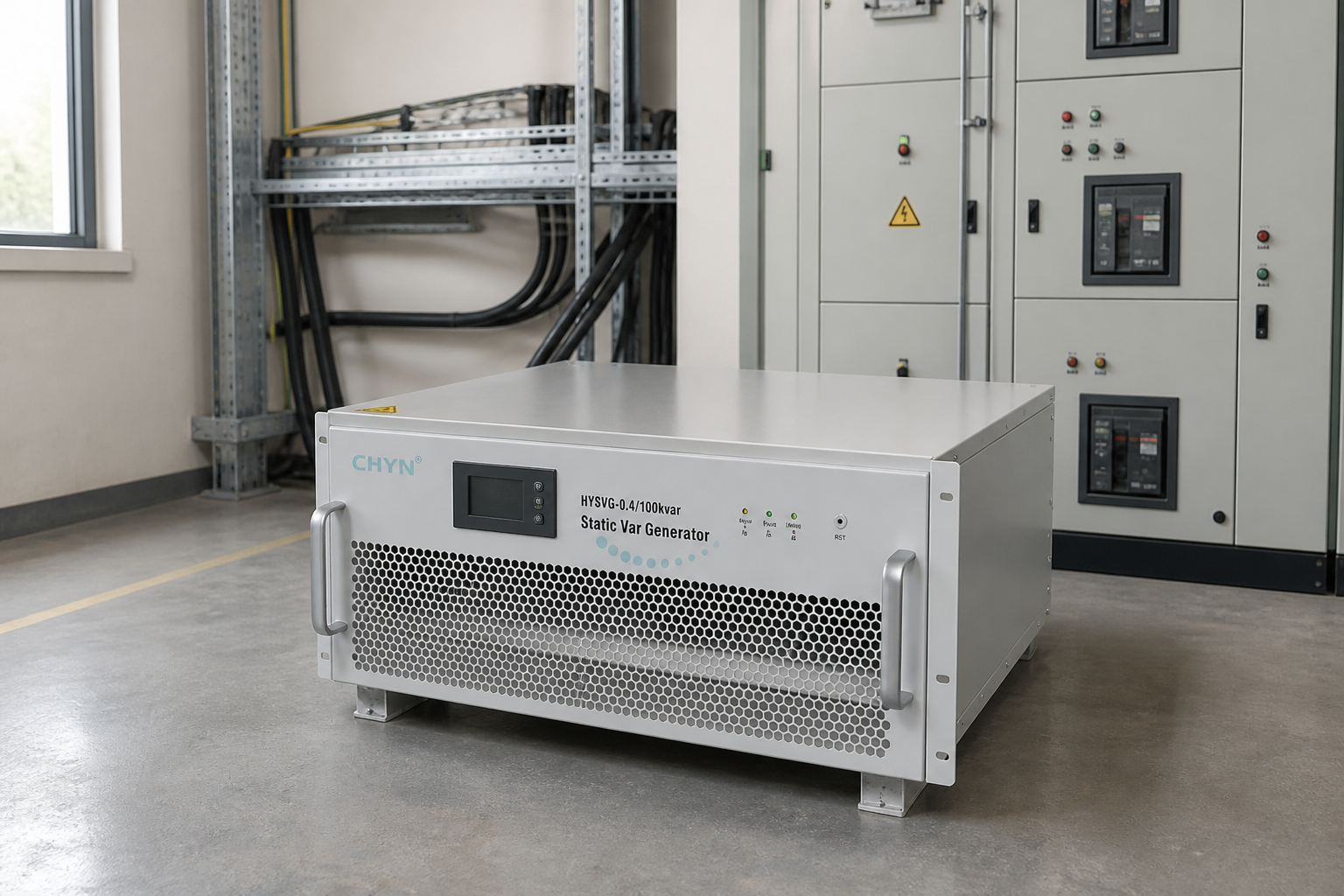
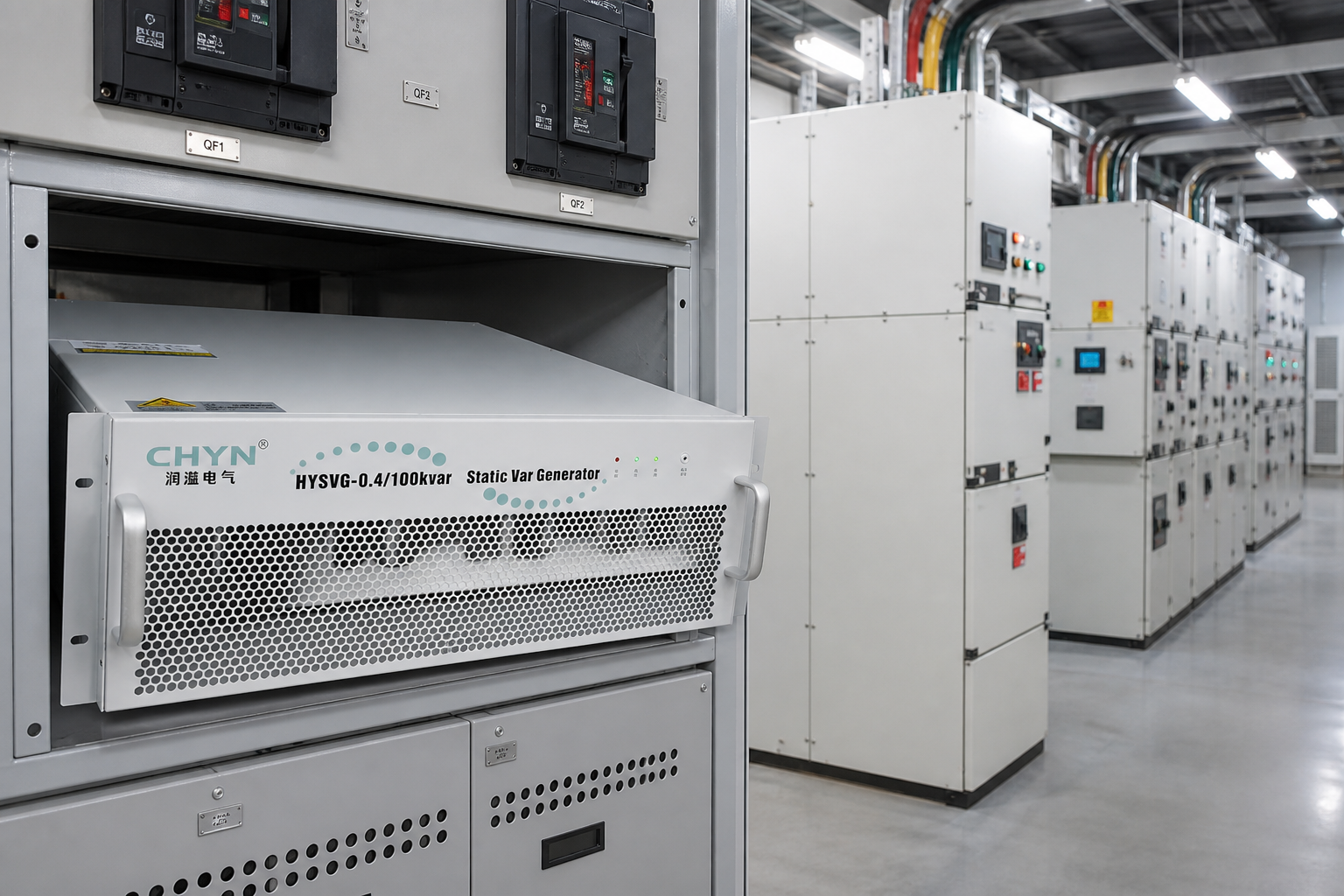
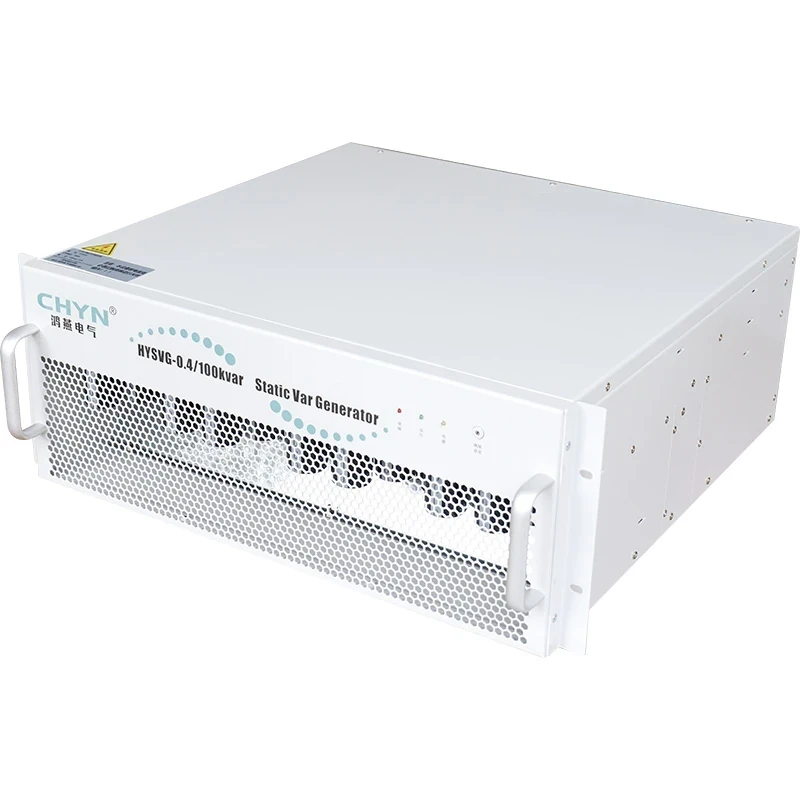
When the project needs converter-type SVG behavior on a low-voltage distribution network, CHYN’s HYSVG Static Var Generator (SVG) is the matching product on this site.
HYSVG provides continuous inductive and capacitive reactive-current compensation and responds to changing loads without capacitor switching transients. It is listed under the Active Power Filter Series hub for industrial and commercial distribution applications such as cranes, VFDs, welding, mining equipment, automation lines, and data-center rooms.
The HYSVG parameter table lists available capacities of 50 kvar, 75 kvar, 100 kvar, and 200 kvar with parallel expansion supported, a 380 V rating with allowable fluctuation from -40% to +20%, 50 Hz +/-2 Hz, overall efficiency of at least 97 percent, current-loop response of 40 us, full compensation time of 10 ms, and IP20 protection.
| HYSVG parameter | Published value |
|---|---|
| Available capacities | 50 kvar, 75 kvar, 100 kvar, 200 kvar (parallel expansion supported) |
| Rated voltage | 380 V (allowable fluctuation -40% to +20%) |
| Rated frequency | 50 Hz +/-2 Hz |
| Compensation mode | Inductive and capacitive continuous dynamic compensation |
| Overall efficiency | >=97% |
| Response time (current loop) | 40 us |
| Full compensation time | 10 ms |
| Protection grade | IP20 |
HYSVG is not a drop-in substitute for a thyristor variable-impedance SVC yard. If a bid truly requires TCR/TSC impedance hardware, keep that scope separate. For hybrid static-var packages, CHYN also lists an optional HYSVGC hybrid device in the same series; treat it as an adjacent family member after the topology decision is clear.
Published application notes on the product page cover lifting equipment, welding, compressors, pumps, mining and drilling loads, CNC and PLC lines, and commercial facilities with imbalance or reactive instability. Use those scenes as sizing context, not as verified project case results for your site.
Review the product page for monitoring, protection, and mounting options, then open the Active Power Filter Series hub or Contact CHYN with load data if you are ready to size a converter-type SVG.
FAQ
What does “variable impedance type static var generator” mean?
In FACTS consulting and education sources, it names an SVC-style variable-impedance shunt compensator. The phrase should not be read as a guarantee that every industrial SVG is thyristor-based.
Is an SVG the same as an SVC?
No. An SVC in the variable-impedance sense uses thyristor reactor and capacitor branches, while many industrial SVG products are converter-type units closer to STATCOM principles.
How does STATCOM differ from a variable-impedance SVC?
STATCOM uses a voltage-source converter to synthesize reactive current. A variable-impedance SVC changes shunt reactance with thyristors. Low-voltage capacitive support and harmonic-filter needs therefore diverge.
Why do SVCs often need harmonic filters?
TCR firing-angle control creates harmonic currents. Educational power-system references note that SVC applications usually require harmonic filters to manage that side effect.
Can SVC or STATCOM provide both capacitive and inductive compensation?
Yes. Field discussions and design practice treat both directions as common requirements. Switched capacitor groups may move in steps while reactor or converter control can be continuous.
When should I choose a converter-type SVG such as HYSVG?
Choose HYSVG when you need continuous LV inductive and capacitive compensation without capacitor switching transients, modular kvar expansion, and the converter-type performance class rather than a thyristor impedance yard.
Where are SVC systems often discussed for wind interconnection?
Engineering forum threads often place SVC-type reactive support at the wind-farm collector substation and size it against plant MW and utility interconnection rules. Confirm the actual voltage level and grid code with the interconnecting utility.
Why might capacitors stay fixed while the reactor is controlled?
In FC-TCR arrangements, fixed capacitors supply a capacitive base while the TCR absorbs a controllable inductive amount so the net VAR output can move smoothly. That is a design pattern for impedance-type SVCs, not a universal rule for every site.
References
- PSMA Consulting — Static VAR Compensators (SVC)
- Engineeringa2z — STATCOM / Static Synchronous Compensator
- Moz Electronics — Thyristor-Controlled Reactor Guide
- Wikipedia — Static var compensator
- SAJET — Operation of TCR and TSC of SVC for Voltage Variations (PDF)
- Physics Forums — Hydroelectric plant reactive support mentioning SVC and STATCOM