
 Zhejiang Hongyan Electric Co., Ltd.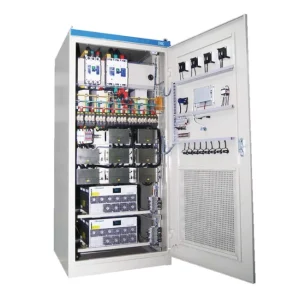
Most searches for how to install capacitor bank at home point at a residential panel can or a hobby array, and that is usually the wrong first buy. A typical household residential kWh meter bills kilowatt-hours, while a shunt capacitor bank is a packaged three-phase industrial or workshop job with isolation, a discharge path, and commissioning.
The useful fork is object identity, then job fit: which consumer can to reject, when panel knockouts must stop, and which packaged LV product is the measured buy.
Decide between a 380 V end-point enclosure and a cabinet filter/compensation module after that object test.
Why a Home Capacitor-Bank Search Is Usually the Wrong Job
If the meter bills kilowatt-hours, hanging capacitance on a house panel does not turn a hobby can into a billed PF project.
US forum electricians and independent educators keep repeating the same meter fact: a residential watt-hour meter records real energy. Displacement power factor can change line current on a motor, yet the house kilowatt-hour register still ignores that phase shift.
From the field: Residential watt-hour meters measure kilowatt-hours, not kVA-hours — Mike Holt.
That is why a YouTube “energy saver” plug and a genuine industrial power factor correction capacitor package answer different tariffs. Plants that pay a reactive penalty or a kVA demand charge have a billed problem; a dwelling on kilowatt-hours usually does not.
Local capacitors supply reactive power beside inductive load so the utility feeder carries less of it. That physics is real. It still does not convert a household kWh tariff into a billed PF project.
Send already-specified cabinets to capacitor bank installation for landing order. Kvar arithmetic stays on how to size a capacitor bank.
Power-Saver Cans, Hobby Arrays, and Single-Phase PFC Are Not a Shunt Bank
A power-saver can or plug is a consumer gadget with a couple of hots and often a lamp; a shunt capacitor bank is a switched industrial or commercial package.
The power-saver / KVAR can in ads is the KVAR-style panel box: two red leads, a green earth, a double-pole breaker, and a claim about the electric bill. Forum replies call that little box something factories would never confuse with their switched banks.
Hobby arrays follow a different error. One All About Circuits thread describes buying a three-phase APC capacitor array on eBay and planning #8 wire onto a 240 V, 200 A US house panel. That shopping list names industrial hardware and then lands it on single-phase dwelling service.
Single-phase PFC capacitors hung on a dwelling panel remain a house accessory rather than a packaged shunt bank.
| Object | What it actually is | What the home search usually wants from it |
|---|---|---|
| Power-saver / KVAR can | Small panel or plug gadget, two hots plus earth, indicator lamp | Cut a household kWh bill |
| Hobby array | Salvaged three-phase cans on a single-phase panel | “Bank” hardware without a packaged enclosure |
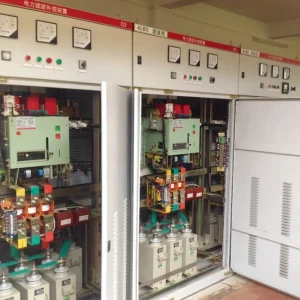
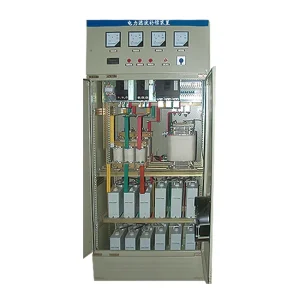
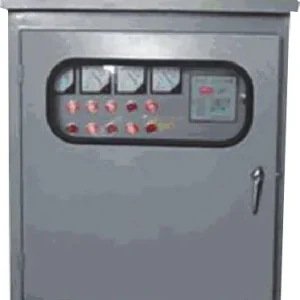
| Shunt capacitor bank | Packaged PF assembly with isolation, switching, protection, discharge path | Industrial or workshop vars at a three-phase bus |
Consumer how-to pages skip that object map. Once the hardware is a packaged bank, stored energy comes next, then whether the site even has a three-phase inductive feeder.
When DIY Must Stop Before Any Panel Knockout
Opening the feeder is not the same as a discharged bank, and a three-phase packaged bank stays off single-phase house wiring.
Capacitors store charge after the supply opens. OSHA 1910.333 requires that stored electric energy which might endanger personnel be released, that capacitors be discharged, and that the equipment be treated as energized while that discharge work happens. Isolation / disconnect is the energy-isolating device; a push-button on a saver lamp is not that device.
The discharge path, often a bleeder network built into a packaged step, is what makes “feeder off” eventually mean “cans empty.” Until that path has done its work, treat the hardware as live.
Phase mismatch is the second stop. A three-phase industrial array on single-phase house wiring repeats the AAC pattern: wrong voltage class, missing phase, and switching that was designed for a balanced three-phase bus. Stop before any panel knockout.
Reddit-style saver plugs add a third hazard in user language: cheaper gadgets sometimes omit a discharge resistor, so the pins stay charged after unplugging. That is still the consumer object, and it still fails the packaged-bank test.
What a Packaged Shunt Capacitor Bank Requires at a High Level
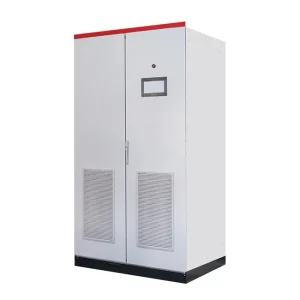
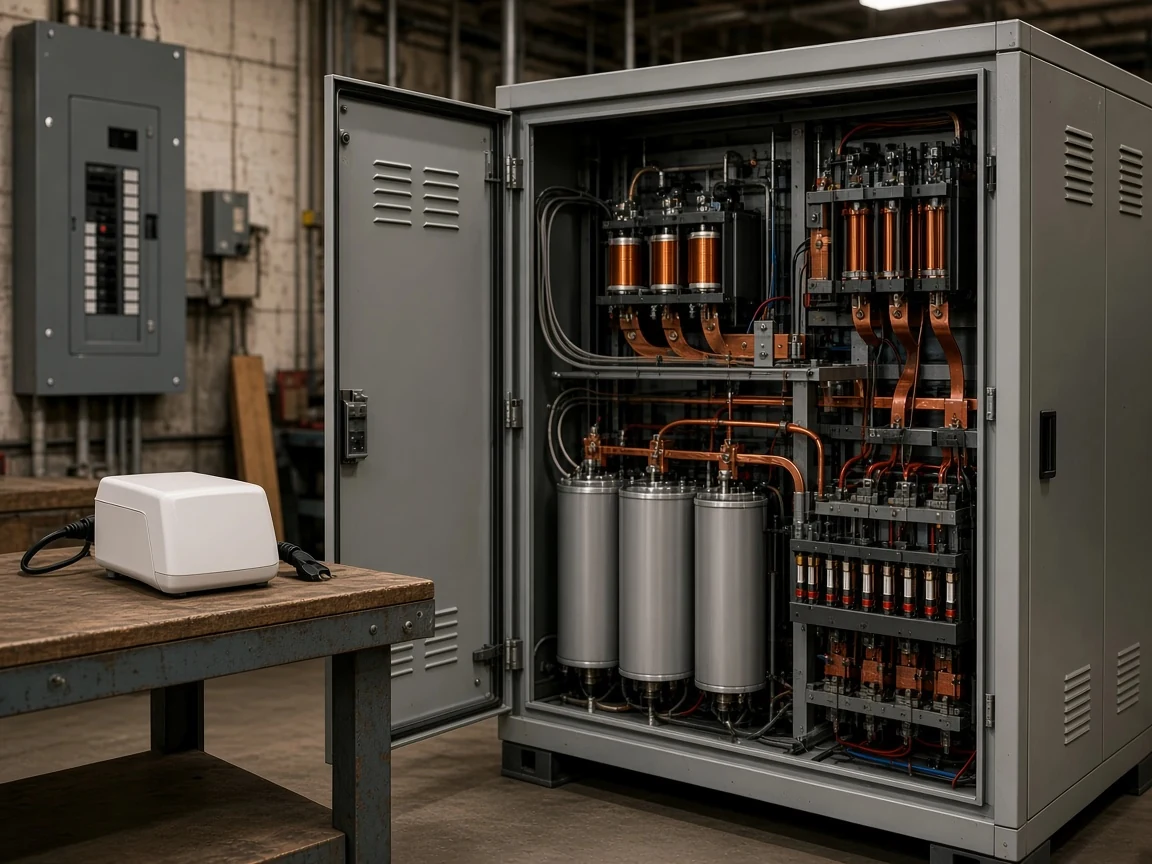
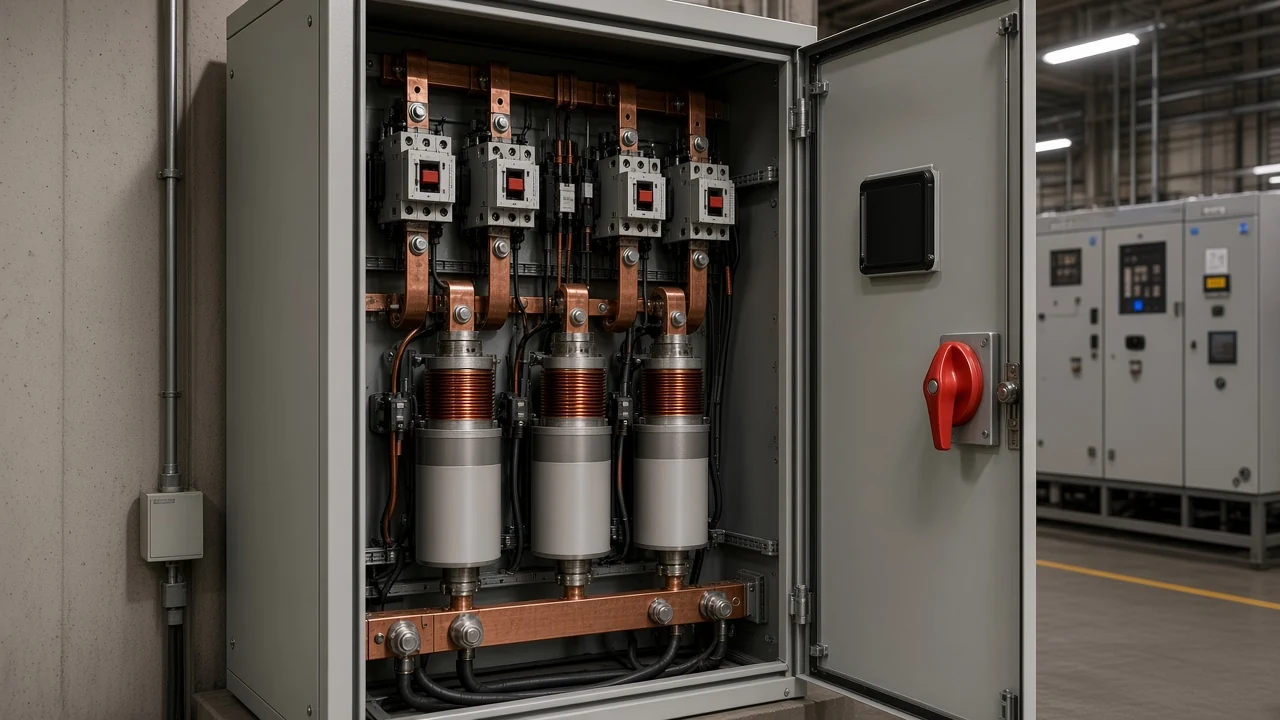
Expect an enclosed package with isolation, a discharge path, and a commissioning record rather than a panel knockout kit; landing order lives on the packaged-bank installation page.
A shunt capacitor bank supplies leading vars at the connection point. IEEE’s technology note describes switched banks coming in under load and going out at light load so the bus does not sit leading when motors stop.
LV shunt units and banks used for power-factor correction are the object of IEC 60831-1, which includes safety rules and an installation/operation guide.
That catalogue class is industrial equipment with a manual, diagrams, and protection hardware. Packaged-bank manuals talk about qualified personnel and a document holder rather than two red wires.
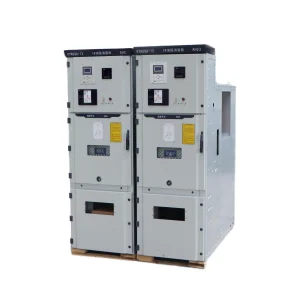
High-level package identity is short on purpose. You need an enclosure, an isolation / disconnect point, a designed discharge path, cable and earth landed to the outline drawing, and a commissioning record the next crew can read. Landing order and the packaged-bank installation sequence stay on the capacitor bank installation article.
One caution belongs here and nowhere else: keep the bank off VFD output terminals. Drive output is a PWM waveform, and a shunt step belongs on the supply side of that drive, not on the motor leads.
When a Small Commercial or Workshop LV Package Fits
An end-point package beside motors or feeders fits a measured workshop job. Leave the residential can on the workbench.
A 380 V three-phase enclosure is that measured job; a 240 V house accessory is the wrong voltage class.
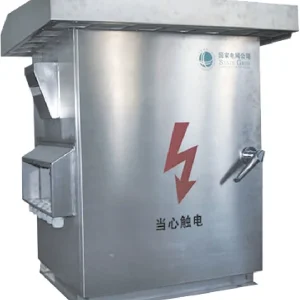
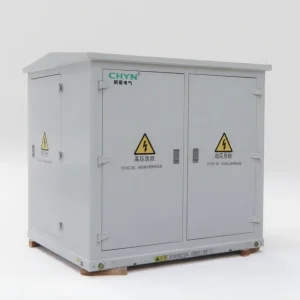
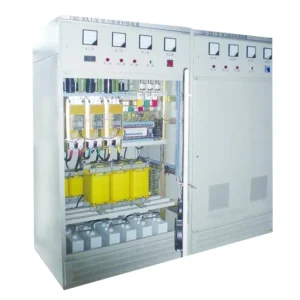
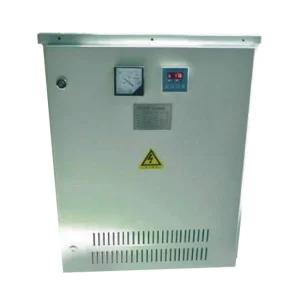
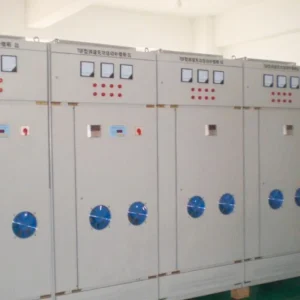
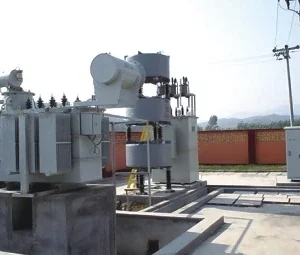
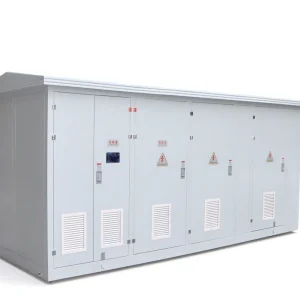
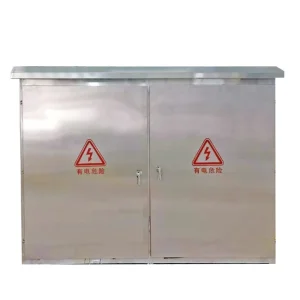
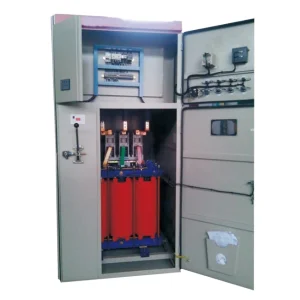
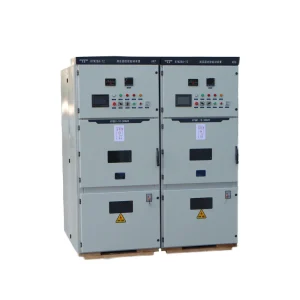
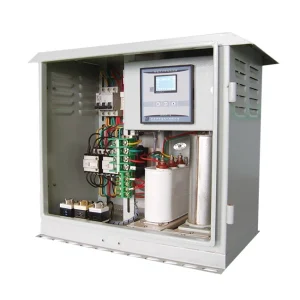
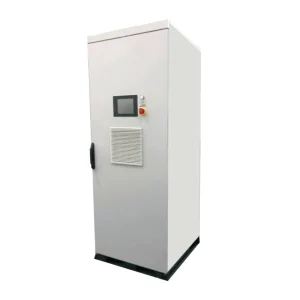
End-point compensation means the vars sit next to the inductive load on a three-phase LV bus. HYTBBM is that small-site job: close to motors, feeders, or other inductive loads on the low-voltage power factor compensation line.
HYTBBM is rated 380 V, three-phase, in 30 / 45 / 60 / 90 kvar steps, and it sits close to motors or feeders. HYTBBM supports balanced, phase-separated, or hybrid modes, PF to ≥0.9, and automatic recovery within 10 s after fault removal or power restoration.
Leading power factor is the light-load failure a fixed can creates. Switched shunt banks are applied under load and removed at light load to avoid leading PF and voltage rise. A fixed can that stays on when motors stop is the light-load problem switched banks are built to avoid.
The fit therefore needs three-phase 380 V service, inductive motors or feeders, and a tariff or feeder-current problem that actually prices or feels those vars. A house panel on kilowatt-hours still fails that test.
What a Packaged LV Compensation Step Already Includes
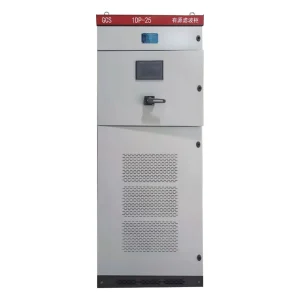
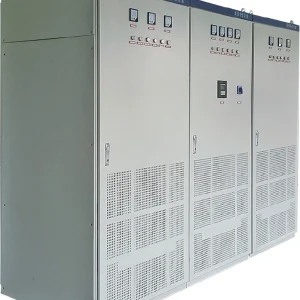
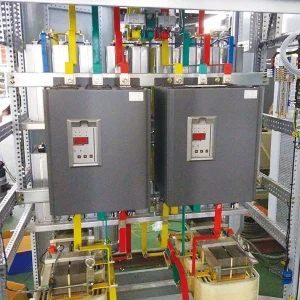
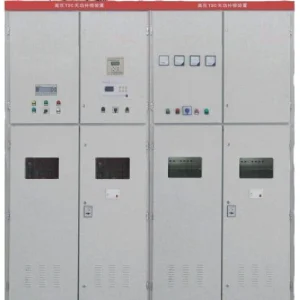
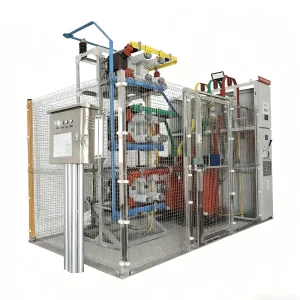
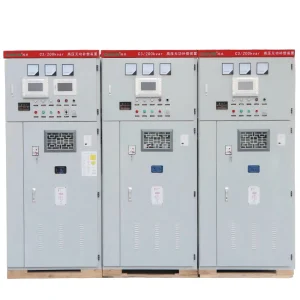
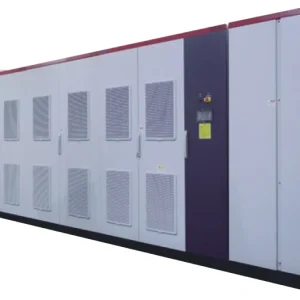
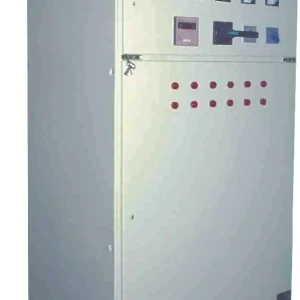
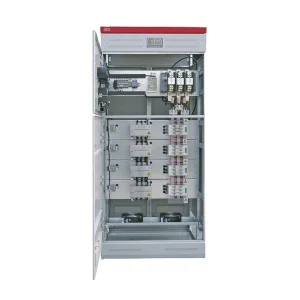
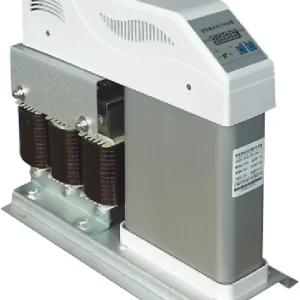
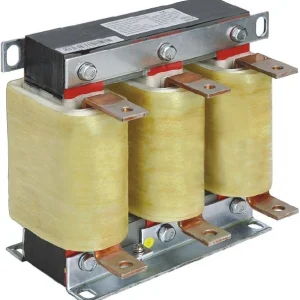
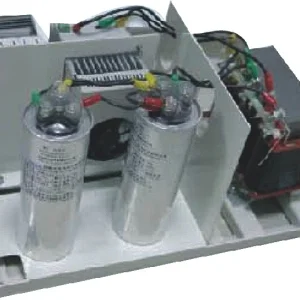
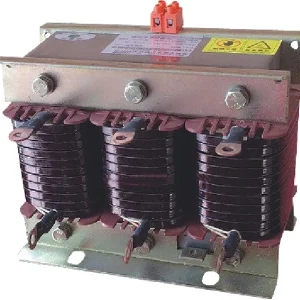
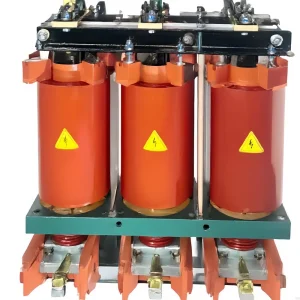
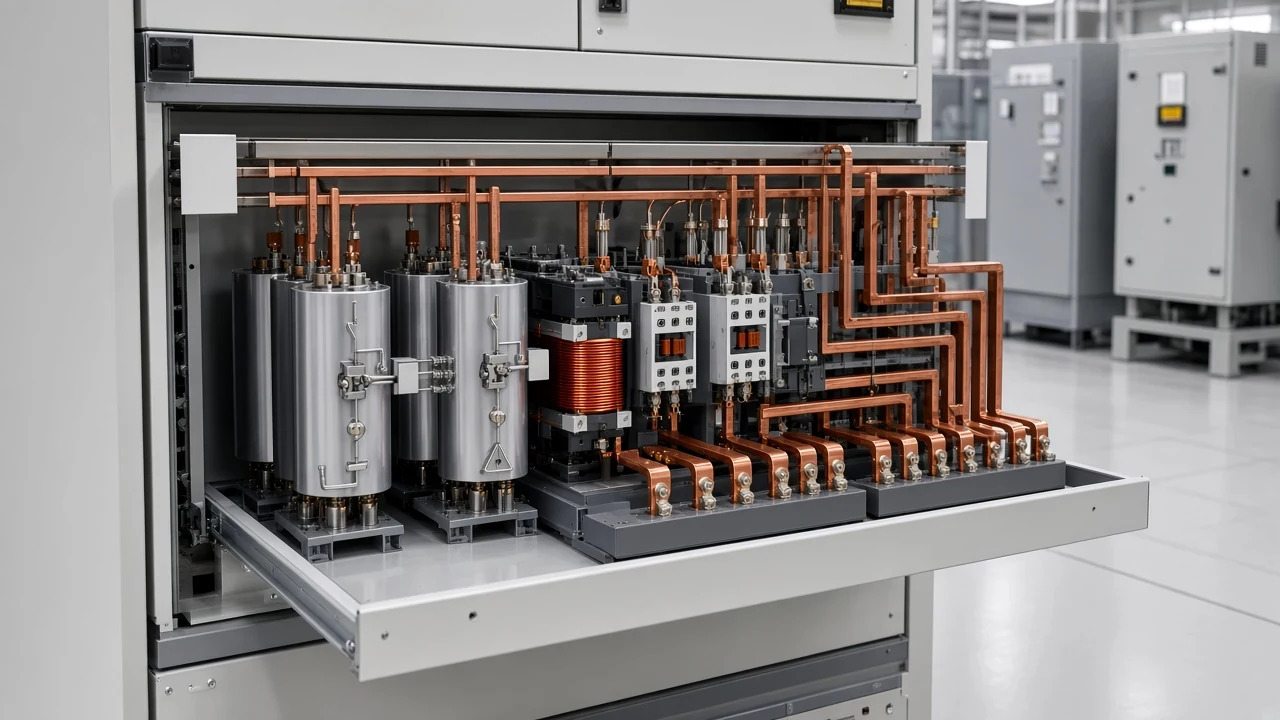
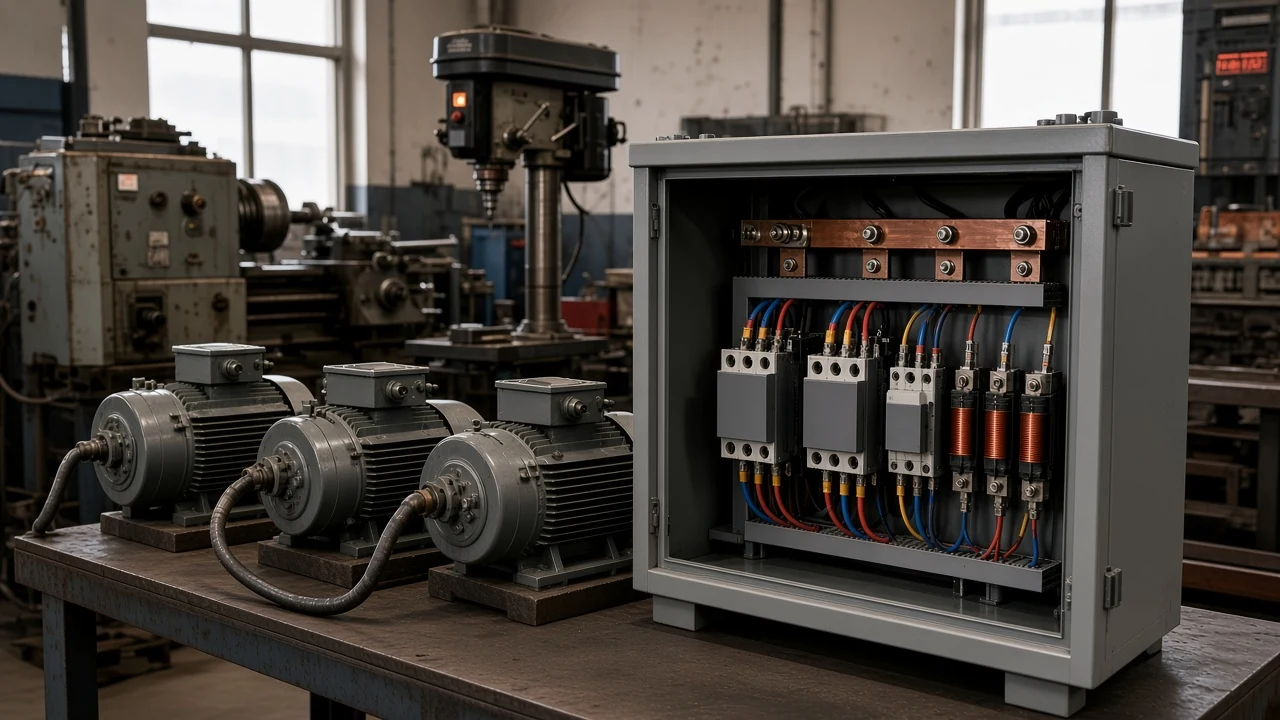
A filter/compensation module already combines capacitors, detuned reactors, contactors, fuses, busbars, and terminals as an LV cabinet step.
That hardware list is the proof that “bank” means more than two red wires. Detuned reactors give the step a harmonic overload / detune path so a plain can is not asked to swallow drive harmonics by itself. Contactors and fuses are the switching and protection layer a garage gadget never ships.
Each filter/compensation module is an LV cabinet step with capacitors, detuned reactors, contactors, fuses, busbars, and terminals, offered at 400 / 450 / 480 / 525 V and 12.5–50 kvar per unit. These modules are offered with detuning 5.67%, 7%, 12% or 14%.
Cabinet builders order these modules for cabinets whose width is ≥800 mm. Standard-cabinet ordering notes cap a lineup at ≤250 kvar with 50 kvar modules or ≤225 kvar with 25 kvar modules, with 300 mm module height and bottom wiring for cabinet integration.
Protection on Filter/Compensation Modules includes over-voltage, under-voltage, over-temperature, and harmonic overload. Those trips belong to a packaged LV step, which is why the home-search object and this drawer are different products.
Select a Filter/Compensation Module When the Job Is Packaged, Not a Garage Can
Open Filter/Compensation Modules when the job is a cabinet LV step. Use HYTBBM when vars belong beside a three-phase motor or feeder.
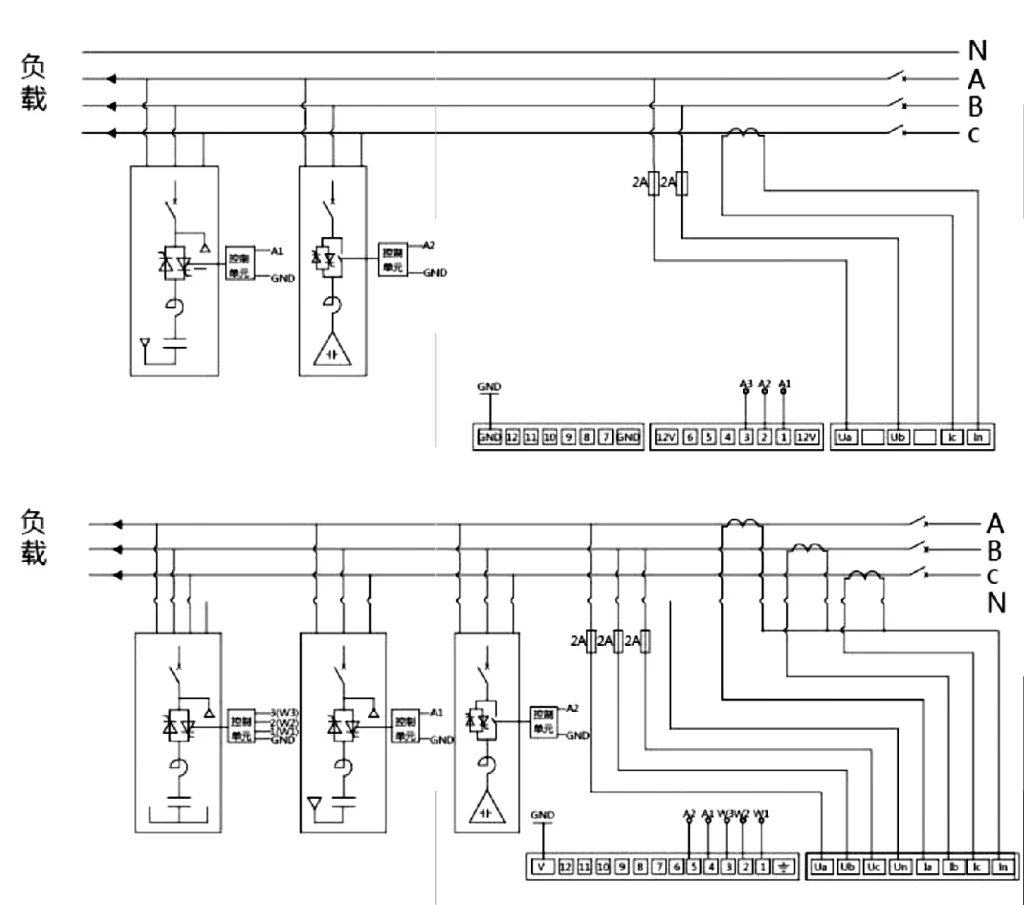
Choose Filter/Compensation Modules when a panel builder is extending or assembling a PFC cabinet and needs a standardized LV step that already includes isolation and protection hardware. The technical drawing shows capacitors, reactors, contactors, fuses, busbars, and terminals in that drawer.
| Job | Fit this SKU | Leave it aside when |
|---|---|---|
| Cabinet LV step, width ≥800 mm, 12.5–50 kvar steps, 400–525 V options | Filter/Compensation Modules | 240 V house panels, saver plugs, hobby DC banks |
| End-point 380 V three-phase enclosure beside motors or feeders | HYTBBM | Single-phase dwelling service |
| Packaged enclosure already specified | Sibling capacitor bank installation | The object is already chosen; only landing remains |
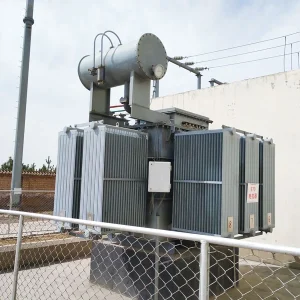
The module family is for cabinet builders, so skip it as a plug-in home device. Skip both SKUs for pole-mount hardware and for already-specified boxes that only need landing order.
Parent cluster for packaged compensation sits on the high-voltage power factor compensation series hub and the LV series named above. Open the Modules product for cabinet-step fit; follow HYTBBM when the enclosure should sit at the motor; use the sibling install article once the package is already on the drawing.
FAQ
Does “how to install a capacitor bank at home” usually mean a residential panel job?
Usually it names the wrong object: a panel can or hobby array on a kWh meter, rather than a packaged three-phase shunt bank.
Will a capacitor or power saver cut a typical household kWh bill?
A typical US residential kWh meter records real energy, so hanging capacitance on the panel does not create a billed PF saving the way an industrial penalty tariff can.
What is the difference between a power-saver can and a shunt capacitor bank?
A saver can is a small consumer box; a shunt capacitor bank is an enclosed, switched industrial or commercial PF package with isolation, protection, and a discharge path.
When should DIY stop?
Stop before any panel knockout once the hardware stores charge after isolation, or once the array is three-phase industrial equipment aimed at single-phase house wiring.
When does a small commercial or workshop LV package fit?
It fits a three-phase inductive workshop or end-of-feeder job beside motors, using an end-point enclosure such as HYTBBM rather than a house can.
Can I land a three-phase industrial array on single-phase house wiring?
No. Voltage class, phase count, switching, and discharge were designed for a packaged three-phase job, which is the AAC hobby pattern, not a landing method.
Who owns the landing sequence once a packaged bank is specified?
The capacitor bank installation article owns site, landing, isolation, cable, ground, discharge, and handover once the package is already specified.
Why does a fixed can stay wrong when motors are off?
A fixed can keeps injecting leading vars after the motors stop, which is the light-load leading power factor problem switched banks are built to avoid.