
 Zhejiang Hongyan Electric Co., Ltd.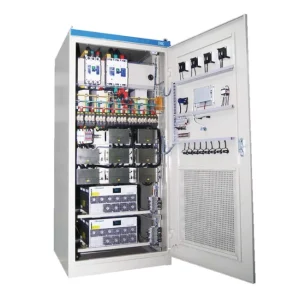

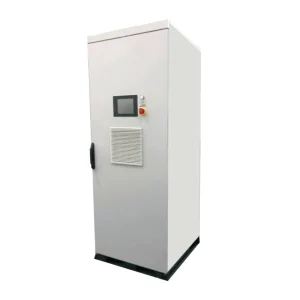
How to calculate kvar rating of capacitor bank starts with the nameplate figure at rated voltage and rated frequency, then converts it to the effective kvar the bus actually sees.
That conversion—and the way unit kvar or step ratings add into a bank figure—is what a capacitor bank specification must lock before anyone treats the order as checkable. The PF-target reactive-power sizing walkthrough is a separate calculation job; full shunt-bank design choices live on the capacitor bank design guide.
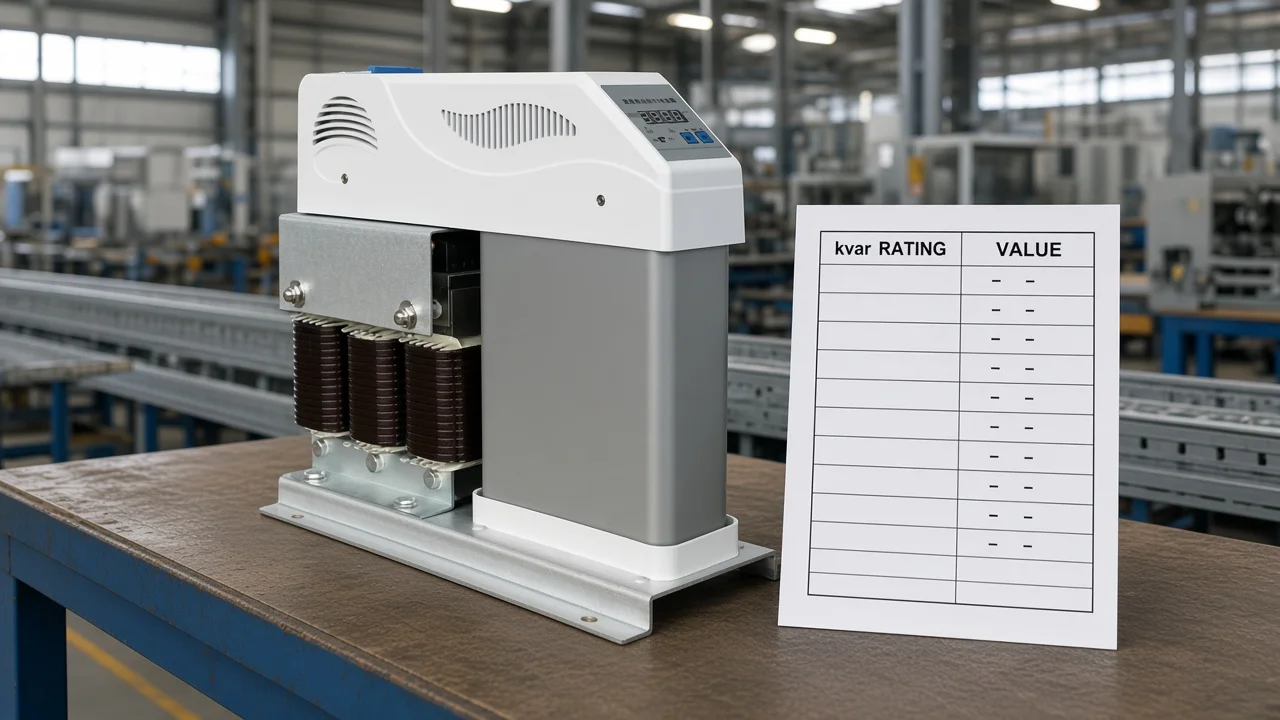
What the kvar Rating on a Capacitor Bank Nameplate Means
Nameplate kvar is the reactive power stated at the capacitor’s rated voltage and rated frequency—not a number that stays true at every bus.
A capacitor bank kvar rating on a unit is stated in kvar at a specific voltage because plant engineers work in reactive power, not microfarads, when they correct power factor. Capacitance in µF is the physical constant; kvar is the application label that assumes those rated conditions.
Power factor correction raises the ratio of real power to apparent power so the distribution system carries fewer amperes for the same kilowatts. Utilities may charge industrial sites when that ratio stays low. The rating question here is narrower: what kvar did the supplier stamp for which voltage, and what will the bus actually get?
Write the nameplate as a paired statement: kvar at rated volts and rated frequency. If either condition moves, the delivered figure moves with it.
Rated kvar vs Effective kvar at Bus Voltage
Effective kvar equals rated kvar multiplied by the square of (bus voltage ÷ rated voltage), then by the frequency ratio when nameplate frequency differs from the supply.
In symbols: Q_effective = Q_rated × (V_bus / V_rated)² × (f_supply / f_rated). Capacitance stays put; reactive output does not. Field guides use the same square-law rule when a bank rated 100 kvar at 480 V sits on a 430 V bus and delivers about 80 kvar.
Application notes give the same pattern for low-voltage cans: a 100 kvar unit rated at 400 V delivers about 90.2 kvar on a 380 V network. Community engineers ask the same question in reverse—if voltage halves, kvar falls to one quarter—because voltage and current both move.
| Nameplate | Bus condition | Effective kvar (same capacitance) |
|---|---|---|
| 100 kvar @ 400 V | 380 V, same frequency | ≈ 90.2 kvar |
| 100 kvar @ 480 V | 430 V, same frequency | ≈ 80 kvar |
| 10 kvar @ 400 V | 200 V, same frequency | 2.5 kvar |
Important: A bus below rated voltage quietly short-changes correction. Match the capacitor voltage rating to the real bus, or recalculate effective kvar before you sign the bank rating. See the Anvilfield capacitor-bank field guide for the voltage-squared caution.
Tip: A sustained 10% voltage rise raises reactive output by about 21%. That extra kvar is not free capacity—it is extra dielectric and thermal stress.
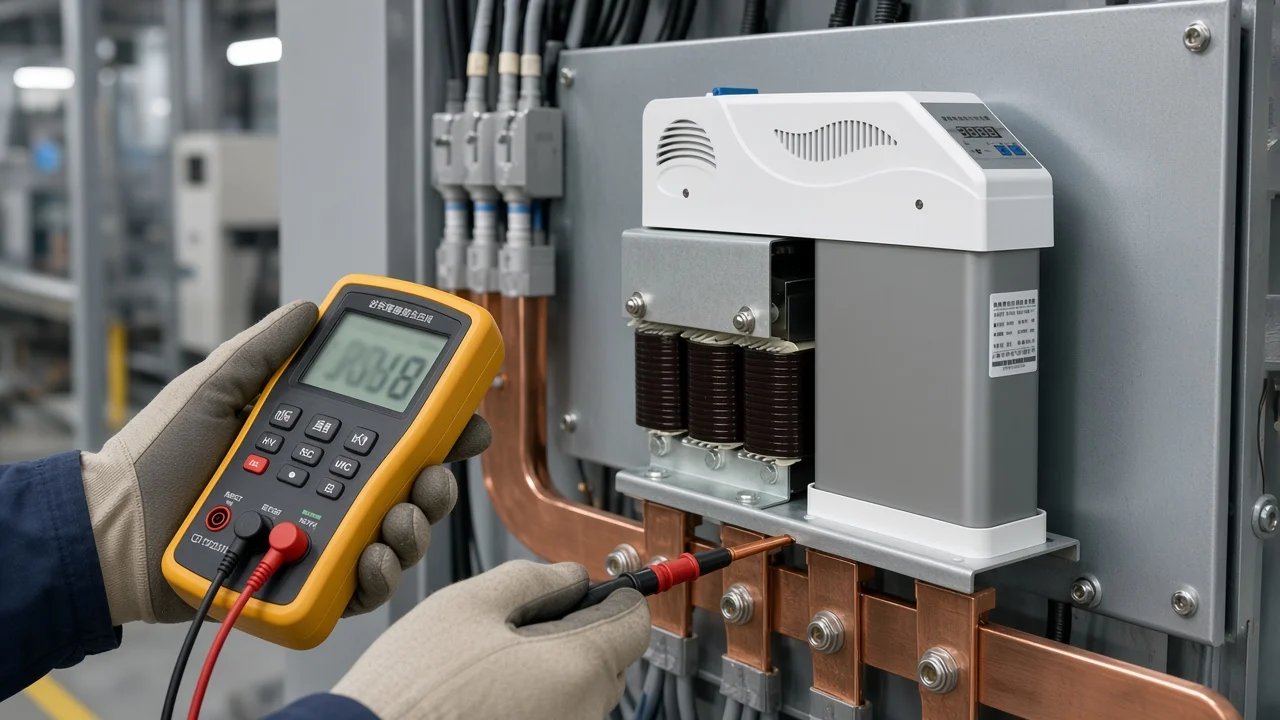
How Unit and Step Ratings Build the Bank Rating
Parallel groups add kvar; series strings raise the voltage class; the bank rating is the assembled three-phase kvar at the bank’s rated voltage.
Shunt banks are built from capacitor units connected in series-parallel combinations so the string can live at system voltage while the parallel paths reach the target reactive power. On a three-phase nameplate, the kvar figure is normally the total bank rating—not the rating of one internal can—unless the datasheet says otherwise.
Switched or modular steps follow the same addition rule: each stage’s unit kvar at its rated voltage contributes to the bank when that stage is in. Controllers add and drop steps with load; the nameplate bank rating is still the sum of the stages you can connect, stated at rated conditions.
| Building block | What it contributes to bank rating | What to write on the RFQ |
|---|---|---|
| Parallel units or stages at the same voltage | kvar adds | Stage count × kvar per stage at rated V |
| Series units in a string | Voltage class rises; string kvar follows series rules | Unit voltage, series count, string kvar |
| Assembled three-phase bank | Total bank kvar @ bank rated voltage | Bank kvar, bank kV, connection (wye/delta if required) |
Rated line current for a three-phase bank follows the rated kvar at the rated voltage. When the bus voltage moves, both delivered kvar and current move with it—so protection and conductor checks must use the effective figure, not only the nameplate.
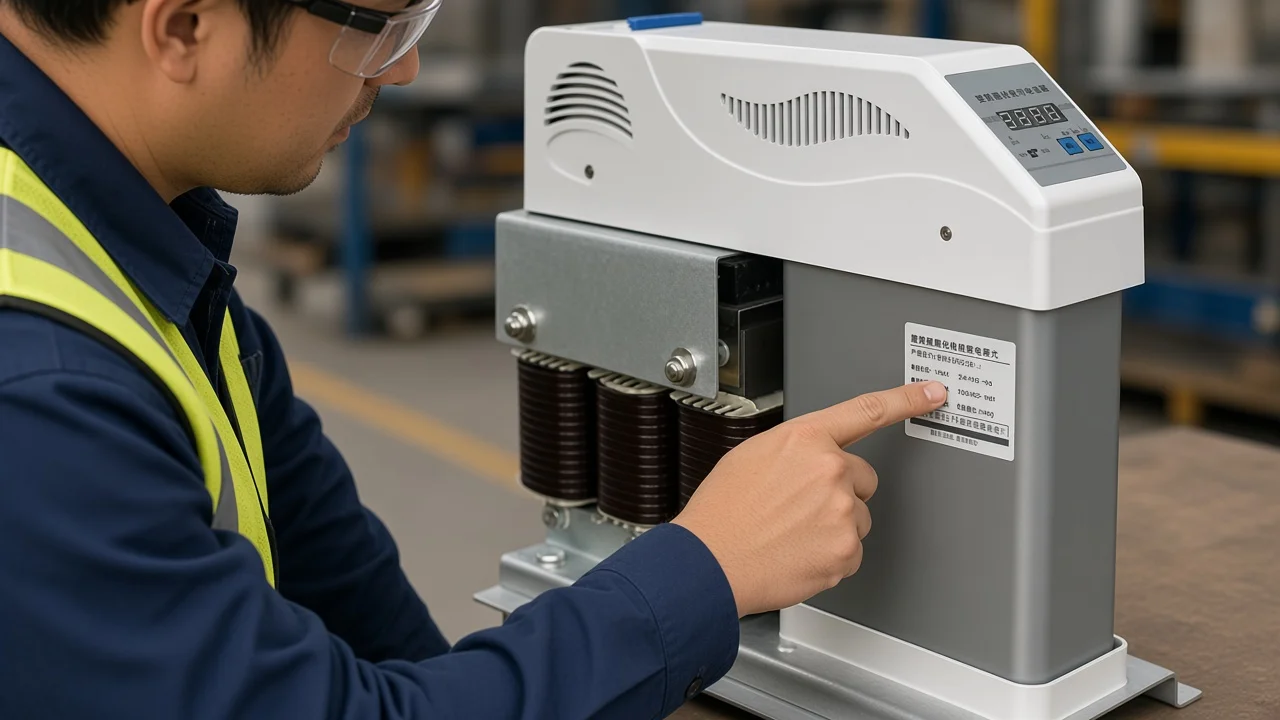
Capacitor Bank Specification Fields for kvar Rating
A capacitor bank specification must lock rated kvar, rated voltage, rated frequency, expected bus voltage, effective kvar at that bus, and the step list—plus installed-versus-effective language when the bank is a harmonic filter bank.
Plain shunt banks still need both rated and effective figures when the bus is not exactly nameplate. Filter banks add a second trap: installed nameplate kvar of the cans can be 25–40% higher than the effective fundamental kvar at system voltage because capacitors are rated above the bus for reactor rise and harmonics.
From the field: Engineers evaluating filter quotes ask for the effective kvar at rated system voltage, the capacitor voltage and kvar used in the bank, and the tuning point—not only a single “installed kvar” line. That distinction keeps a 3,000 kvar request from becoming roughly 2,000 kvar of real output.
Use this minimum field list on the RFQ or datasheet:
- Bank rated kvar and rated voltage (and rated frequency)
- Expected continuous bus voltage range; calculated effective kvar at typical bus
- Unit or step kvar list (kvar per stage × number of stages)
- Connection notes needed for rating (wye/delta, grounded/ungrounded when relevant)
- For filter banks: effective kvar at system voltage and installed capacitor kvar/voltage
- Ambient and altitude envelope that the rating assumes
Parent family options for medium- and high-voltage banks sit on the High Voltage Power Factor Compensation Series hub once the rating language is clear.
Secondary Energy-Based Checks Without Replacing Nameplate Rating
kWh and kvarh trends can cross-check how much reactive energy the site has been drawing; they do not replace nameplate kvar rating math.
Some readers meet “kvarh” on energy meters or bills and ask whether that is the bank rating. It is not. kvarh is reactive energy over time; kvar rating is instantaneous reactive power capacity at stated voltage and frequency.
A practical secondary use is trend comparison: if monthly reactive energy stays high after a bank is online, revisit effective kvar at real bus voltage and whether steps are actually in. Keep that as a check, not as the method that invents the nameplate figure.
When Smart Power Capacitors Fit Modular kvar Step Ratings
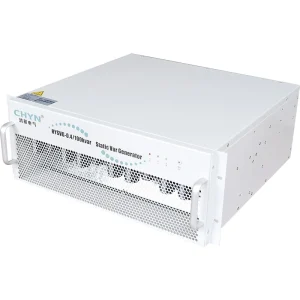
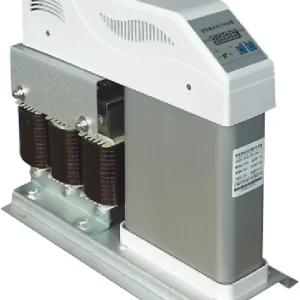
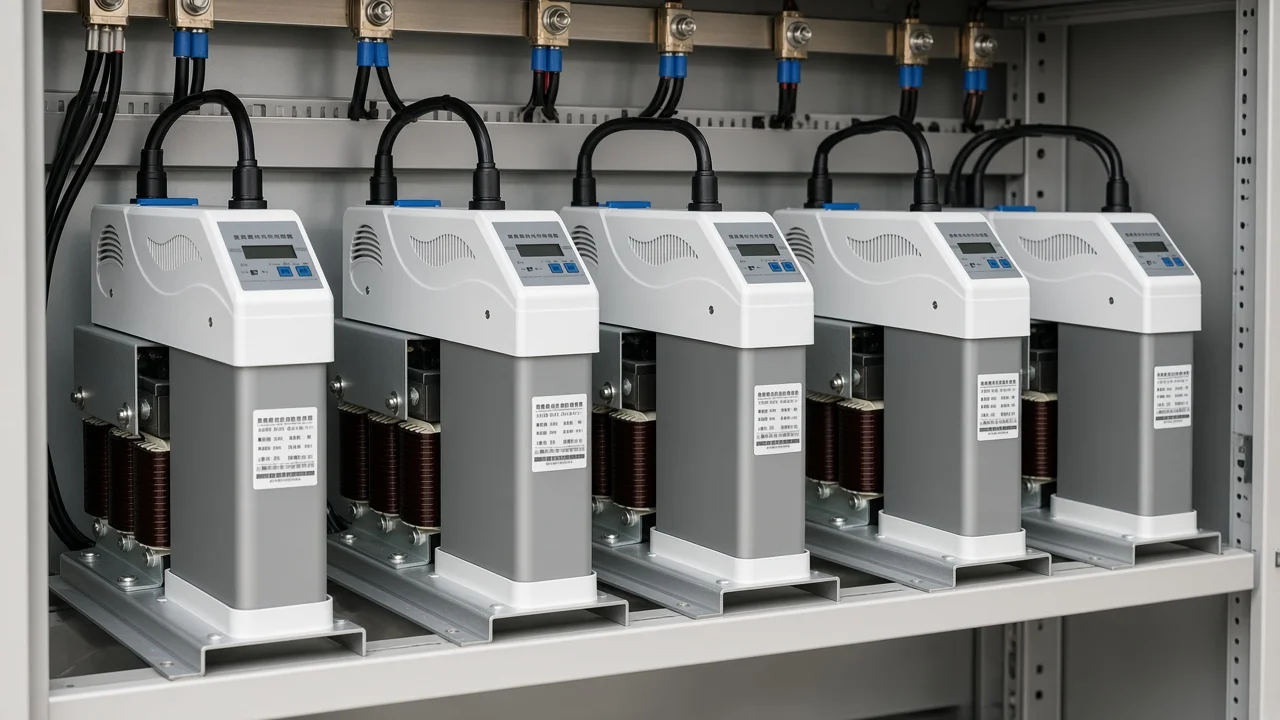
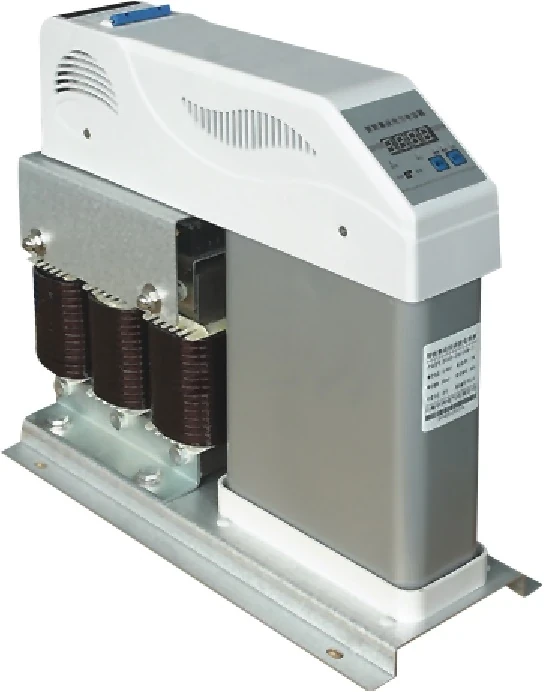
Smart Power Capacitors publish modular rated kvar steps and network so bank rating grows by adding verified units.
Each module integrates measurement and control, zero-cross switching, protection, and a self-healing low-voltage power capacitor. Models such as HYZN/450-20.20, HYZN/450-20.10, HYZN/450-10.10, and HYFB/250-20 list distinct step heights on the product page, so the buyer can map unit ratings to a bank total without inventing kvar labels.
Units can run alone or as a networked compensation system, with three-phase or mixed three-phase plus split-phase modes. That matches a rating-selection job: choose step kvar that fits the bus class, sum the connected modules for bank rating, then still apply the effective-kvar check at the real bus voltage.
Related component options sit under Power Quality Components. Open the Smart Power Capacitors page, match published step ratings to the bank figure and bus voltage, then send project voltage and step list if you need a configuration check—without treating this section as a separate enquiry workflow.
FAQ
What does the kvar rating on a capacitor bank nameplate mean?
It is the reactive power of the unit or bank at the stated rated voltage and rated frequency. It is not a promise of the same kvar at every bus voltage.
How do I calculate effective kvar if bus voltage differs from rated voltage?
Multiply rated kvar by (V_bus / V_rated)². If supply frequency differs from the nameplate frequency, multiply by that frequency ratio as well.
Why are banks rated in kvar instead of farads?
At fixed system voltage and frequency, kvar is proportional to capacitance, so kvar is the convenient ordering unit for power-factor work. Capacitance remains the underlying physical quantity.
How do unit ratings combine into a bank rating?
Parallel units or stages at the same voltage add kvar. Series strings raise the voltage capability of the assembly. The three-phase bank rating is the total assembled kvar at the bank’s rated voltage.
What should a capacitor bank specification list for kvar rating?
Rated kvar and voltage, rated frequency, expected bus voltage, effective kvar at that bus, step or unit list, and—for filter banks—both effective and installed kvar language.
Does frequency change the kvar rating?
Yes when the supply frequency differs from the nameplate frequency. Reactive output scales with frequency as well as with voltage squared.
How do I estimate rated current from bank kvar?
Use the rated kvar and rated voltage for the three-phase bank current formula on the datasheet or engineering notes. Recalculate with effective kvar when the bus is off nominal.
Is kvarh the same as kvar rating?
No. kvarh is reactive energy over time; kvar rating is reactive power capacity at stated conditions. Energy trends are a secondary check only.