
 Zhejiang Hongyan Electric Co., Ltd.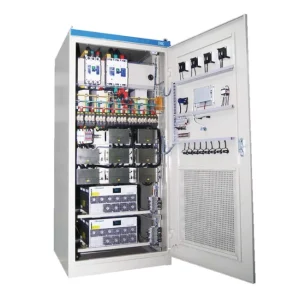
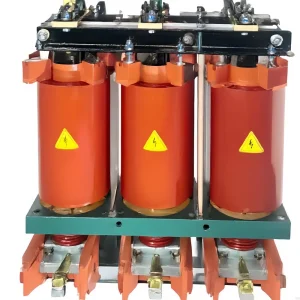
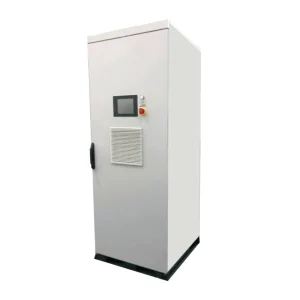
A review of active filters for power quality improvement is most useful to plant buyers as a class map and shortlist, not as another literature survey of control algorithms. Academic papers catalog topologies and controllers. Procurement teams need to know which commercial classes solve which bus problems, and when low-voltage dynamic filtering with compensation is the job rather than a pure current injector or a fixed passive bank.
This article maps active-filter classes that show up on real RFQs, ties common plant symptoms to those classes, keeps tuned passive filters and bare capacitor banks out of the wrong shortlist, and shows when to choose the HYTSF Series Low-Voltage Dynamic Filtering & Compensation Device. Deep active-harmonic-filter sizing, diagrams, and head-to-head vs-passive comparisons already live on sibling pages and stay out of scope here.
What Active Filter Classes Cover for Power Quality Improvement
For plant buyers, "active filter" usually means power-electronics gear that improves current or power factor under harmonics - not an op-amp signal filter from an electronics textbook.
Three classes matter on a shortlist:
| Buyer class | What it mainly does | Typical plant cue |
|---|---|---|
| AHF / APF current injector | Measures distortion and injects an opposite-phase harmonic current at the connection point | Many VFDs that start and stop; spectrum that will not sit still |
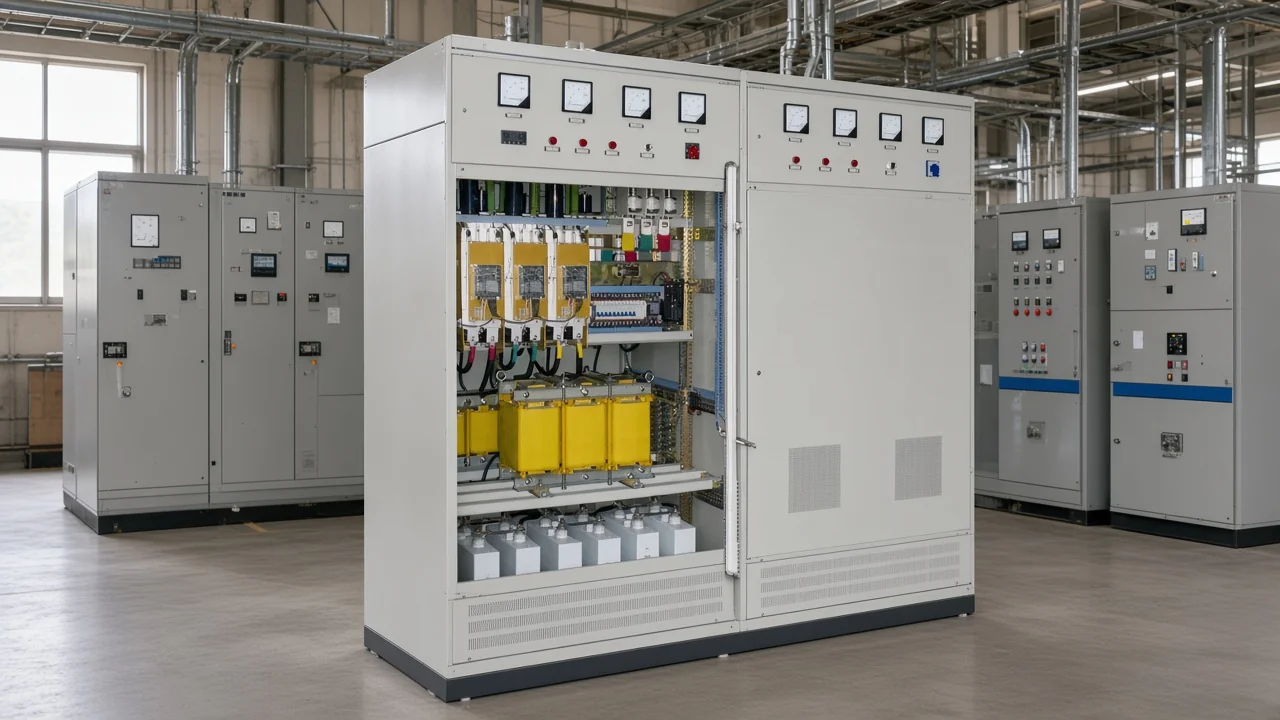
| LV dynamic filtering & compensation package | Switches tuned capacitor-reactor branches under DSP control to filter selected orders and support power factor | Harmonics plus fluctuating reactive demand on a low-voltage bus |
| Hybrid leftover idea | Passive or detuned branch takes large known orders; an active unit cleans the remainder | Steady big orders plus a moving leftover spectrum |
Shunt injectors sit in parallel with the load and cancel the harmonic current they are told to cancel. Dynamic filtering packages still use tuned LC branches, but they change steps quickly instead of leaving a fixed bank forever online. Hybrid thinking is a split of jobs, not a third catalog brand you must invent.
Series textbook topologies and unified conditioners appear in academic reviews. They are not the first objects most LV industrial RFQs need to name. If the search phrase brought you here from a university PDF, keep that survey for topology homework and use this map for purchasing.
Plant Symptoms That Map to Each Active Filter Class
Symptoms decide the class faster than product brochures do.
| Plant symptom | Usually points toward | Why |
|---|---|---|
| Many drives on one board, loads on/off through the shift | AHF / APF injector | The spectrum moves; a fixed tune is aimed at yesterday's current |
| Failed power-factor capacitors, transformer heat, nuisance trips with nonlinear loads | Harmonic-aware filtering (active or properly detuned), not more bare cans | Capacitors under harmonics are a common failure pattern on VFD-heavy floors |
| Steady furnace or mill spectrum with known dominant orders | Passive or detuned branches; sometimes a dynamic package if reactive demand also swings | A known spectrum can still use traps if resonance is handled |
| Need both harmonic filtering and power-factor support as load moves on LV | Dynamic filtering & compensation package | Filtering and compensation share one switched-branch job |
| Utility outages or missing voltage cycles | Not an active filter | A filter cleans distortion; it does not replace missing supply |
Important: A harmonic filter can clean a distorted line cycle, but it cannot replace a missing one - community discussion on LV harmonic filters and outages.
Field language often mixes line reactors, drive-input traps, shunt injectors, and "the boss wants an active filter." Reactors soften a drive's input a little. They are not an active filter class on this map. If the only ask is cheap drive protection on a mild bus, reactors or a passive package may win before an injector RFQ.
AHF/APF Injectors Versus Dynamic Filtering and Compensation Packages
An active harmonic filter (AHF) or active power filter (APF) injector and an LV dynamic filtering package are not two names for one cabinet.
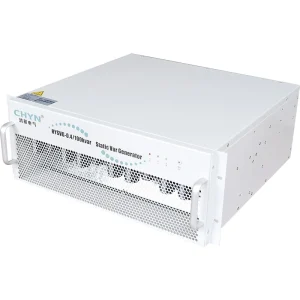
An injector watches the current, builds a canceling harmonic current, and returns it so the supply sees a cleaner waveform within its rating. It does not rely on a fixed LC trap for each order.
That is why swinging multi-drive boards often prefer injection. Active-versus-passive decision pages treat injectors as the moving-spectrum answer. Sizing from measured current and reading block diagrams belong on the design and diagram articles already published for that product family.
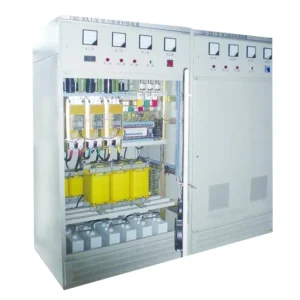
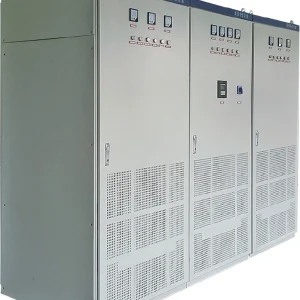
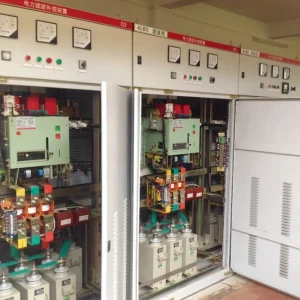
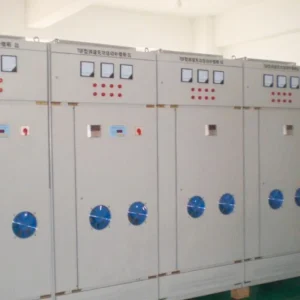
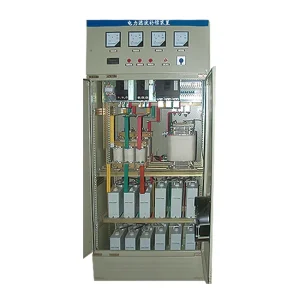
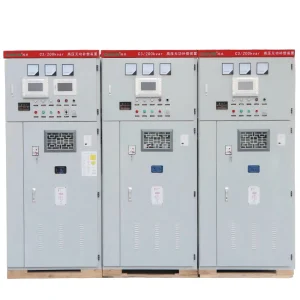
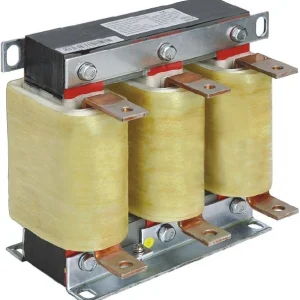
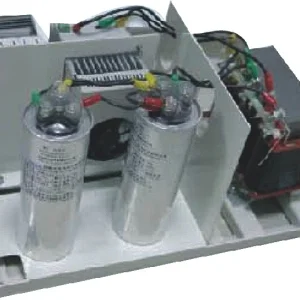
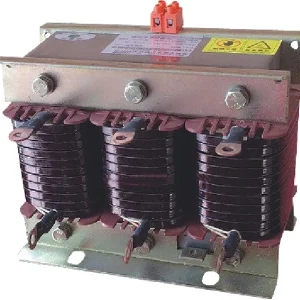
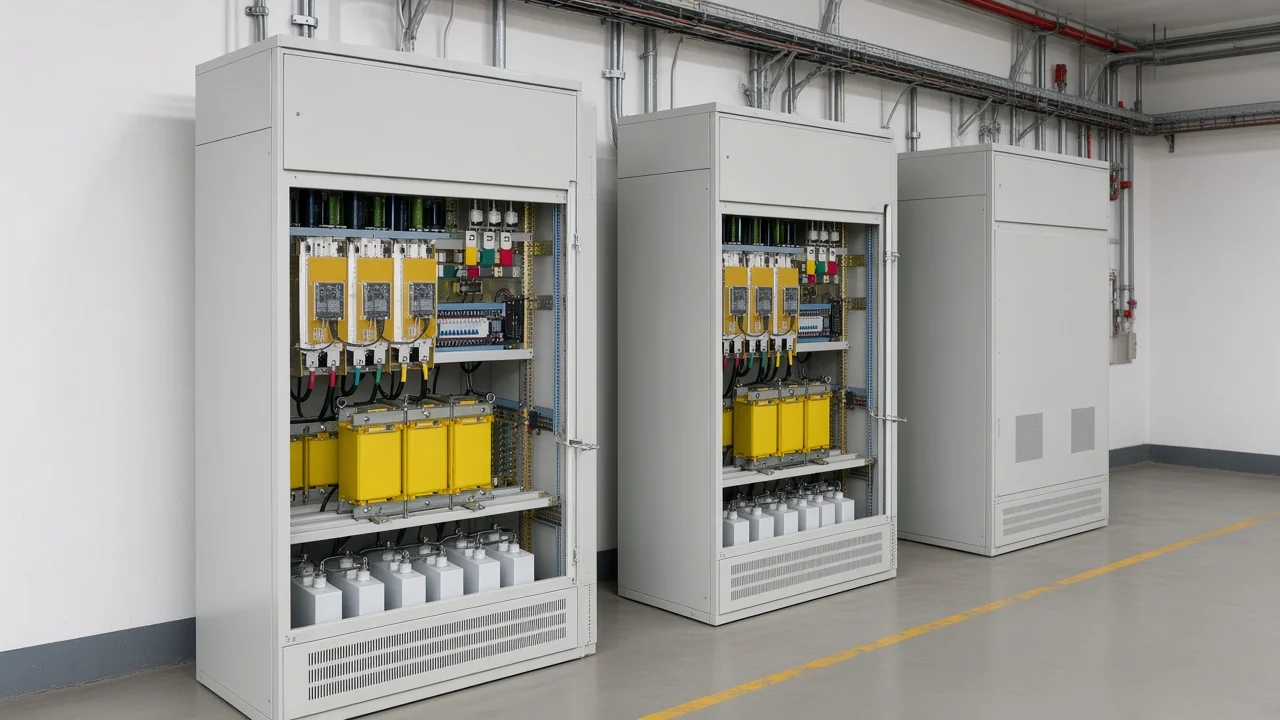
A dynamic filtering and compensation package keeps tuned capacitor-reactor branches, then switches them with fast, controlled steps while it watches harmonics and reactive demand. The job is dual: suppress or mitigate harmonic current under real operating conditions, and improve power factor without treating compensation as a separate afterthought. On CHYN's catalog, that LV object is the HYTSF series under harmonic mitigation, while pure active power filter hardware such as HYAPF lives in a separate series.
Do not collapse the two into one RFQ line. If the plant only needs broadband current cancellation on a busy VFD board, start with an injector class.
If the plant needs LV filtering of known orders plus dynamic reactive support through thyristor-switched branches, start with a dynamic filtering package. Hybrid use - a detuned branch for large predictable orders, an injector for the leftover - is valid when measurements show both jobs. Published hybrid notes remind readers that a detuned LC branch alone may not clear every order.
Keep Passive Tuned Filters and Bare Capacitor Banks Off the Wrong Shortlist
Passive tuned filters, detuned banks, and bare capacitor banks are easy to drop into an "active filter review" by mistake.
On a steady spectrum, a tuned branch can sit for years because it offers a low-impedance path near a chosen harmonic order.
Resonance appears when supply inductance lines up with the filter reactance. Later drives can also overload the branch with harmonic current it was never built to carry. Detuning moves the branch below the target order so some harmonic current remains unfiltered while resonance risk falls - harmonic filter selection notes explain that trade clearly.
Field engineers usually blame bare power-factor cans, not a filter, when transformer leakage inductance and capacitors line up and fuses or humming show up. Adding more cans under harmonics is often how plants arrive at the symptom table above. A bare capacitor bank is not a harmonic filter.
Keep these objects on a parallel shortlist when the spectrum is steady and the budget favors traps - or when a detuned bank is the honest first step before any active cabinet. Do not label them "active" because the sales deck said "dynamic." Full active-versus-passive decision trees already have their own page; this section only keeps them out of the wrong active-filter RFQ.
Shortlist Checklist for Active Filters Before You RFQ
Before anyone writes an RFQ titled like a journal paper, run a plant checklist.
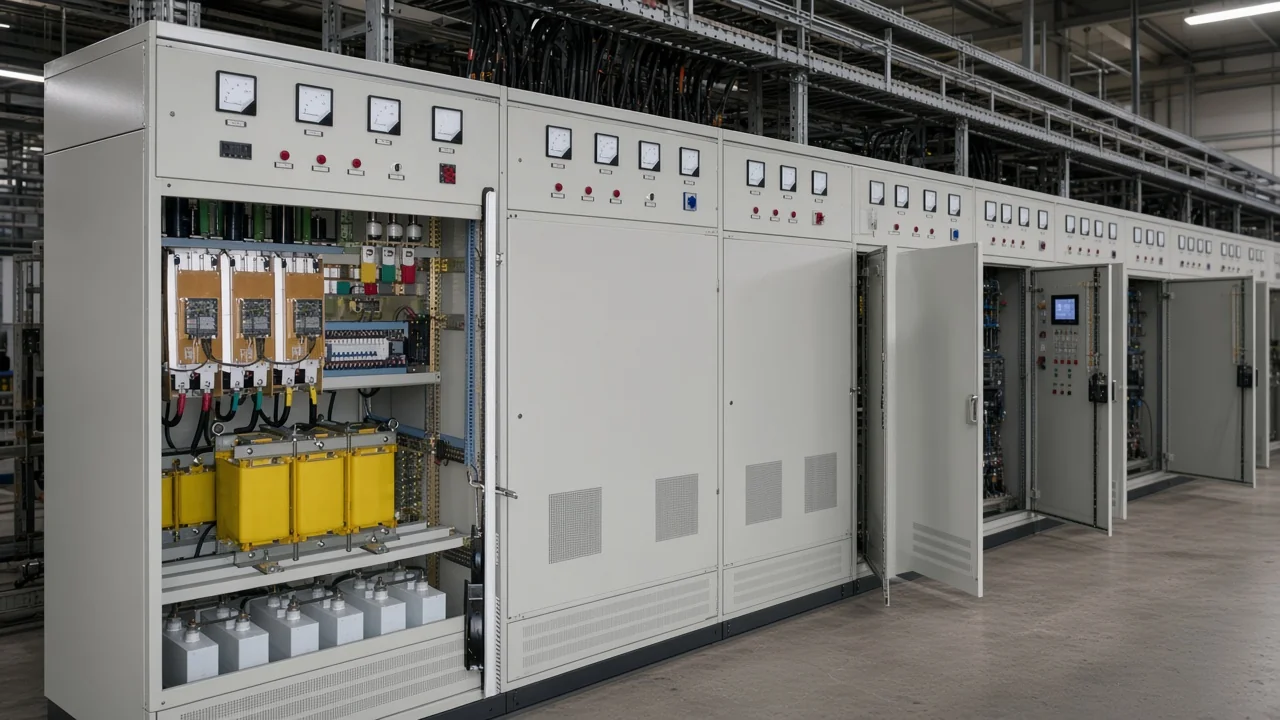
- Name the job in one line: cancel moving harmonic current, switch tuned filtering plus compensation, fix resonance on existing cans, or ride through missing voltage (the last one is not a filter).
- Capture a harmonic snapshot at the point of common coupling or the board you care about, with load pattern notes for busy and quiet hours.
- List nonlinear loads and whether they start, stop, or change speed together.
- Separate objects already on site: line reactors, bare cans, detuned banks, UPS, surge devices.
- Pick the class from the tables above before you pick a brand or a module count.
- Only then open a product page for parameters, wiring space, and ordering data.
If the answer after step 1 is "missing voltage," stop the filter RFQ and look at sag or UPS classes instead. If the answer is "steady 5th and 7th with PF work on a quiet bus," a passive or detuned package may still win.
If the answer is "LV harmonics plus fluctuating reactive demand and switched tuned branches," keep reading into the HYTSF recommendation. Related reading for injectors stays on the live design, diagram, and vs-passive articles. Power-conditioning naming and large-building load balancing have their own published pages.
When to Choose and Recommend HYTSF for LV Dynamic Filtering Compensation
Choose and recommend HYTSF when the LV job is dynamic filtering and compensation through switched tuned branches - not when you only need a pure current-injection AHF.
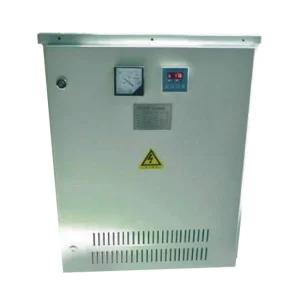
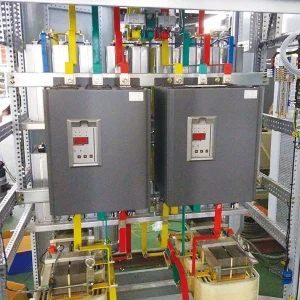
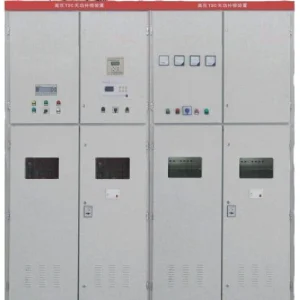
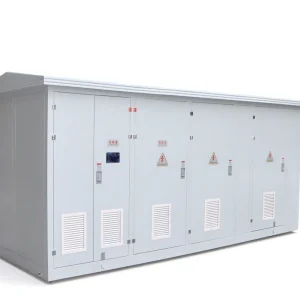
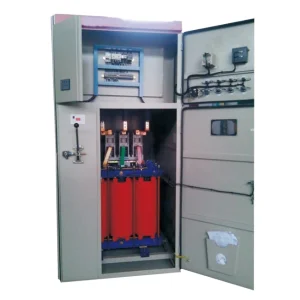
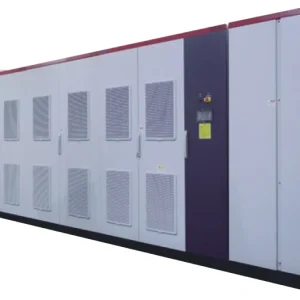
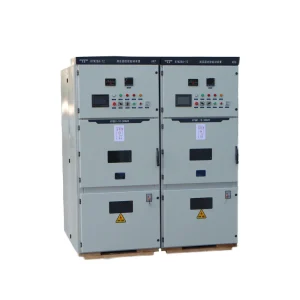
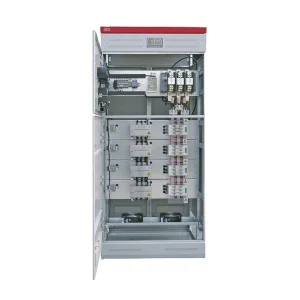
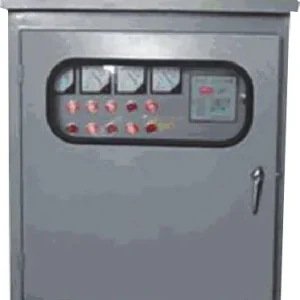
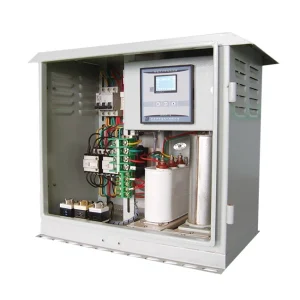
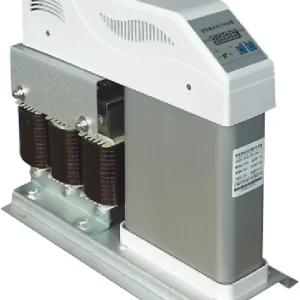
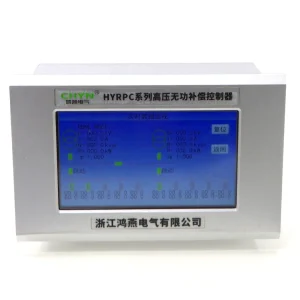
The HYTSF Series Low-Voltage Dynamic Filtering & Compensation Device is built for complex low-voltage networks where capacitor compensation under harmonics is awkward, and where the plant needs both harmonic mitigation and power-factor support. It combines monitoring, switching elements, filter capacitors, reactors, protection, and DSP control. The controller samples harmonic content and reactive demand, then uses zero-crossing thyristor switching so branch changes stay soft - no inrush or overvoltage from hard capacitor slamming.
Live product figures that belong in the shortlist conversation follow.
Dynamic response shorter than 20 ms, with acquisition, power-quality computation, and control commands completed within 10 ms on the stated DSP path.
Rated voltages 220 V, 400 V, 690 V, 770 V, and 1140 V at 50 Hz or 60 Hz.
Harmonic filtering range stated through the 1st-50th, with filtering targets including the 3rd, 5th, 7th, 11th, 13th, 17th, 19th, and 23rd.
Achievable power factor >= 0.92-0.95 adjustable.
Typical branch examples named for orders such as 3rd (150 Hz), 5th (250 Hz), 7th (350 Hz), 11th (550 Hz), and 13th (650 Hz), application-dependent.
Protection level IP2X; indoor ambient limits on the page include -25 °C to +45 °C, relative humidity ≤ 95% at 25 °C, and altitude ≤ 2000 m.
Select HYTSF when measurements show LV harmonic pollution plus reactive swing that fits switched tuned branches, and when the ordering data the page asks for - transformer capacity, short-circuit level, load pattern, pre-install harmonic data, target power factor, and layout - can be collected. Fit falls off when the honest job is a modular shunt injector for a highly variable multi-order current (use the active power filter series instead), when a static passive filter already matches a fixed spectrum, or when the symptom is missing voltage rather than distortion.
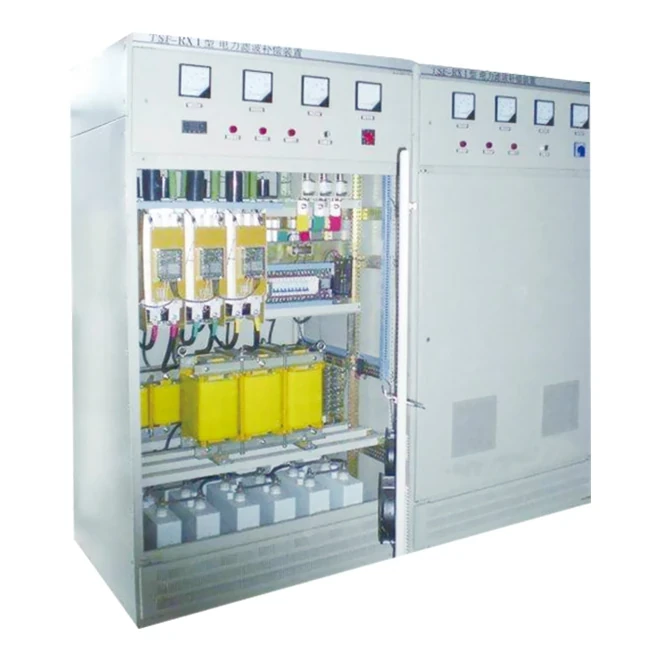
Browse the products hub if the shortlist still spans injector, passive, and dynamic packages after the checklist.
FAQ
What does a review of active filters for power quality improvement mean for a plant buyer?
It should mean a class map and shortlist: which active-filter types solve which bus problems. The famous academic papers with that title survey topologies and control methods; they are not a purchasing worksheet.
What is an active power filter on a plant bus?
A shunt active power filter is a power-electronics cabinet that injects a compensating current opposite in phase to the harmonic current it measures, so the supply current at the connection point is cleaner within the unit's rating. It can also support reactive and balancing jobs depending on the product - see the overview of active power filters.
How does an AHF/APF differ from an LV dynamic filtering compensation package?
An AHF/APF injector cancels measured harmonic current with power electronics. An LV dynamic filtering and compensation package switches tuned capacitor-reactor branches under fast control to filter selected orders and improve power factor together. They sit in different catalog lines for a reason.
When should we not buy an active filter?
Skip an active RFQ when a line reactor or a well-designed passive/detuned bank already matches a steady spectrum, when cooling and upkeep for electronics are unrealistic in the room, or when the real problem is missing voltage, not harmonic current. Community threads regularly push back on active upsells when reactors would do.
Can an active filter fix utility outages or missing voltage?
No. Cleaning a distorted waveform is not the same as replacing a missing cycle. Outage and sag mitigation are different product classes.
How do we keep passive filters and capacitor banks out of the wrong shortlist?
Name them as passive tuned, detuned, or bare PFC objects. Evaluate resonance and light-load leading power factor on their own merits. Do not file them under "active" because a brochure used the word dynamic.
When is HYTSF the better pick than a pure AHF injector?
When the LV site needs dynamic filtering of targeted orders plus power-factor support through switched tuned branches, with response and voltage ratings that match the live HYTSF page. When the site only needs broadband current injection across a shifting multi-drive spectrum, start with an active power filter injector instead.
References
- Harmonic Filter Selection: Passive, Active & Hybrid Types - Electrical Volt (independent technical education).
- A review of active filters for power quality improvement - ETS Montreal publication record for Singh, Al-Haddad, and Chandra, IEEE Trans. Ind. Electron., 1999 (authority abstract).
- Active power filter - Wikipedia (independent encyclopedia overview).
- LV harmonic filters for utility customers / power outages - Physics Forums (community discussion).