
 Zhejiang Hongyan Electric Co., Ltd.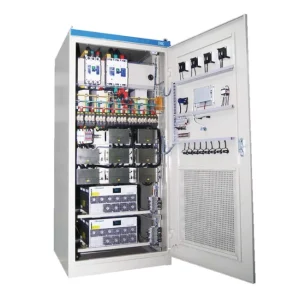
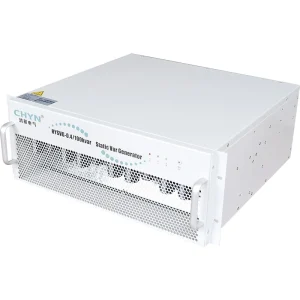
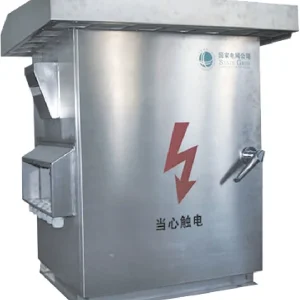
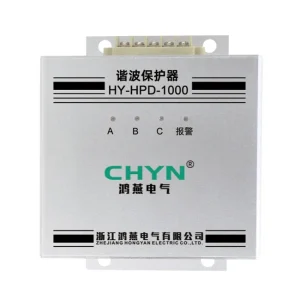
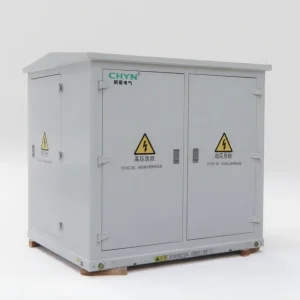
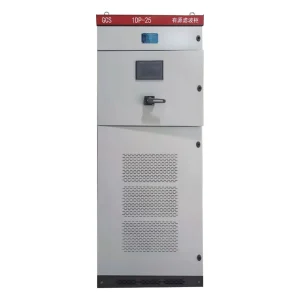
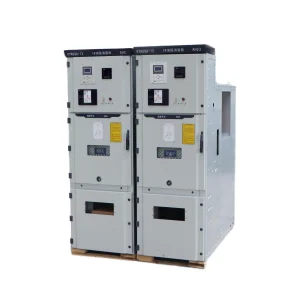
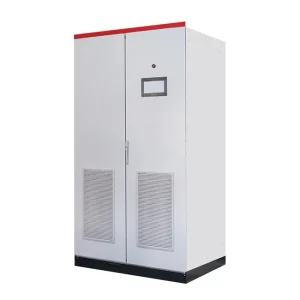
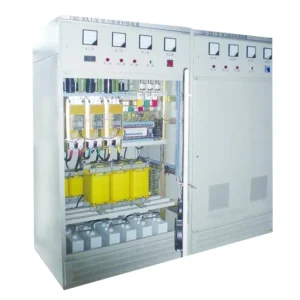
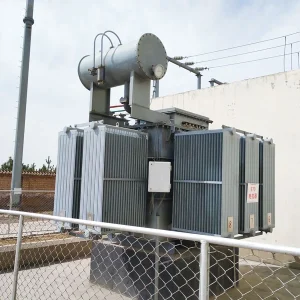
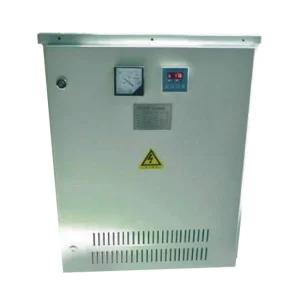
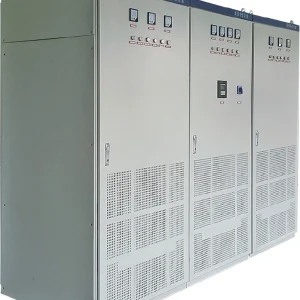
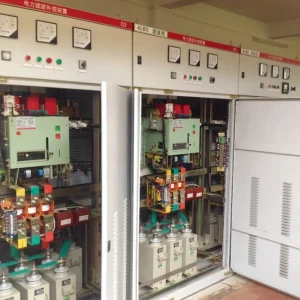
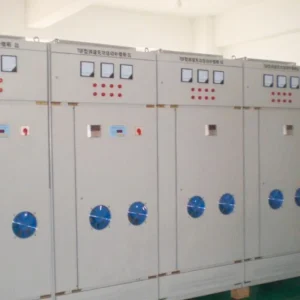
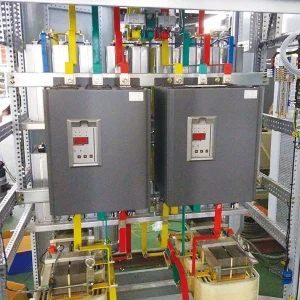
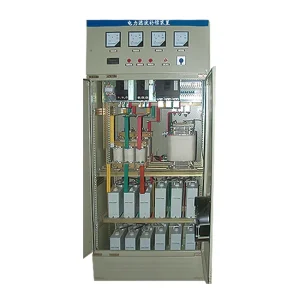
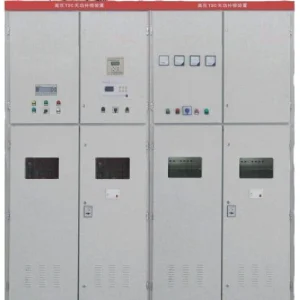
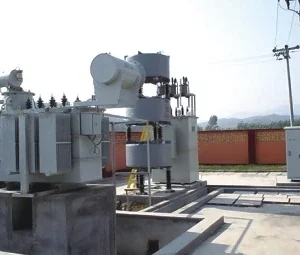
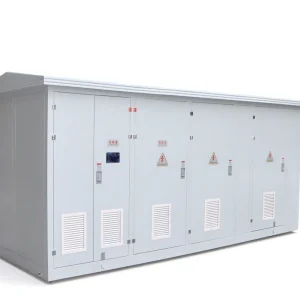
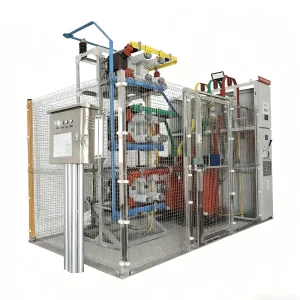
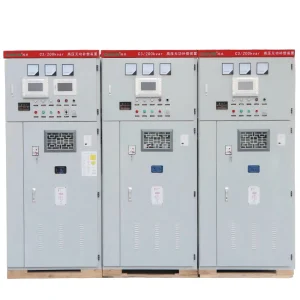
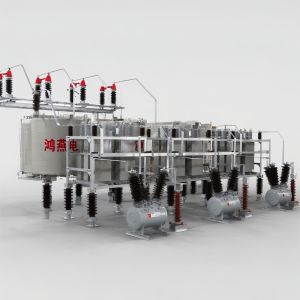
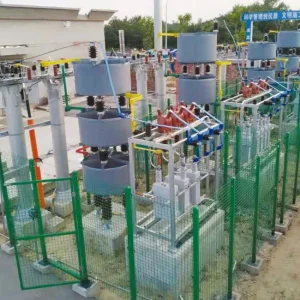
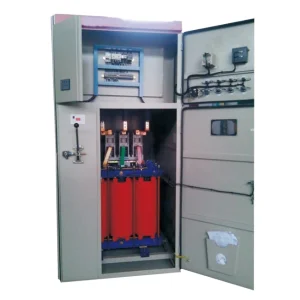
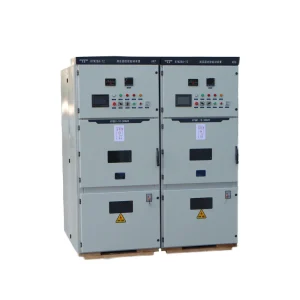
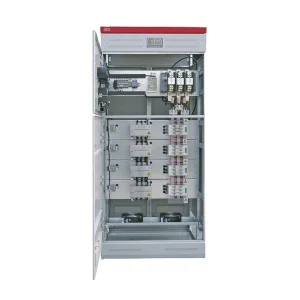
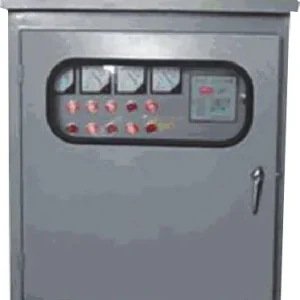
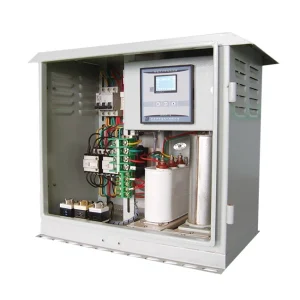
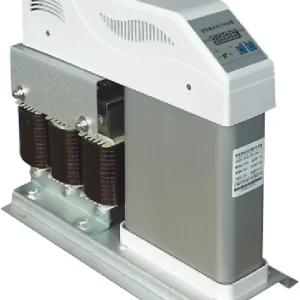
what is static var generator? A static var generator (SVG) is a shunt-connected power-electronic device that injects or absorbs reactive current so a plant can hold power factor and support bus voltage without waiting on contactor steps. Sections below cover the converter principle, bank and classical SVC naming, when plants pick SVG-class gear, and where CHYN’s HYSVGC hybrid package fits on a low-voltage board.

What a Static Var Generator Is
A static var generator is a converter-based shunt compensator that manufactures reactive current electronically instead of relying on a spinning synchronous condenser or on fixed blocks of capacitance alone.
In plant language, “static” simply means there is no rotating machine doing the var work. Reactive power (VAR) is the current component that motors, transformers, and many nonlinear loads force through cables and transformers even though it delivers little useful work at the shaft.
An SVG sits in parallel with the load or feeder, measures what the network needs, and supplies or absorbs that reactive component so upstream gear carries less useless current.
Catalogs reuse overlapping labels. The same converter idea shows up as an industrial SVG cabinet at low voltage and as a STATCOM at medium or transmission voltage.
Classical FACTS literature also uses “static var compensator” for thyristor TCR/TSC yards that change impedance rather than synthesize current with a voltage source converter (VSC). Keep the industrial SVG meaning on the converter path and treat classical SVC as a naming cousin, not a synonym.
The Job: Dynamic Reactive, Power Factor, and Voltage Support
An SVG’s day job is continuous reactive exchange: raise power factor toward the target, reduce reactive burden on transformers and cables, and help hold voltage when loads swing.
Power factor is the practical buying signal. When lagging current is high, apparent power (kVA) climbs even if kilowatts barely move, so feeders heat, breakers look “full,” and utility reactive charges appear.
An SVG injects capacitive vars when the plant is lagging, and it can absorb inductive vars when the network goes leading—something a capacitive bank cannot do by itself.
Voltage support is the twin outcome. Reactive current and bus voltage are tightly linked. When an arc welder, crane hoist, or large motor start pulls the bus down, a fast reactive source that still delivers current into a depressed voltage is more useful than a bank whose capacitive output falls with the square of voltage.
Typical load contexts match that job: welding and cranes, injection machines and elevators, large motors with variable duty, oil-field and drilling auxiliaries, HVAC and compressor halls, renewables on weak feeders, and precision manufacturing lines that hate flicker. The common thread is reactive demand that changes faster than a stepped bank can follow cleanly.
Static Var Generator Working Principle
An industrial SVG works as a voltage source converter (VSC) operated to control reactive current through a coupling reactor (or transformer at higher voltage).
A DC-link capacitor holds an internal DC bus. IGBT bridges switch that DC voltage into a synthesized AC waveform at the grid fundamental.
If the converter voltage is slightly larger than the grid voltage, capacitive (leading) current flows outward and the SVG supplies vars. If the converter voltage is slightly smaller, lagging current is drawn and the SVG absorbs vars.
In steady state there is almost no real-power exchange beyond converter losses, so the DC capacitor mainly circulates reactive energy rather than storing bulk energy the way a UPS battery would.
Buyers therefore hear “stepless” and “bidirectional” together. The converter can move continuously between capacitive and inductive output instead of jumping between contactor steps.
The same hardware family relates to active harmonic filters: a converter can be programmed for fundamental reactive current, harmonic current, or a split of both. The focus here stays on the reactive-power job.

How an SVG Differs from Stepped Capacitor Banks
A stepped capacitor bank corrects power factor by switching capacitive blocks in and out; an SVG synthesizes reactive current continuously and can move into inductive absorption when needed.
Banks remain the right first tool for many steady lagging loads. They are familiar, often lower first cost, and easy to explain on a bill of materials.
Their limits show up as soon as the load schedule is uneven. Correction arrives in discrete kvar steps, so the plant lives with residual over- or under-compensation between steps. Contactors wear with frequent operations.
A fixed or poorly staged bank can leave the feeder leading when motors drop off at night—exactly the field concern plant electricians raise when capacitors stay online while loads idle.
From the field: On Physics Forums, engineers note that a fixed capacitor bank’s reactive output tracks voltage squared, while an SVC or STATCOM can trim reactive power in a stepless way—useful language when a buyer is deciding whether “more capacitors” still answers a swinging bus.
| Criterion | Stepped capacitor bank | Industrial SVG (converter) | Classical thyristor SVC |
|---|---|---|---|
| Core hardware | Contactor- or thyristor-switched capacitors | IGBT voltage source converter (VSC) | Thyristor-controlled reactor (TCR) / TSC |
| Output shape | Capacitive steps | Stepless capacitive ↔ inductive | Variable impedance, inductive↔capacitive |
| Behavior under low voltage | Capacitive output falls with V² | Holds current by converter rating | Capacitive branch weakens with voltage |
| Best fit | Steady lagging PF | Fast / unbalanced / bidirectional needs | Utility or industrial FACTS yards |

For a deeper continuous-converter versus stepped-bank decision matrix, see STATCOM vs capacitor bank.
SVG vs Classical SVC and STATCOM Naming
In buyer language, an industrial SVG usually means a converter-based (VSC) reactive cabinet; a classical SVC usually means a thyristor variable-impedance system built from thyristor-controlled reactor (TCR) and TSC branches; STATCOM is the same converter idea at larger industrial or transmission scale.
what is static var compensator in FACTS notes often points to that classical SVC: a shunt-connected static var generator or absorber whose output exchanges capacitive or inductive current—typically for bus-voltage control—and is classified as a variable-impedance device. Educational pages describe TCR phase control and TSC switching as the building blocks.
Converter explainers then contrast STATCOM: a voltage source converter (VSC) replaces controllable reactors and switched capacitors, responds quickly, and keeps reactive current capability when voltage sags.
None of that means every RFQ line item labeled “SVG” is a STATCOM, or that every “SVC” quote is wrong for your plant. Ask which topology you are buying: stepped capacitors, thyristor impedance, or IGBT converter current.
Asian and export catalogs often sell low-voltage converter cabinets as “SVG,” while transmission RFQs say “STATCOM,” and older textbooks say “SVC” for thyristor yards. If your shortlist needs a typology walk-through rather than a definition, use types of static var compensator. Literature phrasing around “variable impedance type” belongs on variable impedance type static var generator.
When Plants Choose SVG-Class Gear
Plants choose SVG-class gear when reactive demand moves too fast for contactor banks, when they need inductive absorption as well as capacitive injection, or when voltage quality during swings matters as much as a monthly power-factor average.
Concrete triggers include:
- Impact and cyclic loads (cranes, welders, elevators, injection presses) that hammer PF and voltage every cycle of the process
- Nonlinear drive-heavy feeders where banks alone fight harmonics or resonance more than they help displacement PF
- Sites already living with leading-PF nights, light-flicker complaints, or transformer loading that tracks kvar more than kW
- Weak or renewable-heavy feeders that need continuous voltage support rather than occasional capacitive steps
Banks still win when the load is mostly steady lagging motors, when first cost dominates, and when operators are staffed for simple APFC staging. Classical SVC yards still appear on high-power industrial or utility projects where thyristor impedance packages and filter branches are the specified FACTS solution.
SVG-class cabinets sit in the middle for many LV and industrial distribution boards: converter speed without turning the project into a transmission STATCOM RFQ.

Application benefits of running compensators at all are covered separately in advantages of static var compensator. Mechanical cooling packages belong on cooling systems for static var compensators once the topology is already chosen.
When to Choose HYSVGC as Your SVG-Class Package
Choose the HYSVGC Series Hybrid Static Var Dynamic Compensation Device when your low-voltage board needs converter-speed SVG dynamics and high-capacity LC compensation in one coordinated package—not a bank-only panel and not a thyristor SVC yard.
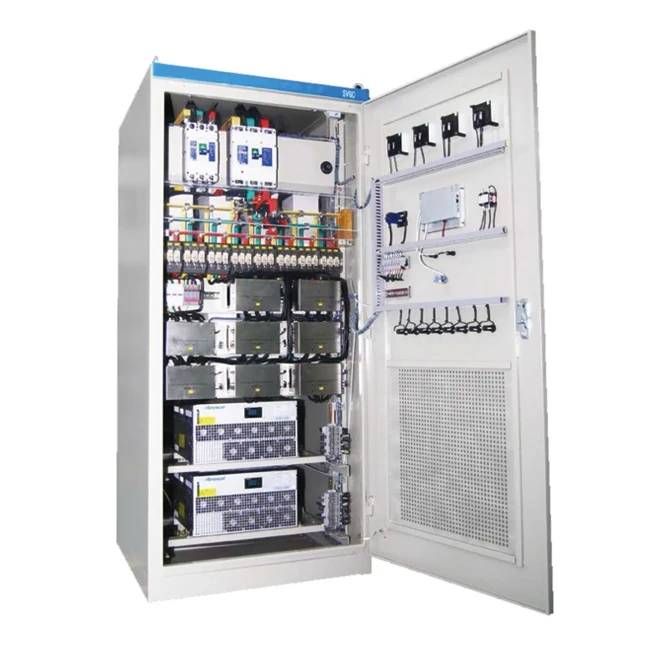
HYSVGC is built as a hybrid: SVG modules handle fast dynamic reactive regulation, LC branches carry large steady compensation with low losses, and the ICMS controller coordinates both so sudden load swings do not leave the feeder stuck under- or over-compensated.
Typical module range published on the product page covers 30 kvar–300 kvar, with rated voltage 380 V and working frequency about 20 kHz.
Published product figures for selection conversations include the values below.
| Parameter | Published HYSVGC value |
|---|---|
| Rated voltage | 380 V (fluctuation −40% to +20%) |
| Frequency | 50 Hz ±2 Hz |
| Compensation capacity | 50 / 75 / 100 / 200 kvar (expandable) |
| Typical module range | 30 kvar–300 kvar |
| Compensation accuracy | ≥97% |
| Power factor target | Adjustable up to 0.99 |
| Working frequency | ~20 kHz |
| Harmonic capability (SVG module) | 2nd–13th, depending on system requirements |
| Installation / cooling / IP | Wall-, floor-, or cabinet-mounted; intelligent air cooling; IP20 |
Fit this series when the plant story matches the product’s recommended applications—impact loads, variable motors, nonlinear equipment, voltage-quality needs on LV distribution, renewables, HVAC and compressor halls—and when you want hybrid SVG+LC rather than a converter-only or bank-only bill of materials.
It is not the shortlist item for a utility-scale STATCOM RFQ, and it is overkill if a slow, steady lagging feeder is already happy with a well-staged capacitor bank.
Browse the wider converter and hybrid family on the Active Power Filter Series hub after the definition and fit criteria are clear.
FAQ
What is a static var generator in plant language?
It is a shunt power-electronic cabinet that injects or absorbs reactive current so power factor and voltage stay usable while loads change—without depending only on contactor-switched capacitor steps.
How does a static var generator work?
Static var generator working principle: a voltage source converter (VSC) synthesizes an AC voltage behind a coupling reactor. Making that voltage slightly higher or lower than the grid voltage pushes capacitive vars out or pulls inductive vars in, continuously.
Is a static var generator the same as a static var compensator (SVC)?
Not safely. Many industrial catalogs use “SVG” for converter cabinets, while classical “SVC” or “static var compensator” often means thyristor TCR/TSC variable-impedance gear. Ask for the topology on the datasheet.
How does an SVG differ from a capacitor bank?
Banks switch capacitive steps; an SVG is stepless and can move into inductive absorption. Banks are still excellent for steady lagging loads; SVG-class gear fits when dynamics or bidirectional vars dominate.
Is an industrial SVG the same as a STATCOM?
Same converter idea, different scale and packaging. Low-voltage plants usually buy SVG cabinets in kvar; large industrial or transmission projects usually say STATCOM in Mvar.
When should a plant choose SVG-class equipment?
When reactive demand swings with the process, when leading/lagging both appear, or when voltage quality during dips matters as much as average PF—after you have ruled out a simple bank as insufficient.
What does CHYN HYSVGC add as an SVG-class package?
It pairs SVG modules with LC branches under one controller for LV distribution, with published capacities such as 50–200 kvar expandable, compensation accuracy ≥97%, and PF adjustable up to 0.99.
Does an SVG improve power factor?
Yes—that is a primary job. By supplying or absorbing the reactive current locally, the upstream network carries less reactive burden and metered power factor can move toward the plant target.
References
- SpecForge / SourceBySpec — Static VAR Generator Guide
- PSMA Consulting — Static VAR Compensators (SVC)
- Electrical Technology — What is Static VAR Compensator (SVC)?
- IEEE Technology Navigator — Static VAr Compensators
- Physics Forums — Hydroelectric powerstation with Asynchronous or synchronous generator