
 Zhejiang Hongyan Electric Co., Ltd.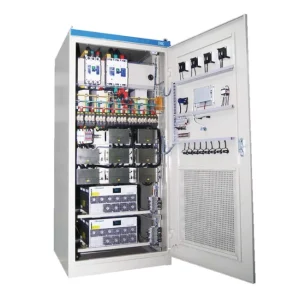
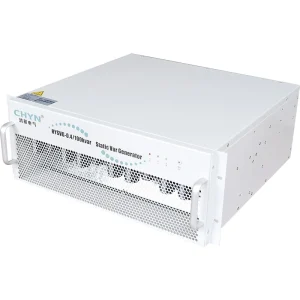
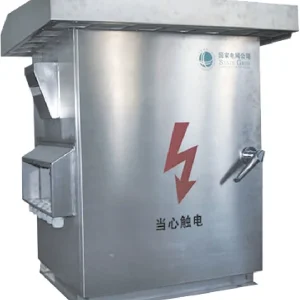
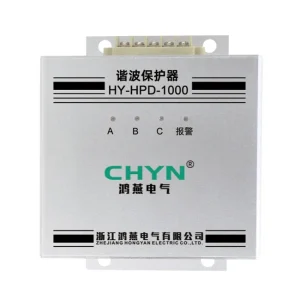
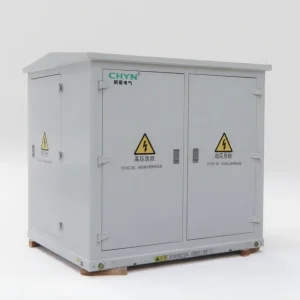
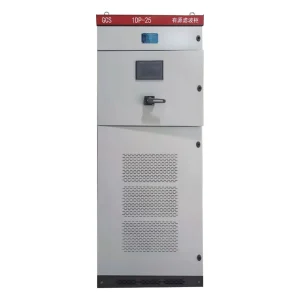
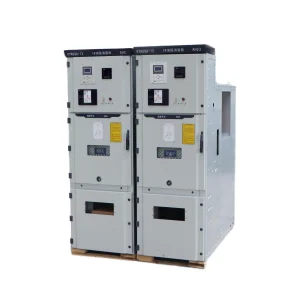
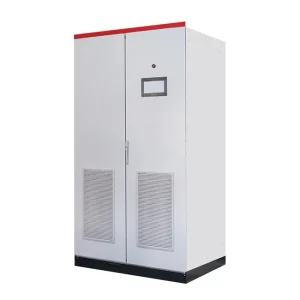
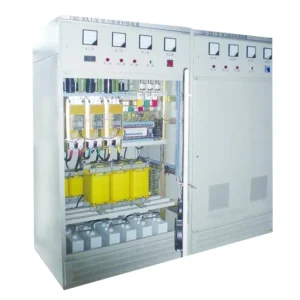
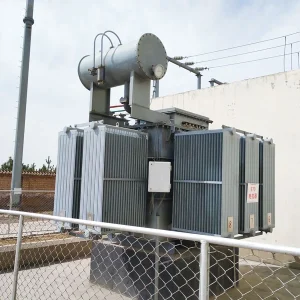
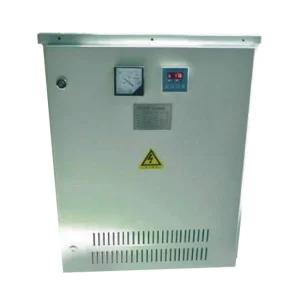
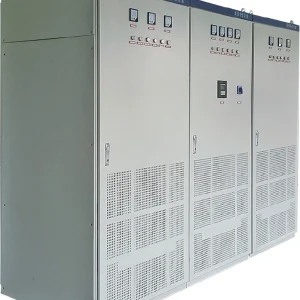
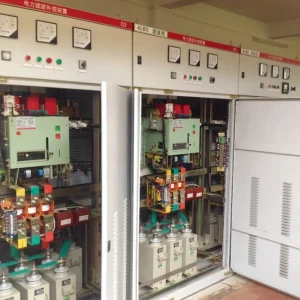
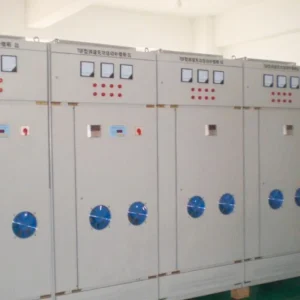
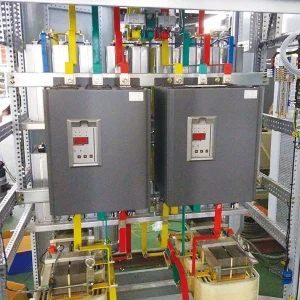
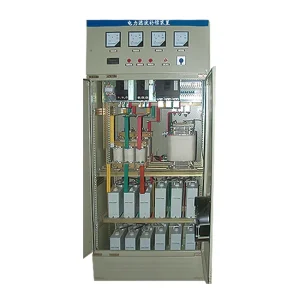
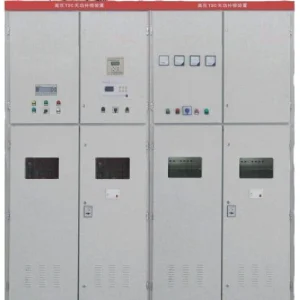
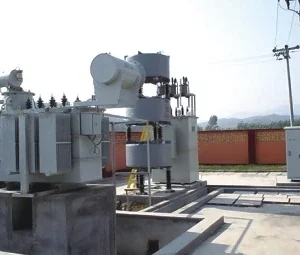
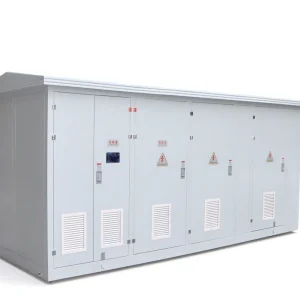
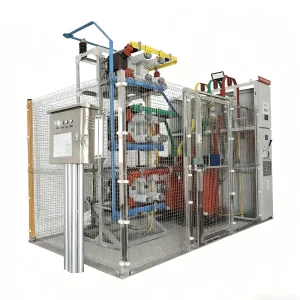
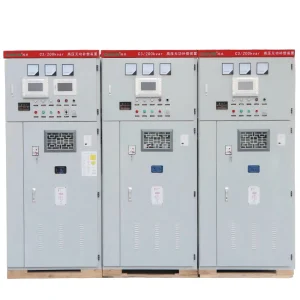
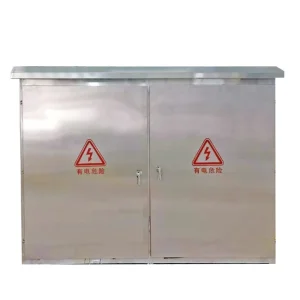
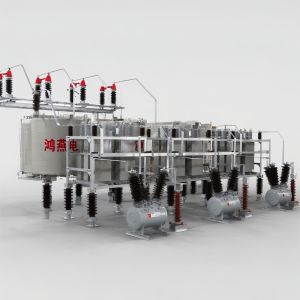
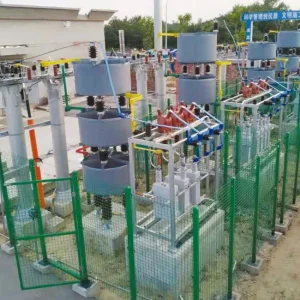
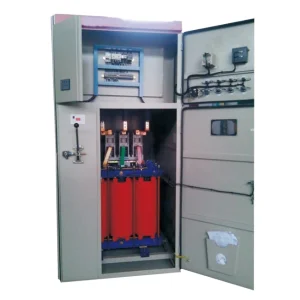
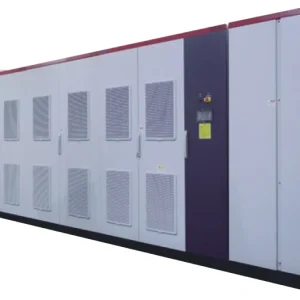
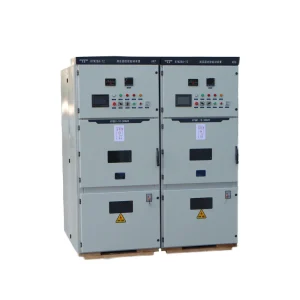
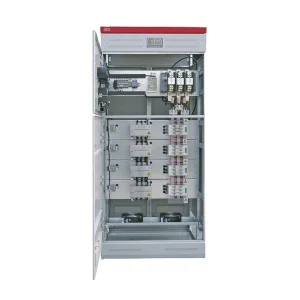
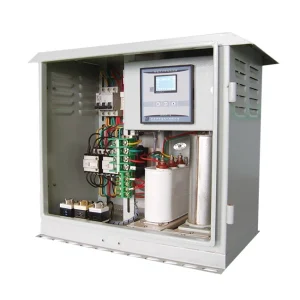
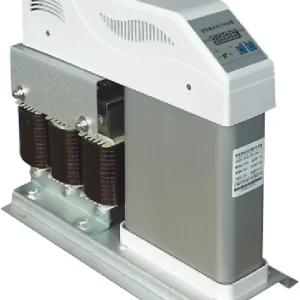
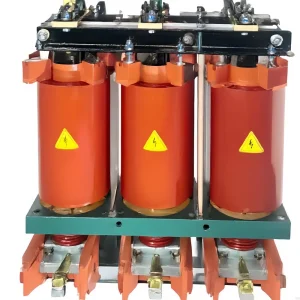
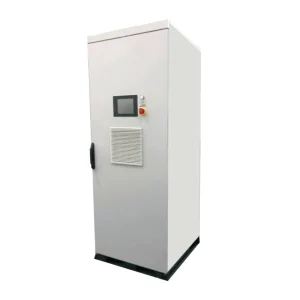
The practical types of static var compensator fall into two families: thyristor impedance packages built from reactor and capacitor branches, and converter-type STATCOM/SVG units that synthesize reactive current. This guide maps TCR, TSC, FC+TCR, and TSC-TCR layouts, clarifies SVC vs STATCOM naming, and gives selection cues before pointing to an HV MCR-type package when that shortlist fits.
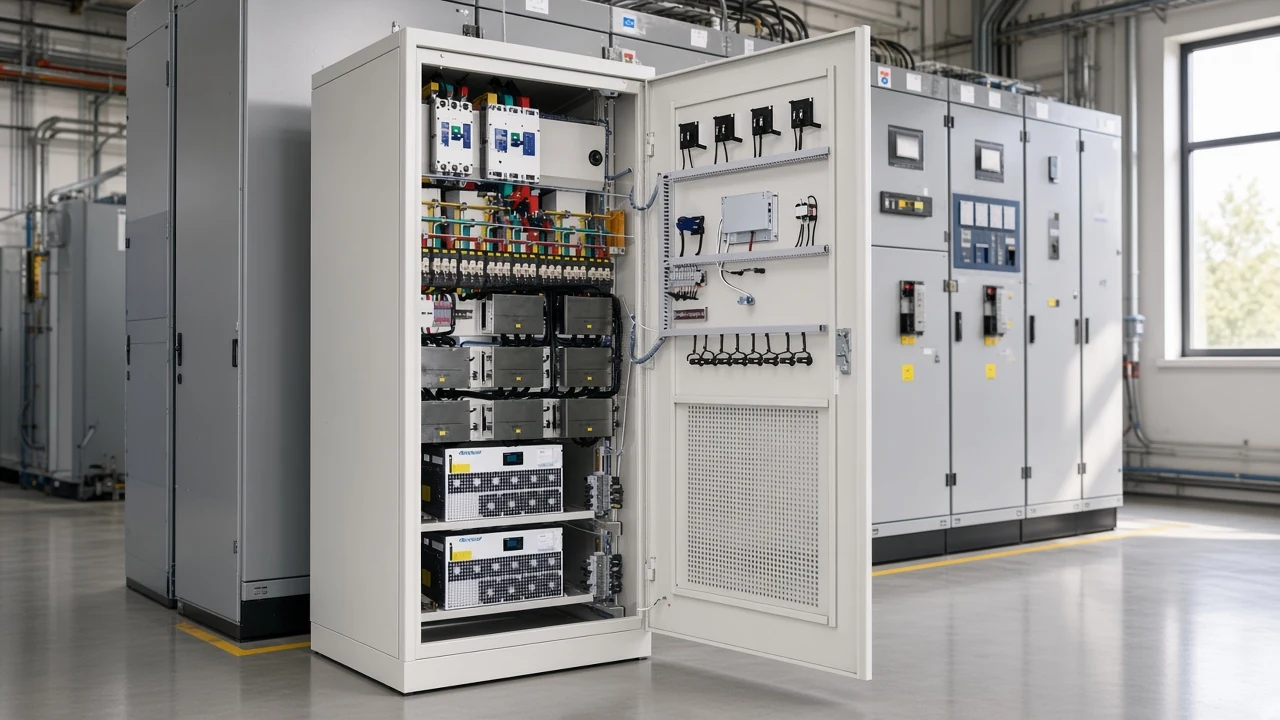
Core Types of Static Var Compensator (TCR to STATCOM)
Most buyer shortlists start with thyristor branches—TCR and TSC—then with the common packages that combine them. Converter-type STATCOM/SVG units sit beside classic SVC impedance designs, not inside them.
A thyristor-controlled reactor (TCR) is a shunt reactor in series with anti-parallel thyristors.
Delaying the firing angle absorbs a continuously adjustable inductive reactive current. That continuous trim is why TCR shows up in so many utility and industrial SVC sketches.
A thyristor-switched reactor (TSR) is the step-only cousin. The reactor is essentially on or off, without the continuous dial.
A thyristor-switched capacitor (TSC) works differently.
Capacitors switch fully in or out through thyristor valves. You get capacitive steps, not a continuously dialed capacitive current.
Transient-free switching matters. Valve timing must respect residual capacitor voltage.
Two packaged combinations dominate textbooks and consulting notes:
- FC-TCR — fixed capacitors (often also tuned filters) supply a capacitive base; the TCR absorbs a controllable inductive amount so net VAR moves smoothly.
- TSC-TCR — TSC banks provide capacitive steps while a smaller TCR fine-tunes continuously.
Literature frames TSC-TCR as more flexible, with a smaller reactor and lower harmonic burden than a large always-on FC-TCR.
A TSC step can take up to about one cycle.
Converter-type units—STATCOM in transmission language, often a static var generator in industrial catalogs—use a voltage-source converter to synthesize reactive current. They are a different family when the buyer needs converter behavior rather than variable impedance.
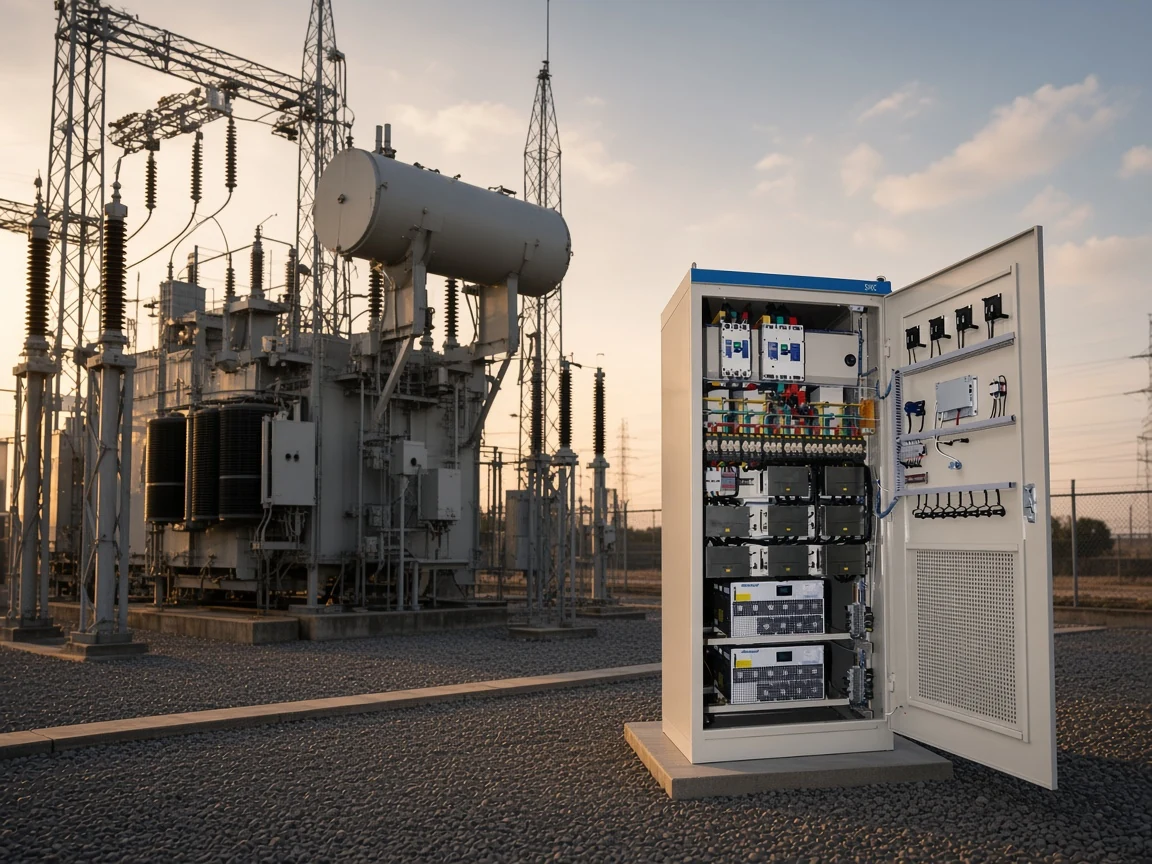
Type taxonomy at a glance
| Type | Control style | Primary role | Buyer note |
|---|---|---|---|
| TCR | Continuous (firing angle) | Absorb inductive VARs | Core trim branch inside many SVCs |
| TSR | Step on/off | Absorb inductive VARs in steps | Simpler than TCR; less continuous |
| TSC | Step on/off | Supply capacitive VARs in steps | Needs careful switching |
| FC-TCR | Continuous net output | Caps base + TCR trim | Watch circulating losses/harmonics |
| TSC-TCR | Steps + continuous trim | Capacitive steps + TCR fine control | Often preferred for standby losses |
| STATCOM / SVG | Converter current control | Inject or absorb reactive current | Different family from thyristor SVC |
Mechanically switched capacitors or reactors still appear beside these packages for steady-state VARs. They are the slow neighbors that hold average load while the dynamic package keeps headroom.
How SVC, SVG, and STATCOM Names Map in Industry
Industrial naming is messy. “SVC” on a datasheet may mean a thyristor or MCR impedance package.
“SVG” or “STATCOM” usually points at a converter-class product—even when sales decks blur the words.
An SVC vs STATCOM comparison on paper is really a family comparison, not a badge contest.
Use this map when reading RFQs and OEM catalogs:
- SVC (classic) — shunt static VAR generator/absorber built as variable impedance: TCR/TSC/FC combinations, sometimes MCR-type magnetic control instead of thyristor firing.
- STATCOM — shunt converter that behaves like a controllable voltage source for reactive support; common in transmission FACTS language.
- SVG (static var generator) — industrial label that usually tracks the converter/STATCOM idea on LV or MV distribution boards, not a TCR yard.
- Hybrid SVG + LC — soft note only: some sites pair a fast converter module with a larger LC block when bulk vars and fast trim both matter.
A one-line boundary: comparing STATCOM to a plain capacitor bank is a different buying job than typing thyristor families.
Another one-line boundary: a pure “what is a static var generator” definition article is also a different job; here SVG appears only as a naming peer to STATCOM.
If a vendor says “variable impedance type,” they are almost always pointing at the thyristor/MCR impedance family, not at a VSC SVG.
When to Choose Each Static Var Compensator Type
Choose the type by load speed, whether you need continuous trim, how much harmonic filtering you can host, and whether depressed-voltage support is part of the duty.
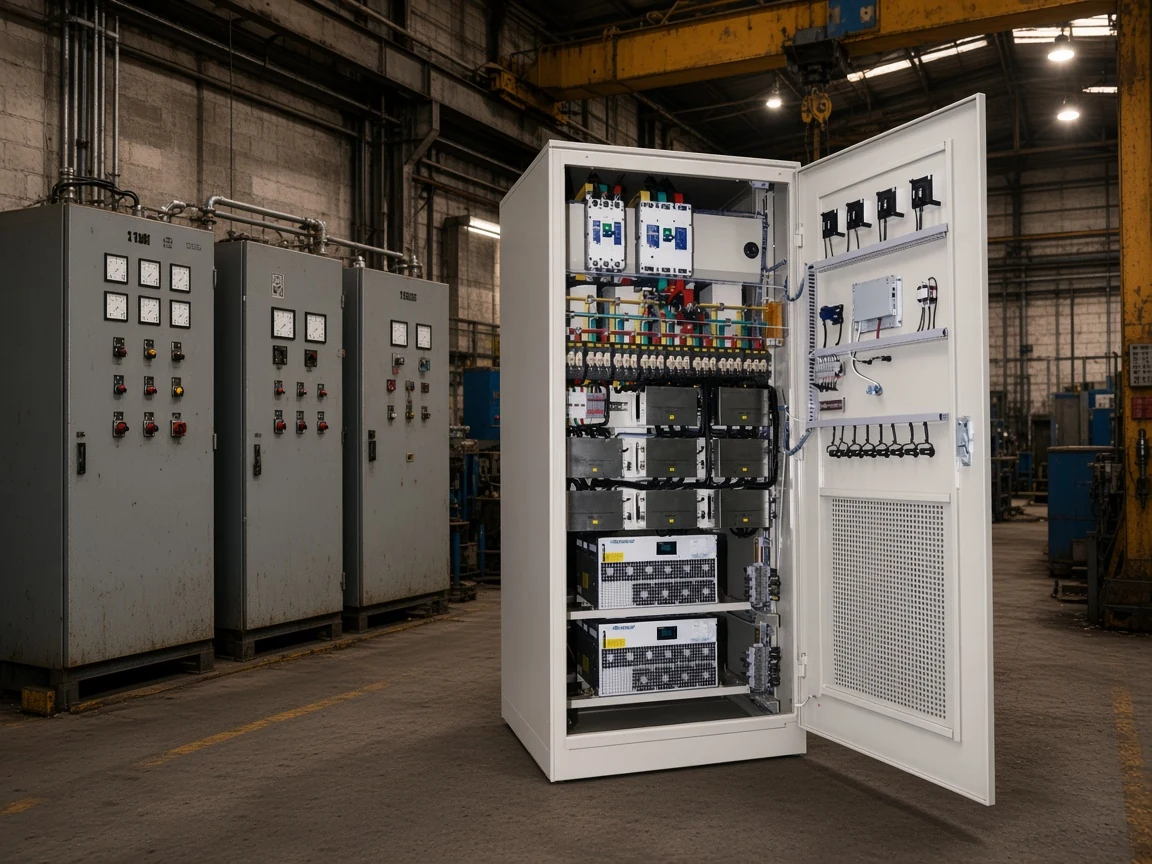
When to choose which type
| Situation | Prefer | Why |
|---|---|---|
| Fast inductive swings / flicker near an arc furnace or rolling mill | TCR-centered SVC (often FC-TCR or TSC-TCR) | Continuous inductive absorption tracks violent VAR swings |
| Need capacitive steps plus fine trim with lower standby reactor losses | TSC-TCR | Smaller reactor rating and lower harmonics than large FC-TCR in many designs |
| Simple continuous capacitive-to-inductive net range on a fixed cap base | FC-TCR | Straightforward net control; budget filters for TCR harmonics |
| Only coarse capacitive steps, little continuous need | TSC-heavy package | Step control may be enough if load changes are staged |
| Strong need for support when bus voltage is already depressed | STATCOM / SVG class | Converter current support is the usual literature contrast |
| HV feeder needs dynamic PF + filtering without classic TCR complexity | MCR-type HV package (see HYMSVC) | Magnetic control + FC filtering as a published alternative path |
Tip: Many operators keep a dynamic compensator near a low steady output so the full range stays available for contingencies, while mechanically switched banks carry average vars (Engineeringa2z on SVC operating practice). Buying only “maximum MVAR on the nameplate” without that operating idea wastes dynamic headroom.
For a plant that only fights a steady lagging power factor with slow load changes, a thyristor SVC of any flavor may be oversized compared with a fixed capacitor bank.
For a furnace bay that punches the voltage every heat, the types table above matters immediately.
Harmonics, Filters, and Operating Caveats by Type
TCR branches create harmonic currents whenever conduction is partial. Packages almost always include tuned or high-pass filter branches—often the same capacitors that supply fundamental VARs.
TSC branches, once fully on, are comparatively quiet in steady state. Switching windows are unforgiving.
That is also why so many designs leave capacitors effectively “in” as a base and use the reactor side as the continuous knob.
Continuous firing-angle control fits reactors better than capacitors.
From the field: In plant discussions, engineers contrast fixed capacitor banks that supply reactive power roughly with the square of voltage against SVC/STATCOM packages that can trim reactive power in a stepless way (Physics Forums reactive-support thread). That contrast is why type choice starts with “do I need continuous trim?” rather than “which acronym is trendiest.”
STATCOM/SVG packages shift the harmonic conversation to converter switching and filter design.
Cooling plant, valve house, and outdoor yard layout also change with topology and scale.
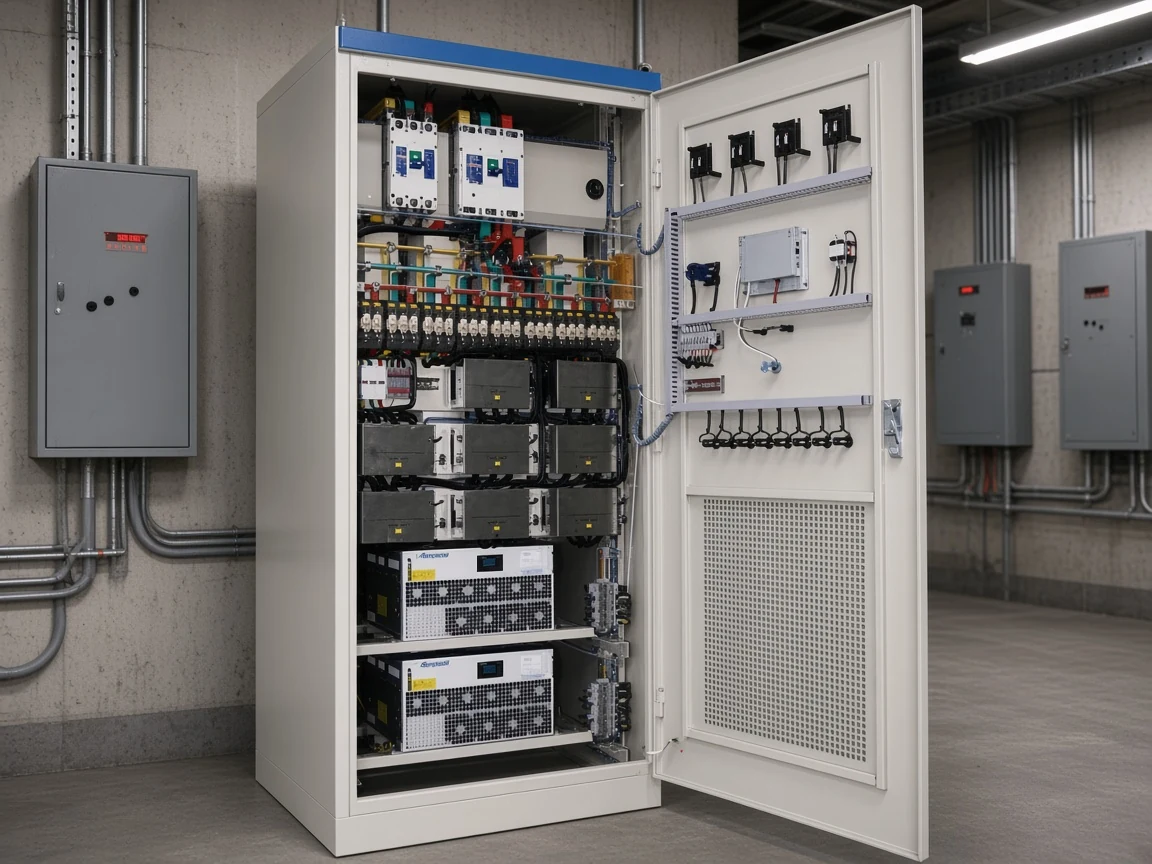
Which HYMSVC Package Fits These SVC Type Choices
Choose the HYMSVC Series High-Voltage Dynamic Filtering and Compensation Device when your shortlist is an HV dynamic compensator that needs stepless reactive support plus filtering, and you want an MCR-type SVC path instead of a complex classic TCR-type build.
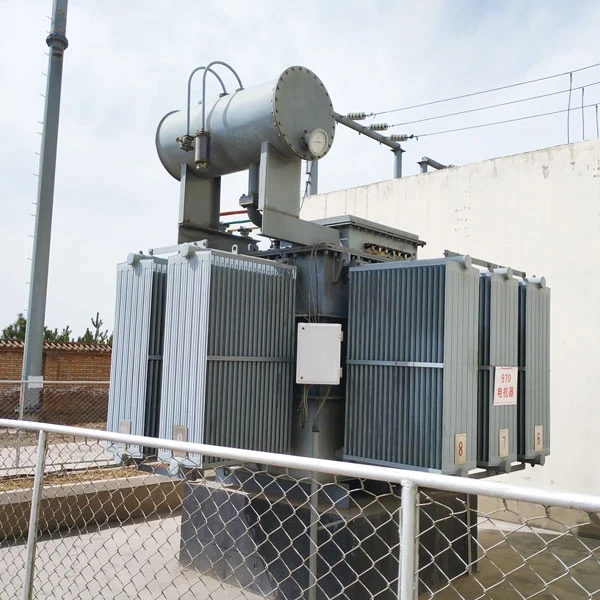
On the live product page, HYMSVC is framed as an MCR (magnetic-controlled reactor) SVC.
DC excitation changes reactor inductance in real time.
An FC filtering branch supplies capacitive support and absorbs characteristic harmonics.
A DSP control/protection unit closes the loop.
Published series claims include reaction times under 0.1 s.
Control-system current stays below 1% of the main circuit.
THDI is typically under 5%.
Post-compensation power factor is at or above 0.95.
Indoor/outdoor temperature envelopes and altitude limits are stated for installation planning.
That fit is deliberate against two poor matches on the same page: discrete capacitor switching that hunts accuracy and inrush, and earlier TCR-type SVC builds that run expensive, complex, and maintenance-heavy.
HYMSVC is not the pick for a pure LV modular SVG cabinet, for mechanically switched steady-state capacitors only, or when the specification already locks a voltage-source STATCOM topology.
Parent category context for nearby converter and hybrid families lives under the Active Power Filter Series hub.
Keep HYMSVC as the HV MCR-type recommendation for this types map.
Related Decisions: Cooling, Advantages, and Naming Edges
Cooling plant sizing follows topology and scale—see cooling systems for static var compensators when the shortlist is already chosen.
Application benefits of running an SVC at all are covered in advantages of static var compensator.
If a datasheet uses “variable impedance type” language, use variable impedance type static var generator as the edge article.
FAQ
What is the difference between SVC and STATCOM?
An SVC in the classic sense is a variable-impedance shunt package—thyristor (or MCR) control of reactors and capacitors.
A STATCOM is a converter-type shunt device that synthesizes reactive current.
They solve overlapping voltage/reactive jobs with different hardware families.
Why do people say STATCOM is better than SVC?
The common literature contrast is performance under depressed bus voltage and converter response behavior—not a universal cost or maintenance win.
If your duty is large continuous inductive absorption on a stiff bus, a TCR-centered SVC can still be the rational shortlist.
What is the difference between TCR and TSC?
TCR continuously trims inductive absorption with firing angle.
TSC switches capacitive banks fully on or off.
One is a smooth inductive dial; the other is capacitive steps.
When should I choose FC-TCR vs TSC-TCR?
FC-TCR is the straightforward fixed-cap-plus-trim pattern.
TSC-TCR is often chosen when designers want capacitive steps, a smaller reactor, lower harmonics, and lower standby losses.
Capacitive steps are not as immediate as TCR half-cycle trim.
Why is the capacitor often left in and the reactor controlled?
Continuous firing-angle control fits reactor current.
Capacitors are normally switched as wholes.
Many packages keep a capacitive base in service and let the reactor absorb the adjustable portion so the net VAR moves smoothly.
Is an SVG the same as an SVC?
Usually no in industrial catalogs.
A static var generator typically tracks converter or STATCOM-class products.
SVC typically tracks impedance-type packages.
Always read the topology section, not only the acronym on the cover.
Does a reactor-only SVC need a capacitor bank?
A reactor-only leftover can absorb inductive VARs, but it is not automatically a full FC-TCR or TSC-TCR package.
If the site also needs capacitive supply and filtering, the capacitor/filter branch has to be designed in.
Where does HYMSVC fit among these types?
HYMSVC is an HV MCR-type dynamic filtering and compensation device: magnetic-controlled inductive trim plus an FC filtering branch.
Treat it as an SVC-family package alternative to classic TCR complexity when the voltage class and filtering need match the published series scope.
References
- Static Var Compensator — analysis, configuration and modelling (Engineeringa2z)
- What is Static VAR Compensator (SVC)? (Electrical Technology)
- FACTS Module-3 — SVC configurations (GCEKJR course PDF)
- Comparative analysis of SVC configurations including TSC-TCR (JESA / DOI)
- Static VAr compensators — IEEE Technology Navigator topic
- Physics Forums discussion contrasting fixed capacitor banks with SVC/STATCOM control