
 Zhejiang Hongyan Electric Co., Ltd.
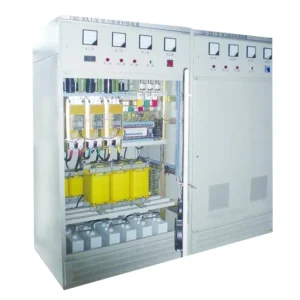
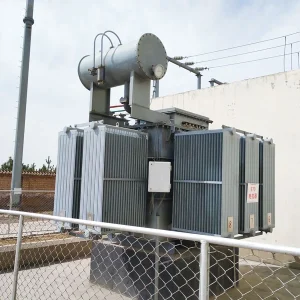
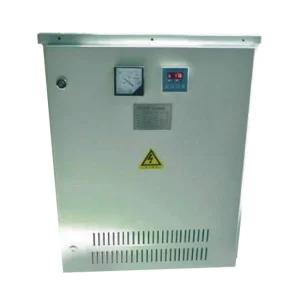
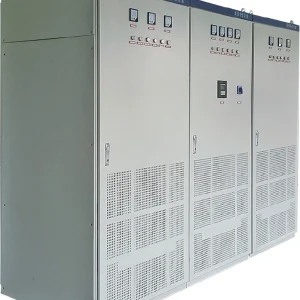
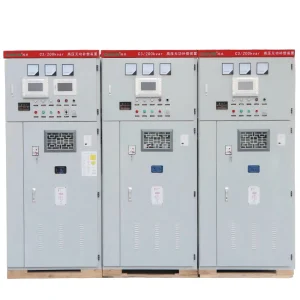
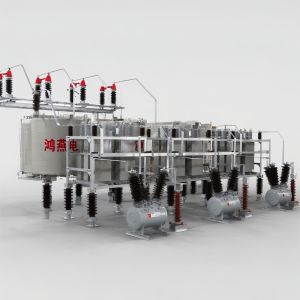
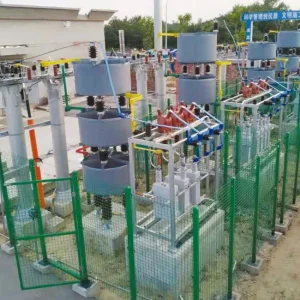
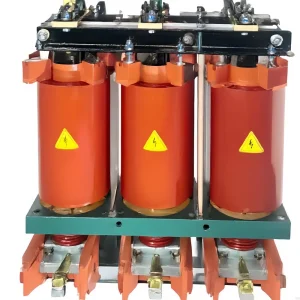
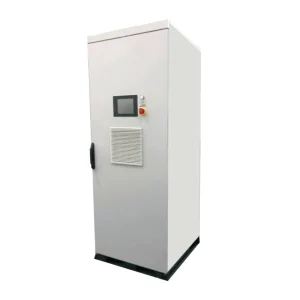
Choose a STATCOM-class converter when the bus needs continuous bidirectional Reactive power / vars and strong dynamic Voltage support / sag; keep a capacitor bank when steady Power factor correction at lowest cost is enough. That is the practical statcom vs capacitor bank decision for industrial buyers. This comparison walks a criteria matrix, dynamics, harmonics, and naming for static var compensator vs capacitor bank and static var compensator vs statcom, then when HYSVG Series HV fits.
Criteria Matrix: STATCOM vs Capacitor Bank
Dynamics, harmonics, voltage support, and cost separate the two options on an industrial bus.
| Criterion | STATCOM / industrial SVG | Shunt capacitor bank |
|---|---|---|
| Control shape | Continuous bidirectional vars via Voltage-source converter (VSC) | Fixed or stepped capacitive impedance |
| Dynamics | Millisecond-class converter response | Contactor/breaker steps with switching delay |
| Voltage support / sag | Reactive current can stay near rating as voltage falls | Capacitive kvar falls roughly with voltage squared |
| Harmonics / resonance | No plain fixed-impedance LC bank trap | Undetuned banks can resonate with non-linear loads |
| Cost / complexity | Higher first cost and converter engineering | Lower first cost; simpler for steady motors |
| Best starting fit | Fast swings, bipolar vars, weak-bus support | Steady lagging PF on low-distortion feeders |
Scan this matrix before arguing brand preference. A bank that wins on cost can still lose on sag support or resonance. A converter that wins on dynamics can still be oversized for a quiet motor plant.
Dynamics: Continuous Converter Vars vs Stepped Bank Switching
Converters change vars continuously on a fast timescale; banks move in delayed steps.
A STATCOM is a shunt Voltage-source converter (VSC) that can supply and absorb capacitive and inductive vars. Encyclopedia framing describes millisecond-scale output change and continuous bidirectional exchange, which is why the device fits dynamic and fault-support jobs better than a fixed on/off bank.
A shunt capacitor bank is different hardware. It is capacitive impedance—fixed or switched in discrete kvar blocks. Automatic banks still wait on sensing, contactors, and discharge constraints, so the step is delayed relative to a converter cycle.
Research on distribution hybrids notes the same split: switched capacitors are cheap but delayed, while a D-STATCOM-class converter can act within an AC cycle. That is the dynamics column of the matrix—not a claim that every plant needs a converter.
Voltage Support When the Bus Sags
Bank kvar falls with voltage squared; STATCOM-class current support holds up better under undervoltage.
Capacitive reactive output scales with the square of bus voltage. When the bus sags, the bank gives less help exactly when voltage support is most needed. That V² behavior is fundamental, not a brand quirk.
A STATCOM-class converter can keep reactive current closer to its rating as voltage falls, so support decreases more nearly linearly with voltage rather than with voltage squared. Comparative SVC versus STATCOM notes make the same point: converter STATCOM packages hold up better under severely depressed voltage than classic variable-impedance capacitive branches.
Use this criterion when the enquiry mentions weak feeders, frequent dips, or process trips during undervoltage—not when the only bill complaint is a steady lagging PF on a stiff bus.
Harmonics and Resonance Risk in the Comparison
Undetuned banks can resonate with non-linear loads; converters do not create the same fixed-impedance trap.
From the field: Fixed capacitor banks deliver reactive power that falls with the square of voltage, while SVC/STATCOM-class devices can provide stepless reactive control. — Physics Forums discussion on fixed caps vs stepless compensation
Practitioners also warn that plain banks on harmonic-rich plants can amplify drive current and overload capacitors. A converter path avoids that fixed LC resonance signature. It still does not replace a measured harmonic-filter design when THD—not bipolar vars—owns the project.
For the filter-versus-bank decision itself, keep one live boundary: harmonic filter vs capacitor bank. Do not clone that matrix here.
Naming Clarity: SVG, STATCOM, and Classic SVC
Industrial SVG often behaves like STATCOM; classic SVC is related but not catalogued here.
Buyers searching static var compensator vs capacitor bank are usually asking the same stepped-impedance versus continuous-compensation question this page owns. Buyers searching static var compensator vs statcom need naming hygiene only: an industrial SVG (static var generator) typically names converter-class continuous vars in the STATCOM family, while a classic SVC is a thyristor variable-impedance package (TCR/TSC family).
This article does not become a types-of-static-var-compensator taxonomy. A separate upcoming definition piece will cover what a static var generator is; here the SVG label only clarifies the STATCOM side of the vs-bank choice.
Cooling media and valve-room design for converter packages belong in the live cooling systems for static var compensators guide—one sentence is enough here.
When to Choose a Bank, a STATCOM, or Both
Steady PF → bank; fast swings/sags → STATCOM/SVG; mixed loads → hybrid.
| Plant situation | Prefer capacitor bank | Prefer STATCOM / SVG | Prefer both / staged |
|---|---|---|---|
| Steady motors, lagging PF, low distortion | Yes | No | — |
| Lowest CAPEX and simple maintenance | Yes | No | — |
| Rapid load swings / impact loads | No | Yes | Bank for baseline kvar + converter for swings |
| Need continuous inductive and capacitive vars | No | Yes | — |
| Weak bus / frequent voltage dips | Weak | Yes | Study required |
| Undetuned bank on drive-heavy bus | Risky | Converter or filter path | See filter-vs-bank article |
| Bulk steady kvar plus local dynamics | Partial | Partial | Hybrid bank + D-STATCOM / SVG pattern |
Many sites keep switched banks on quiet feeders and place a converter on the worst dynamic bus. University hybrid sizing work describes the same pattern: cheap switched capacitors for bulk delayed energy, plus a smaller fast converter for cycle-scale swings. That is coordination, not indecision.
Bank how-to depth stays on live siblings—how do capacitor banks work, how to size a capacitor bank, and high voltage capacitor bank design—one sentence each is enough so this page stays on the decision.
When HYSVG Fits the STATCOM Side of This Comparison
Choose HYSVG when continuous inductive and capacitive vars are required beyond switched banks on a medium-voltage industrial bus.
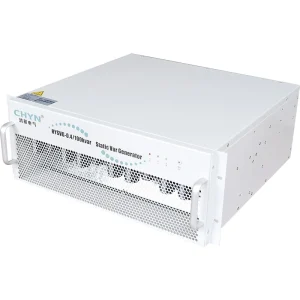
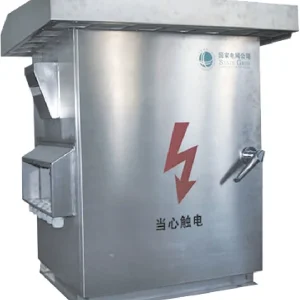
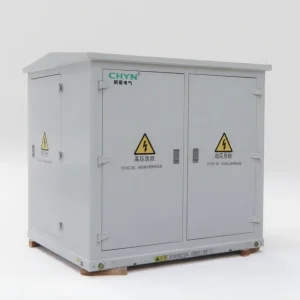
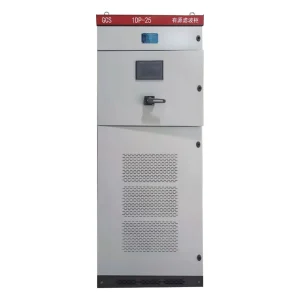
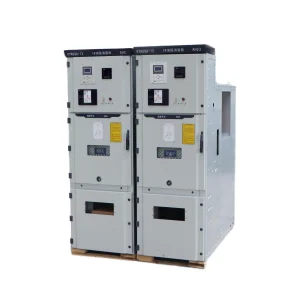
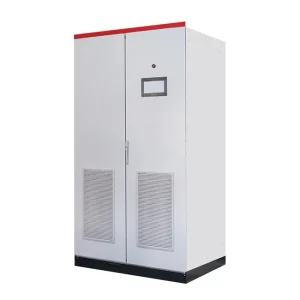
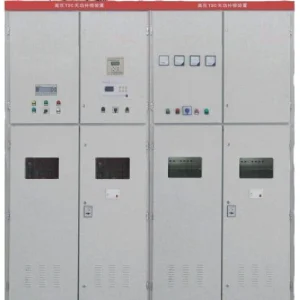
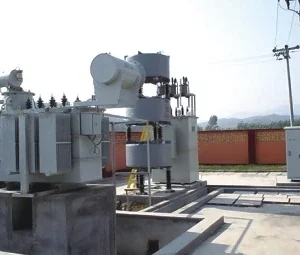
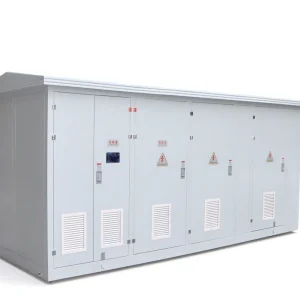
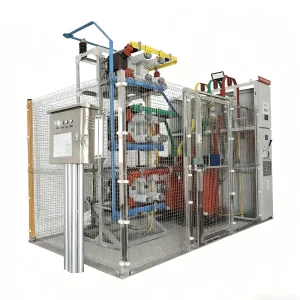
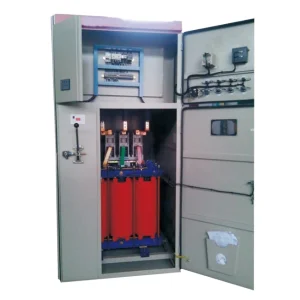
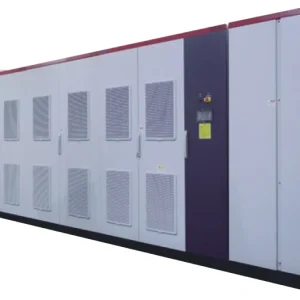
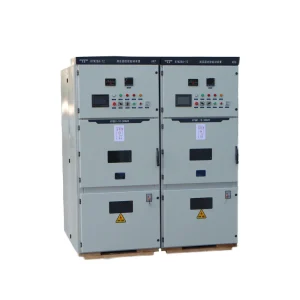
The HYSVG Series High Voltage Dynamic Reactive Power Compensation Device is CHYN’s published HYSVG Series HV package for that STATCOM-side job. The live page states fast, continuously adjustable capacitive and inductive reactive power for 6 kV to 35 kV networks where load changes, voltage fluctuation, or power-factor requirements exceed conventional switched capacitor banks.
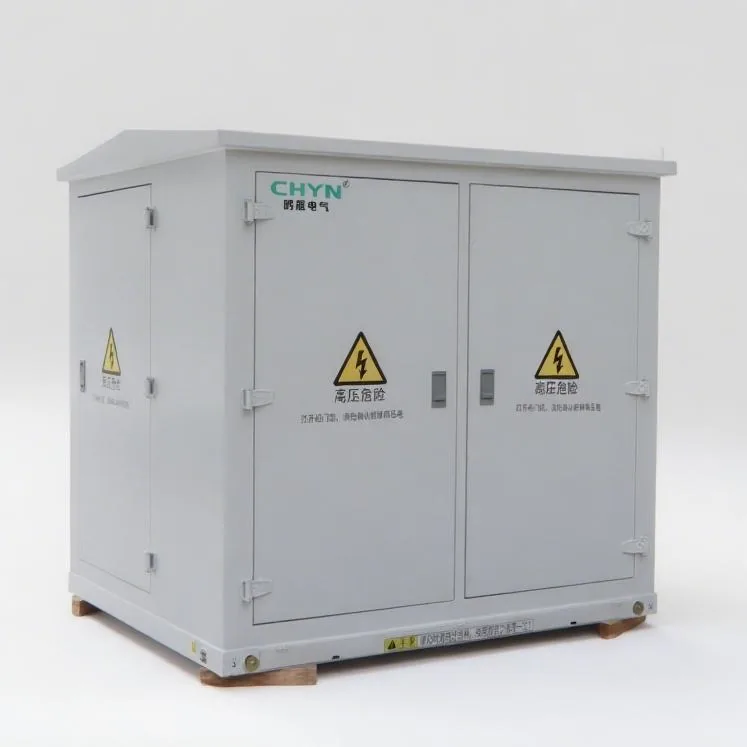
Published HYSVG parameters from the live product page are summarized below.
| Published HYSVG item | Page value |
|---|---|
| Rated operating voltage | 6 kV, 10 kV, 27.5 kV, 35 kV |
| Rated capacity | ±1 ~ ±100 Mvar |
| Output range | Continuous inductive ↔ capacitive within rating |
| Overload | 1.2 × rated for 1 min |
| Efficiency | ≥ 99.2% under rated conditions |
| Cooling | Advanced forced air cooling |
Select HYSVG when the STATCOM column of the decision table is already winning and the voltage class matches. Do not select it as a generic substitute for every low-voltage wall-mount bank, and do not treat it as a thyristor SVC types catalog.
Browse the parent Active Power Filter Series hub when the enquiry may also involve hybrid or low-voltage SVG siblings. Bring measured PF and voltage-swing data when you enquire.
FAQ
What is the core difference in statcom vs capacitor bank hardware?
A STATCOM is a shunt Voltage-source converter (VSC) that continuously supplies or absorbs capacitive and inductive vars. A capacitor bank is fixed or stepped capacitive impedance that supplies leading kvar in blocks.
Why does bank support weaken during a voltage sag?
Capacitive reactive output scales with the square of bus voltage, so a sag cuts bank kvar hard. A STATCOM-class converter can keep reactive current closer to rating as voltage falls.
When does a capacitor bank still beat a STATCOM?
When the plant needs steady power factor correction on largely linear loads, and lowest first cost plus simple maintenance matter more than continuous bipolar dynamics.
Can I combine a capacitor bank with a STATCOM or SVG?
Yes. A common hybrid keeps banks for bulk baseline kvar and adds a STATCOM, SVG, or D-STATCOM-class converter for fast swings.
Is an industrial SVG the same as a STATCOM?
For industrial naming, an SVG usually behaves like a STATCOM-class converter. This page does not open a standalone “what is SVG” definition essay.
How is a classic SVC different from a STATCOM in one sentence?
A classic SVC is a thyristor variable-impedance package; a STATCOM is a Voltage-source converter (VSC)—related FACTS jobs, different topology generation.
Do capacitor banks create harmonic problems STATCOM avoids?
Undetuned banks can resonate with non-linear loads. Converters avoid that fixed-impedance trap, but measured filters remain a separate decision when THD owns the project.
When does CHYN HYSVG fit the STATCOM side of this comparison?
When the enquiry needs continuous inductive and capacitive vars beyond conventional switched capacitor banks on the published HYSVG Series HV voltage classes, matching that product positioning.
References
- Static Var Compensators (SVC) technical note — PSMA Consulting
- Optimal sizing of capacitor banks and D-STATCOM — Caltech SMART paper
- Fixed capacitor banks vs stepless SVC/STATCOM discussion — Physics Forums
- Static VAr compensators — IEEE Technology Navigator topic
- What is Static VAR Compensator (SVC)? — Electrical Technology