
 Zhejiang Hongyan Electric Co., Ltd.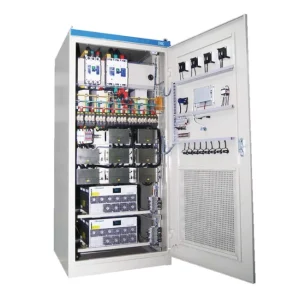
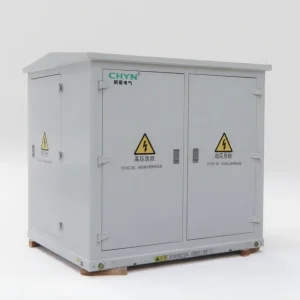
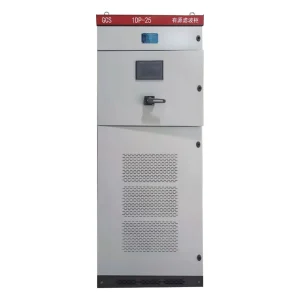
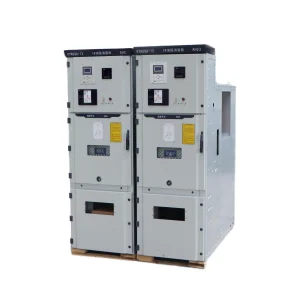
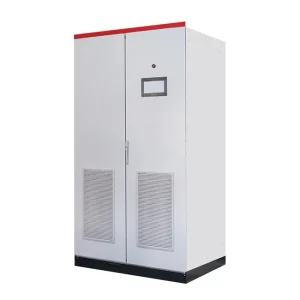
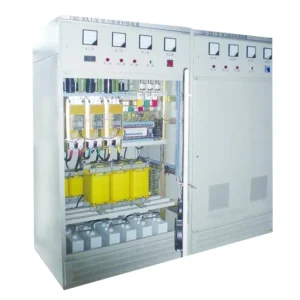
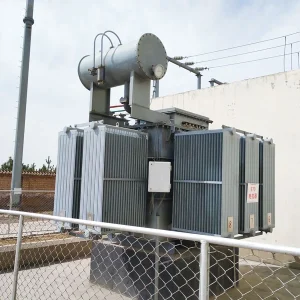
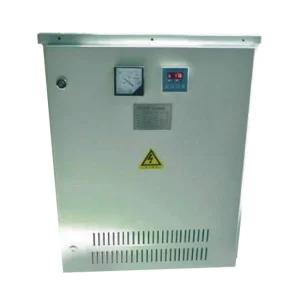
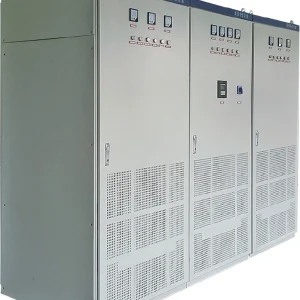
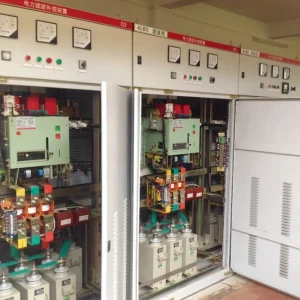
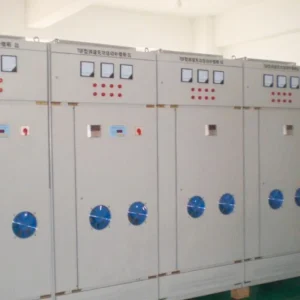
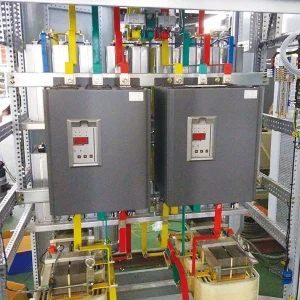
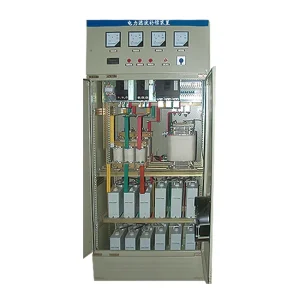
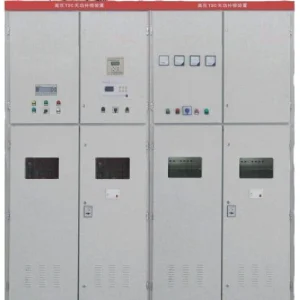
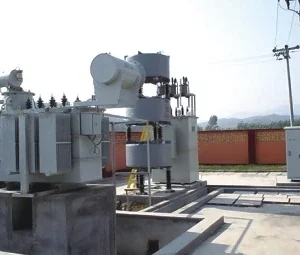
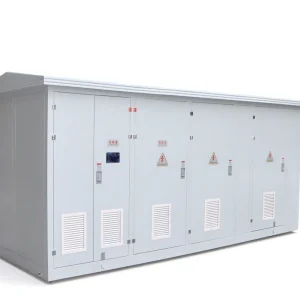
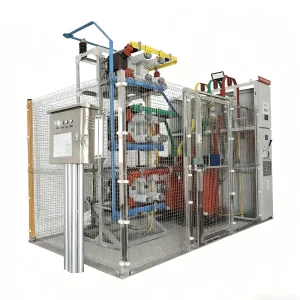
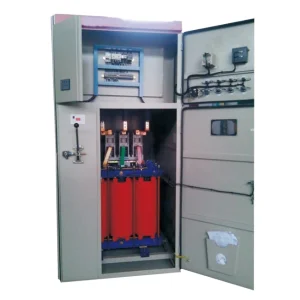
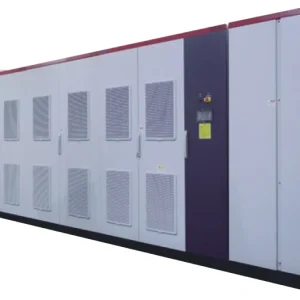
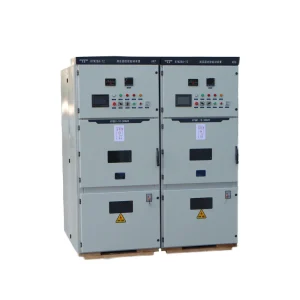
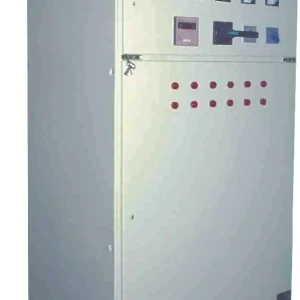

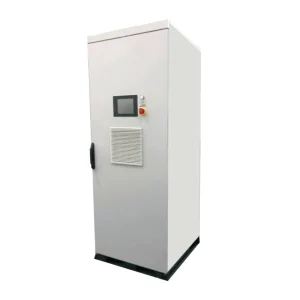
Cooling systems for static var compensators remove heat from thyristor valves or converter modules so reactive support stays available when the plant or grid needs it. This guide covers static var compensator cooling, SVG forced air cooling, and STATCOM liquid cooling paths. It then walks ambient derating, failure modes, and when a forced-air LV SVG such as CHYN HYSVG fits.

What Heat Cooling Systems for Static Var Compensators Must Remove
Cooling removes semiconductor, snubber or switching, reactor, and filter-related losses—not only a nameplate megavar figure. Heat rejection is the job of the cooling system around every static var compensator (SVC) package.
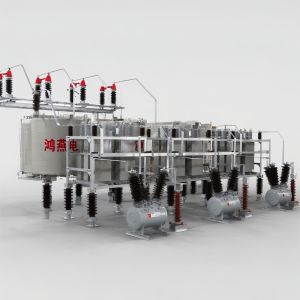
A classic static var compensator (SVC) builds controllable impedance with thyristor-controlled reactors (TCR), thyristor-switched capacitors (TSC), and usually harmonic filters. Heat concentrates in the thyristor valve stacks and associated damping parts.
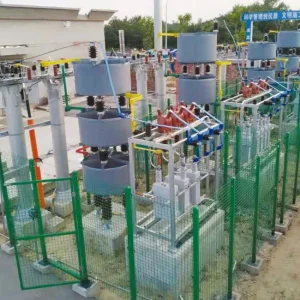
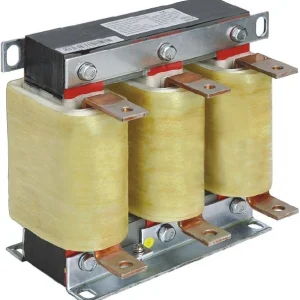
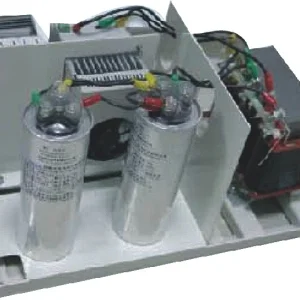
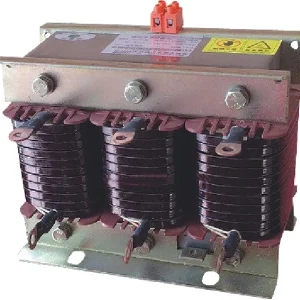
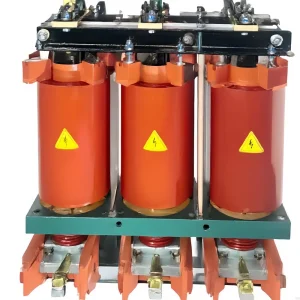
Outdoor air-core reactors and capacitor bank / filter assemblies often reject heat to ambient air on their own. A converter-type STATCOM / SVG instead synthesizes reactive current with voltage-source converters, so the thermal load sits mainly in IGBT / IGCT modules and nearby magnetics.
| Subsystem | Typical heat behavior | Common cooling path |
|---|---|---|
| Thyristor valve (TCR/TSC) | High continuous losses at voltage potential | Closed deionized water loop to a heat exchanger |
| Reactor (air-core) / outdoor filters | Distributed outdoor losses | Natural or forced ambient air |
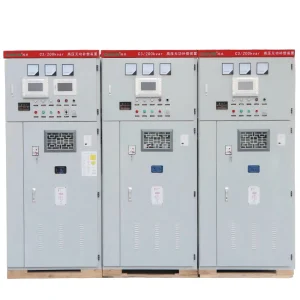
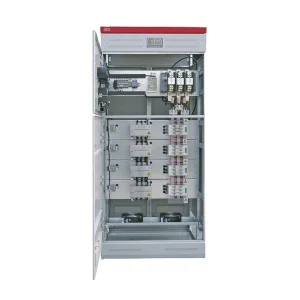
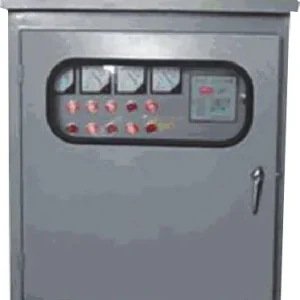
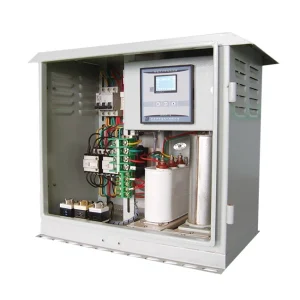
| LV modular SVG cabinet | Module and heatsink losses in an enclosure | Intelligent forced air through louvers and fans |
| Large STATCOM valve halls | Dense IGBT / IGCT module stacks | Liquid-cooled heatsinks and station pumps |
If you size only on Mvar, you miss duty cycle, harmonic-filter loading, and ambient extremes. Thermal design starts from worst-case losses the semiconductors and magnetics actually produce on your site.
Classic SVC Thyristor Valves: Deionized Closed-Loop Cooling
Many thyristor SVC valves use a deionized water loop and outdoor heat rejection rather than relying on enclosure fans alone.
Thyristors generate heat in conduction and switching. Because valve stacks sit at voltage potential, the coolant must stay low in electrical conductivity so the pipework does not become an unintended conductive path.
A closed primary loop typically carries purified water through heatsinks, then hands heat to a heat exchanger that rejects energy to outdoor air or plant technical water. A side stream through deionization resin, plus flow, temperature, and conductivity monitoring, keeps the loop stable over years of operation.
On large industrial or transmission SVC projects the mechanical package is not a small accessory. Field discussions of hundred-megavar installations describe multi-ton cooling pump skids arriving with the thyristor valves, reactors, and capacitor banks.
That scale is normal for valve-hall SVCs. It is not a template for every low-voltage SVG cabinet RFQ.
From the field: On a large Static VAr Compensator build, crews treat the cooling pump skid as heavy mechanical plant—measured in tons—alongside thyristor valves and outdoor reactors. Plan cranage and civil space early if your project is truly an SVC valve hall, not a wall-mounted LV converter — source: industry forum reports of hundred-megavar SVC installation packages that list multi-ton cooling pump skids with the valve hardware.
Converter-Type SVG and STATCOM Cooling: Air and Liquid Paths
Converter paths reject IGBT / IGCT losses with SVG forced air cooling at LV modular scale, or with STATCOM liquid cooling modules at many large stations.
Industrial SVGs used on low-voltage distribution often mount power modules on air-cooled heatsinks and move ambient air with controlled fans. That architecture keeps the footprint compact for switchrooms and avoids a deionized station.
Filter and fan maintenance become the daily thermal discipline. Large utility STATCOM installations frequently clamp modules to water-cooled aluminum heatsinks and circulate coolant through a station sized for dense converter losses.
Research on modular multilevel STATCOMs shows that coolant-flow disruption quickly becomes a junction-temperature endurance problem. That is another reason liquid stations carry redundancy and monitoring.
Naming matters for cooling RFQs. A “static var compensator” in textbooks may mean thyristor TCR/TSC impedance control, while many industrial buyers say “SVG” for a converter-type unit closer to STATCOM behavior.
Cooling expectations follow that split. For topology naming without thermal detail, see CHYN’s companion note on variable impedance type static var generators.

Air vs Liquid Cooling: A Practical Selection Table
Choose by topology, power density, ambient, footprint, and maintenance skill—not by marketing labels alone.
| Decision factor | Lean toward forced air | Lean toward liquid (deionized closed loop) |
|---|---|---|
| Topology | LV modular SVG / many industrial cabinets | Thyristor SVC valves; dense high-power STATCOM modules |
| Footprint & civil works | Prefer smaller switchroom footprint | Accept pump skid, piping, outdoor heat exchanger |
| Maintenance model | Filter, fan, and temperature alarms | Conductivity, pumps, leak detection, resin |
| Ambient / altitude derating | Clean, cool rooms with clearances | Harsh outdoor rejection via HX; sealed primary loop |
| Availability strategy | Fan redundancy / OT trip strategy | Backup pumps and dual-path thinking for critical plants |
Air wins when modules can reject heat with practical duct and filter sizes. Liquid wins when air volume would be impractical or when valves must stay on low-conductivity coolant at potential.
Hybrid plants still appear: a reactor (air-core) stays air-cooled outdoors while indoor valves ride a deionized water loop.

Ambient, Altitude, Fouling, and Derating Limits
Hot rooms, clogged filters, and high altitude shrink thermal headroom and may force ambient / altitude derating of available reactive capacity.
Forced-air cabinets pull whatever dust and oil mist the switchroom holds. Blocked intake filters raise heatsink temperature even when fans still spin.
High altitude thins the air that carries heat away, so manufacturers often require derating above a stated elevation. Liquid stations face a different ambient problem: outdoor dry coolers must reject heat when summer conditions peak.
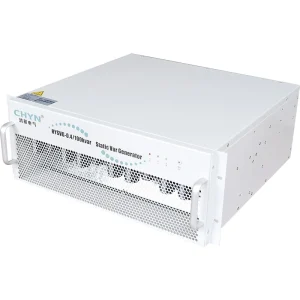
For CHYN’s LV HYSVG Static Var Generator (SVG), the published operating window is −10°C to +45°C. Altitude is ≤2000 m, with derating required above that elevation, IP20 protection, and intelligent forced air cooling.
Treat those limits as design inputs for room HVAC and cabinet clearance. They are not a substitute for measuring actual load harmonics and reactive duty.

Cooling Failures That Cut Var Support
Fan failure, overtemperature, rising coolant conductivity, or loss of coolant flow can remove reactive support exactly when voltage or flicker control is needed.
On air-cooled converters, watch fan-failure alarms, IGBT overtemperature trips, and clogged filters. On liquid-cooled valves, watch primary flow, inlet temperature, leak detection, and conductivity drift from corrosion or resin exhaustion.
Critical STATCOM or SVC stations usually plan redundant pumps so a single pump fault does not strand the grid-support function. Dynamic compensators also run a different thermal lifestyle than fixed capacitor banks.
Fixed banks sit with relatively steady losses when energized. SVC and SVG equipment continuously modulate reactive current, so cooling must track that duty.
Community discussions often contrast fixed capacitors—whose reactive output falls with voltage squared—with SVC or STATCOM control that holds reactive support more deliberately. That continuous modulation is why thermal monitoring belongs beside var setpoints.
Important: Treat cooling alarms as power-quality alarms. If the cooling path is compromised, available Mvar can drop or the unit may trip even though the electrical network still needs support — source: Uppsala University MMC STATCOM thermal thesis on coolant-flow disruption risk, plus HYSVG listed overtemperature and fan-failure protections.
When a Forced-Air LV SVG Such as HYSVG Fits
For continuous low-voltage dynamic vars with intelligent forced air cooling, HYSVG matches the modern industrial path—without requiring a deionized valve-hall plant.

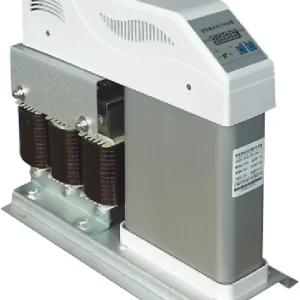
The HYSVG Static Var Generator (SVG) supplies continuous inductive and capacitive reactive-current compensation for LV distribution. Modular capacities are 50, 75, 100, and 200 kvar, with overall efficiency ≥97%.
Current-loop response is 40 μs, and full compensation is 10 ms. Cooling is listed as intelligent forced air cooling—the practical SVG forced air cooling path for many industrial rooms.
Protections include overheating, IGBT overtemperature, and fan failure. Monitoring exposes IGBT temperature alongside the usual electrical quantities.
Use HYSVG when the plant need is modern industrial SVG performance—cranes, VFDs, welding, mining or petroleum loads, manufacturing automation, data centers, and similar LV networks described on the product page—inside the stated ambient and altitude envelope. Browse the parent Active Power Filter Series when you are still comparing SVG, hybrid, and active filter options.
If the project is a true thyristor SVC valve hall with deionized cooling stations, do not treat HYSVG as a drop-in mechanical substitute. Where a hybrid SVG + LC package is appropriate, the sibling HYSVGC hybrid compensator likewise lists intelligent air cooling and fan-failure / IGBT-temperature protections.
FAQ
Do all static var compensators need deionized-water cooling?
No. Deionized closed loops are common for high-power thyristor SVC valves that sit at voltage potential. Many LV SVG cabinets, including HYSVG, use intelligent forced air cooling instead.
Outdoor reactors and filter banks often rely on ambient air even when valves are liquid-cooled.
How is SVC cooling different from STATCOM or SVG cooling?
Classic SVC cooling centers on thyristor valve heatsinks and low-conductivity coolant. STATCOM and industrial SVG units reject converter semiconductor losses—forced air at modular LV scale, or liquid-cooled module heatsinks at many large stations. Topology drives the thermal package.
What ambient and altitude limits matter for an LV SVG cabinet?
Follow the manufacturer’s environmental table. HYSVG publishes −10°C to +45°C operation, altitude ≤2000 m with derating above, and IP20. Hot rooms and high altitude reduce thermal margin even when electrical ratings look adequate on paper.
What happens if fans fail or the unit reports IGBT overtemperature?
Those are listed protection events on HYSVG. Expect alarms, possible curtailment, or trip behavior that removes var support until cooling and module temperatures recover. Treat them as availability risks in the same class as electrical faults.
Why must liquid coolant conductivity stay low?
Valve and converter cold plates sit at elevated electrical potential. Higher conductivity raises leakage and corrosion risks inside the cooling circuit. Closed loops with deionization keep conductivity controlled; open loops make that control much harder.
Can cooling be sized from nameplate Mvar alone?
No. Size from worst-case semiconductor and magnetic losses, harmonic-filter duty, ambient extremes, altitude, and the redundancy you need for availability. Nameplate Mvar describes electrical capability, not the full thermal plant.
When does HYSVG’s forced-air path fit a plant project?
When you need continuous LV inductive and capacitive compensation with modular expansion, documented forced-air cooling, and thermal protections—inside the published ambient and altitude window—without specifying a thyristor valve-hall deionized station.
Is a multi-ton cooling pump skid always required?
No. Multi-ton skids appear on large SVC projects with thyristor valves and outdoor yards. Forced-air LV SVG cabinets solve a different mechanical problem.
Match the cooling plant to topology and scale.
References
- Static VAR compensator — Wikipedia
- Static synchronous compensator — Wikipedia
- Static Var Compensators (SVC) — PSMA Consulting
- Static Synchronous Compensator — Engineeringa2z
- Thermal Modeling and Predictive Thermal Analysis for MMC STATCOMs (Uppsala University thesis PDF)
- Physics Forums: hydroelectric station thread on fixed capacitors vs SVC/STATCOM