
 Zhejiang Hongyan Electric Co., Ltd.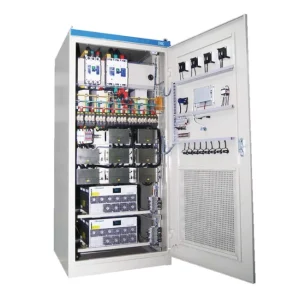
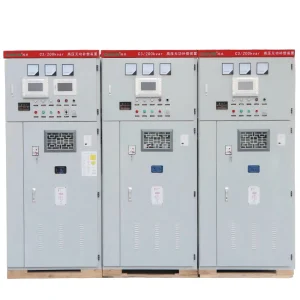
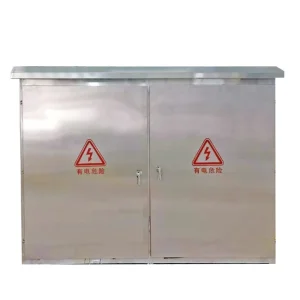
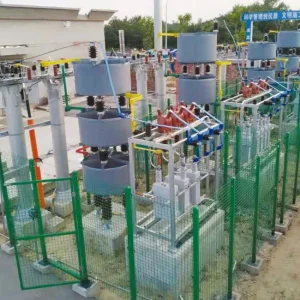
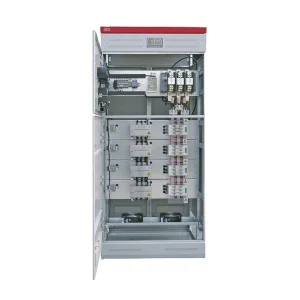
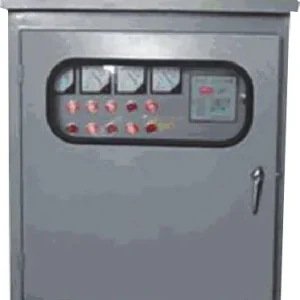
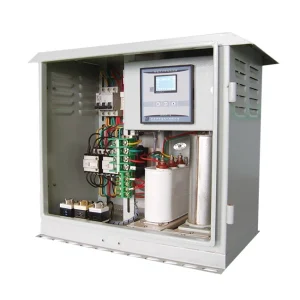
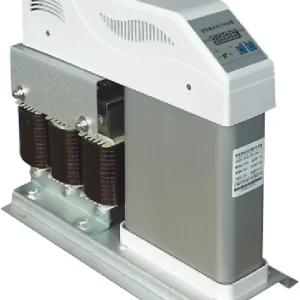
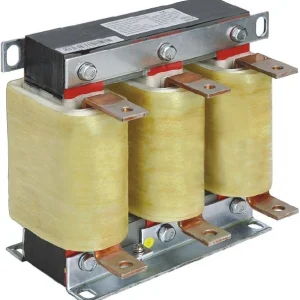
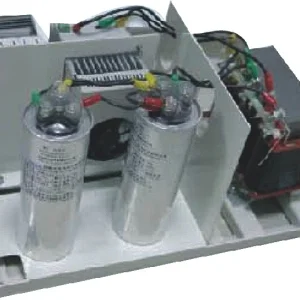
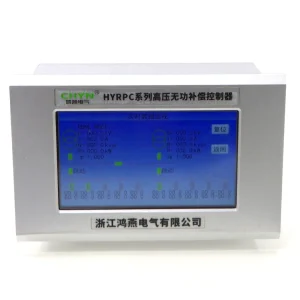
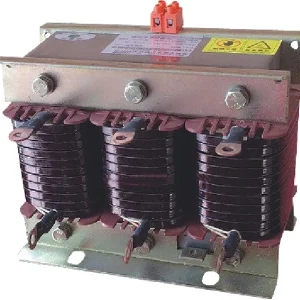
Buyers evaluating automatic power factor controller merits demerits need a scorecard, not another definition page: merits rise when stepped capacitors track changing kvar and reduce low-PF charge exposure; demerits rise when hunting, overcorrection, harmonics, or idle leading power factor sit on the risk register. This page gives a procurement scorecard, a plant-condition map, a go/no-go list, and RFQ questions—then shows when a static LV system such as HYTBBJ fits. For definition basics see what an automatic power factor controller is; for practical plant trade-offs see APFC advantages and disadvantages.

Merits Scorecard for an Automatic Power Factor Controller
Merits center on tracking kvar automatically, cutting reactive current for the same real load, and reducing low-PF charge exposure where tariffs apply.
An automatic power factor controller watches measured power factor or reactive demand and switches Capacitor bank / steps so compensation rises and falls with the plant. That tracking is the core merit versus a Fixed capacitor bank that stays at one kvar value all day.
| Merit to score | What “good” looks like on site | Buyer evidence to request |
|---|---|---|
| Tracks changing kvar | Multi-shift motors and process lines stay near the PF target without manual switching | Target PF, step plan, controller modes |
| Lower reactive current | Feeder amps fall for the same kW when PF improves | Before/after PF and current logs |
| Capacity headroom | Transformer and cable kVA freed without an immediate upsizing project | Loading study at peak and average |
| Penalty / tariff exposure | Low-PF fees shrink where the utility bills on PF or kVA | Tariff clause and historical bills |
| Operator load | Automatic mode reduces reliance on manual capacitor switching | Manual/auto capability confirmation |
DOE tip material notes that many utilities add fees when power factor falls below about 0.95, and that capacitors can cut reactive demand enough to free distribution capacity. Treat that threshold as a screening example—your tariff language still rules the score.
Secondary merit language buyers often use includes “APFC panel keeps PF stable” and “automatic capacitor bank follows the load.” Score those claims only when the controller, CT sensing, and step sizes are sized for the feeder you are buying for.

Demerits and Failure Modes Buyers Should Score
Demerits cluster around overcorrection, hunting, switching wear, and harmonic resonance risk on nonlinear plants.
| Demerit / failure mode | Plant signal | RFQ consequence |
|---|---|---|
| Overcorrection / leading PF | Voltage rise, “poor PF” charges at light load, equipment stress blamed on surges | Smaller steps, anti-lead logic, automatic disconnect at low load |
| Hunting | Contactors chatter; PF oscillates around target | Correct C/k or step threshold; review CT ratio and step size |
| Coarse steps | One step jumps past the target | Finer grading or unequal step ratios |
| Contactor wear / inrush | High switch counts, noisy contactors, capacitor stress | Realistic delays; capacitor-rated switching devices |
| Harmonic resonance | Hot capacitors, nuisance trips with VFDs or rectifiers | Detuned / filtered class after a harmonic look |
| Centralized-only topology | Downstream feeders still carry full reactive before the bank | Mix end-point or at-load options where feeders are long |
From the field: Plant electricians repeatedly warn that leaving a power factor correction capacitor bank online when the plant is nearly idle can drive a leading power factor—sometimes scored as “low PF” on the bill—so automatic step shedding is a demerit fix, not a nice-to-have.
Hunting is a classic demerit when the reactive deviation needed to switch is set too low relative to step size. Practice literature describes an insensitive band on the order of about two-thirds of a step; if the controller reacts to smaller errors, steps can oscillate.
Harmonics deserve a separate demerit column. A plain power factor correction capacitor bank can participate in resonance with nonlinear loads. That does not mean every plant needs filters, but it does mean “standard” APFC without a harmonic class decision is an incomplete score.
Map Merits and Demerits to Plant Conditions
The same APFC earns different scores on steady multi-motor plants versus idle-heavy or VFD-heavy sites.
| Plant condition | Merit score tends to | Demerit score tends to | Buyer note |
|---|---|---|---|
| Relatively steady inductive motors, buildings, public facilities | High — automatic tracking without constant operator action | Medium — still watch light-load evenings | Strong static stepped APFC candidate |
| Multi-shift variation, Qc above ~15% of transformer kVA | High vs fixed banks | Medium — needs enough steps | Screening rule of thumb from sizing practice |
| Single-shift plant with long idle nights | Medium | High — leading PF if banks stay on | Require automatic shed or at-load capacitors |
| High VFD / rectifier share | Medium | High — resonance / capacitor heating | Ask for detuned or filtered APFC class |
| Ultra-fast fluctuating loads | Low for contactor APFC | High — wear and lag | Dynamic compensation class may beat static APFC |

A practical screen used in sizing guidance: if capacitor kvar is about 15% of supply transformer kVA or less, fixed compensation can be enough; above that level, an automatically controlled bank is usually the better merit trade. Use it as a conversation starter, then confirm with measured load profiles.
Distortion power factor from nonlinear loads also caps how far pure capacitors can carry the score. If the meter problem is largely harmonic current rather than displacement kvar, an APFC panel alone will not look like a full win.
Buyer Go/No-Go Checklist for APFC
Proceed when loads vary within contactor response and sensing is correct; pause when idle leading PF or harmonics dominate.
Go signals
- Reactive demand moves with production, but not so fast that contactor steps cannot settle.
- Utility or internal PF target is written into the RFQ (for example 0.95 lagging where that matches the tariff example class).
- CT location will see both load and capacitor contribution correctly.
- Step plan and delays are named; anti-hunt behavior is described.
- Harmonic class is chosen: standard, detuned, or filtered.
No-go / pause signals
- Plant idles for long periods and the proposed bank cannot shed steps automatically.
- Nonlinear load share is high and the offer is “standard capacitors only” with no resonance review.
- Step size is so coarse that one switch routinely overshoots the target.
- Buyer expects APFC to “fix harmonics” without a filter strategy.
- The real need is ultra-fast dynamic reactive support—static stepped APFC is the wrong class.
Keep related reading distinct: the practical advantages/disadvantages guide covers when-to-use narratives versus fixed banks and SVG-class gear; this checklist stays on merits/demerits scoring for RFQ.
RFQ Specification Questions for APFC Merits and Demerits
Ask for target PF, step plan, Current transformer (CT) location, delays, protections, and standard versus Detuned reactor / detuned APFC class.

Paste these into supplier questionnaires:
- What PF or reactive target will the controller hold, and is four-quadrant / leading-PF blocking available?
- What is the total kvar and the individual capacitor step schedule?
- Where must the CT be installed, and what CT ratio is assumed for C/k or auto-sensitivity?
- What switching delay range is offered, and how does it trade response speed against contactor wear?
- Which switching devices are capacitor-rated, and which protections cover over/under-voltage, over-current, and loss of voltage?
- Is the offer standard, detuned, or filtered APFC—and what harmonic data did you use?
- How does the system behave at night or weekend light load?
- What monitoring values (voltage, current, PF, step status) are available for commissioning logs?
These questions convert demerits into specification language. They also stop a purchase from scoring “merit” on paper while failing on hunting or idle leading PF in week two.
When a Static HYTBBJ System Fits the Scorecard
HYTBBJ fits relatively steady inductive LV loads that need automatic stepped compensation—not ultra-fast fluctuating duty.

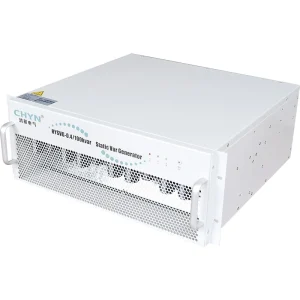
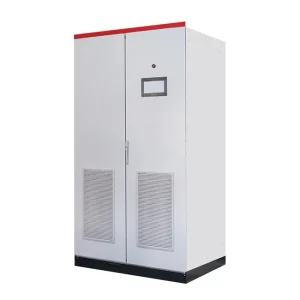
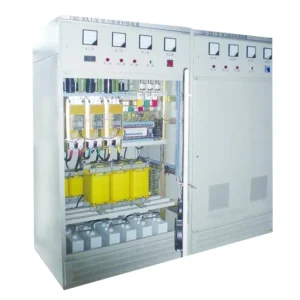
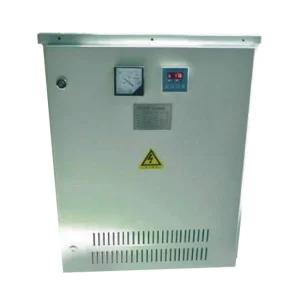
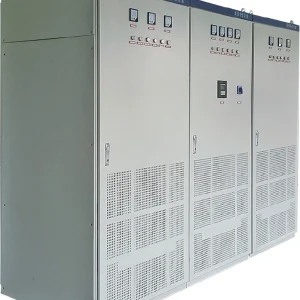
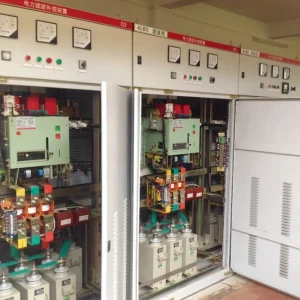
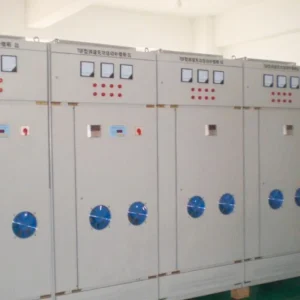
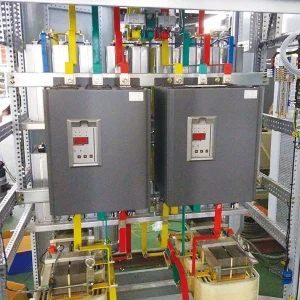
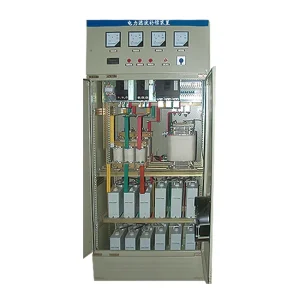
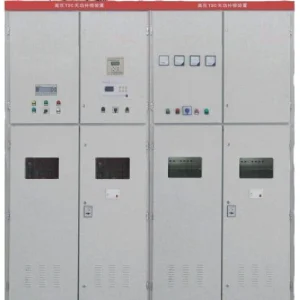
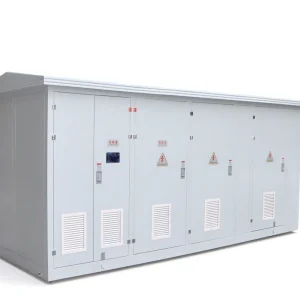
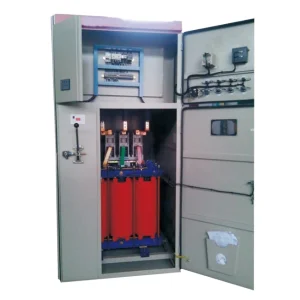
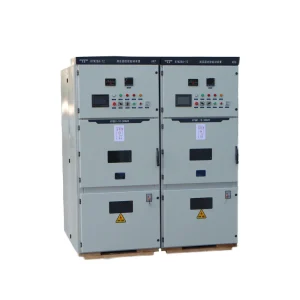
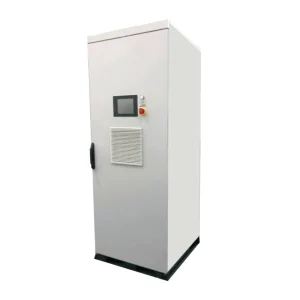
When the scorecard says “static stepped APFC is a go,” review the HYTBBJ Series low-voltage static reactive power compensation system. The live product description positions HYTBBJ to automatically switch capacitor groups from measured reactive demand or power factor on distribution systems with relatively steady inductive loads in manufacturing, buildings, and public facilities.
Documented product traits that map to merit scoring include power-factor / reactive-current control with manual and automatic modes, multiple switching modes, three-phase monitoring of voltage, current, PF, and compensation status, adjustable switching delay from 0–120 s with a special fast mode ≤1 s, and protection coverage for over-voltage, under-voltage, over-current, short circuit, capacitor fault, and switching error. The product page also states typical harmonic current reduction of 20%–30%—treat that as a product-stated figure, not a substitute for a plant harmonic study.
Why not HYTBBJ-only when demerits dominate: if reactive demand swings hard and often, a dynamic LV family path may score better than forcing a static bank. Start from the low-voltage power factor compensation series hub, then match class to the checklist above.
FAQ
What are the main merits of an automatic power factor controller?
The main merits are automatic tracking of changing kvar, lower reactive current for the same real power, better use of transformer and feeder capacity, and reduced low-PF charge exposure where tariffs apply. Score each merit against measured load profiles rather than brochure adjectives alone.
What are the main demerits of APFC?
Core demerits are overcorrection or leading PF at light load, hunting from mis-set step response, contactor switching wear, higher equipment cost than a simple fixed bank, and harmonic resonance risk on nonlinear plants. Put each demerit on the RFQ risk register before awarding “merit” points.
How do I decide APFC versus fixed banks using a simple screen?
If required capacitor kvar is roughly within about 15% of transformer kVA and reactive demand is nearly constant, fixed banks can be enough. Above that level, or when loads vary across shifts, an automatic capacitor bank usually scores higher on merits—provided step size and sensing are correct.
Why does an APFC panel hunt?
Hunting usually means the controller reacts to reactive errors smaller than a sensible fraction of one step, or CT ratio / step size is mismatched. Fix the threshold, enlarge or re-grade steps, and confirm the CT sees both load and capacitors.
Can APFC worsen problems on harmonic-rich plants?
Yes. Capacitors can participate in resonance with VFD and rectifier currents, overheating equipment and tripping protection. Ask for detuned or filtered classes after reviewing harmonic data instead of assuming a standard bank is always safe.
Should capacitor banks stay online when the plant is idle?
Often no for fixed banks: leftover capacitance at near-zero load can create a leading PF and still draw a “poor PF” style charge. A working automatic system should shed steps; verify that behavior in commissioning.
What specification questions belong in an APFC RFQ?
Ask for target PF, step schedule, CT placement and ratio, switching delays, capacitor-rated contactors, protection list, harmonic class, and light-load behavior. Those questions turn demerits into measurable acceptance criteria.
When is a static HYTBBJ-class system a fit?
When the plant has relatively steady inductive LV loads and the scorecard favors stepped static compensation with automatic PF or reactive-current control. If loads swing too fast for contactor steps, evaluate dynamic compensation instead of stretching a static APFC score.