
 Zhejiang Hongyan Electric Co., Ltd.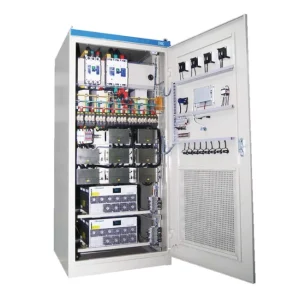
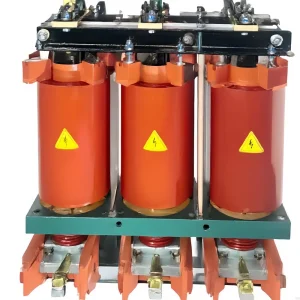
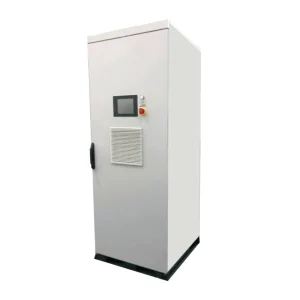
Shunt reactive support is what a static var compensator in power system service does on the bus: the equipment supplies vars when voltage sags and absorbs vars when voltage rises.
The walk from that exchange to a published series runs through siting, a lookalike cubicle, and the figures printed for HYSVC. A high-voltage power factor compensation series is the catalog home for the shunt job.
What shunt vars do on the power-system bus
Shunt vars move between the equipment and the bus so voltage magnitude has a local source or a local sink.
Transmission accounts put it in one sentence: thyristor-controlled reactors take in vars when the reactive load is leading, and capacitor banks come in under lagging load. That exchange is shunt reactive power, not a series boost along the line.
Arc furnace current swings faster than a breaker-switched bank, so the same shunt job shows up beside the furnace as well as on a utility bus. Power-flow notes treat the device as shunt reactance at the connected bus, with the firing angle setting how much of the reactor is in circuit.
Procurement teams usually meet the topic as a one-line bus problem: voltage moves, lights flicker, or a mill drive trips, and someone asks for vars. The useful reply names the direction of those vars before it names a cabinet.
Series capacitors and line reactors change impedance along a feeder. They are a different purchase. The compensator in this query is the shunt branch tied to the bus itself.
| Bus state | Var direction | Branch that carries it |
|---|---|---|
| Low bus, lagging load | Supply vars | Capacitive branch |
| High bus, light or leading load | Absorb vars | Inductive branch |
| Impact load, current jumping | Both, inside the cycle | Thyristor-controlled reactor against a fixed capacitor |
When the bus is low and when the bus is high
A low bus needs capacitive vars. A high bus needs the inductive branch to absorb the surplus.
Light-load hours on a long feeder can leave the bus high, so absorption matters as much as support. Mills show both halves in one shift: bus voltage drops while metal is in the bite, then recovers when the stand clears.
Mechanically switched banks still have a place for slow, predictable vars. They are a poor match for flicker, because the breaker cannot track a furnace heat the way a thyristor branch can.
During a kickoff, ask which way the bus moved on the last event. A sag points to capacitive support. A rise on a light shift points to absorption.
A trace that does both in one heat points to a branch that can move inside the cycle. That is the practical difference between a fixed bank and a thyristor-controlled reactor working against a fixed capacitor.
Plant electricians often describe the same trace without the textbook words: lights dip when the furnace bores in, then glare when the heat ends. That language is enough to separate a shunt var job from a motor-start job.
Where the cabinet sits on the bus or beside the furnace
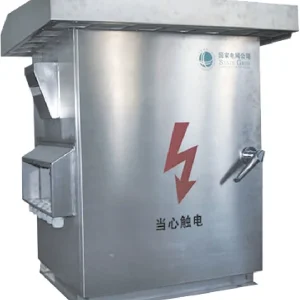
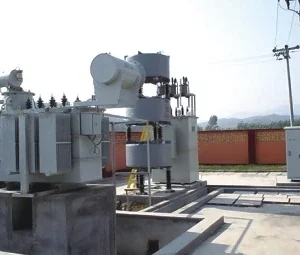
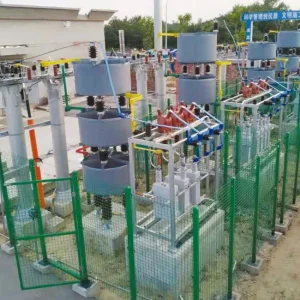
Centralized gear sits on the substation bus and covers the whole load group.
Distributed gear sits close to one impact load, such as an arc furnace or a rectifier, so the upstream transformer sees less of the swing. Rolling mills and mining equipment fall in the same impact-load group on the published HYSVC description.
Both sites are shunt connections. Neither site is a motor terminal. Topology names beyond TCR-plus-filter, including other branch arrangements, stay on the types of static var compensator page.
Choose the substation bus when many feeders share the swing. Choose the furnace feeder when one load owns the flicker and the upstream transformer is the asset you want to unload. The published description allows either placement for HYSVC.
Why a high-voltage reactor starter cabinet is a different job
A high-voltage reactor starter cabinet soft-starts a motor. It does not hold shunt vars for every feeder on the bus.
The published HYLQ series covers soft starting from 75 kW to 10,000 kW.
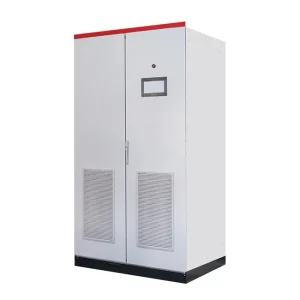
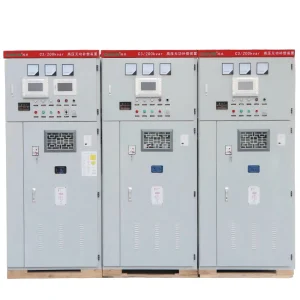
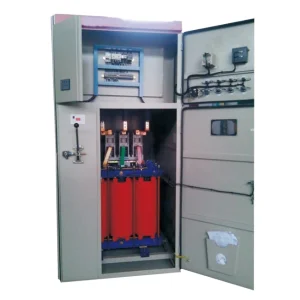
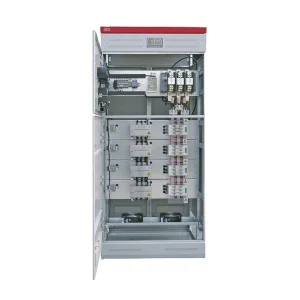
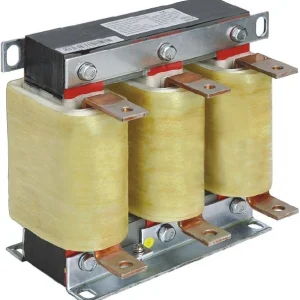
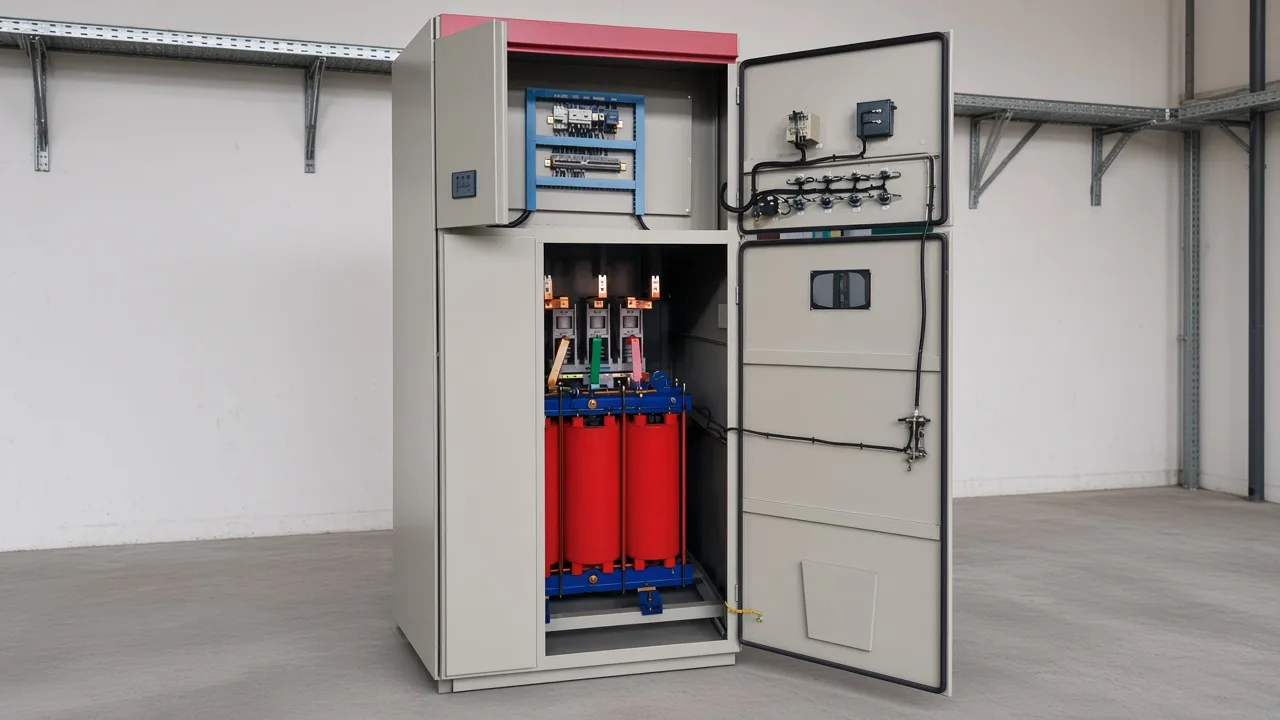
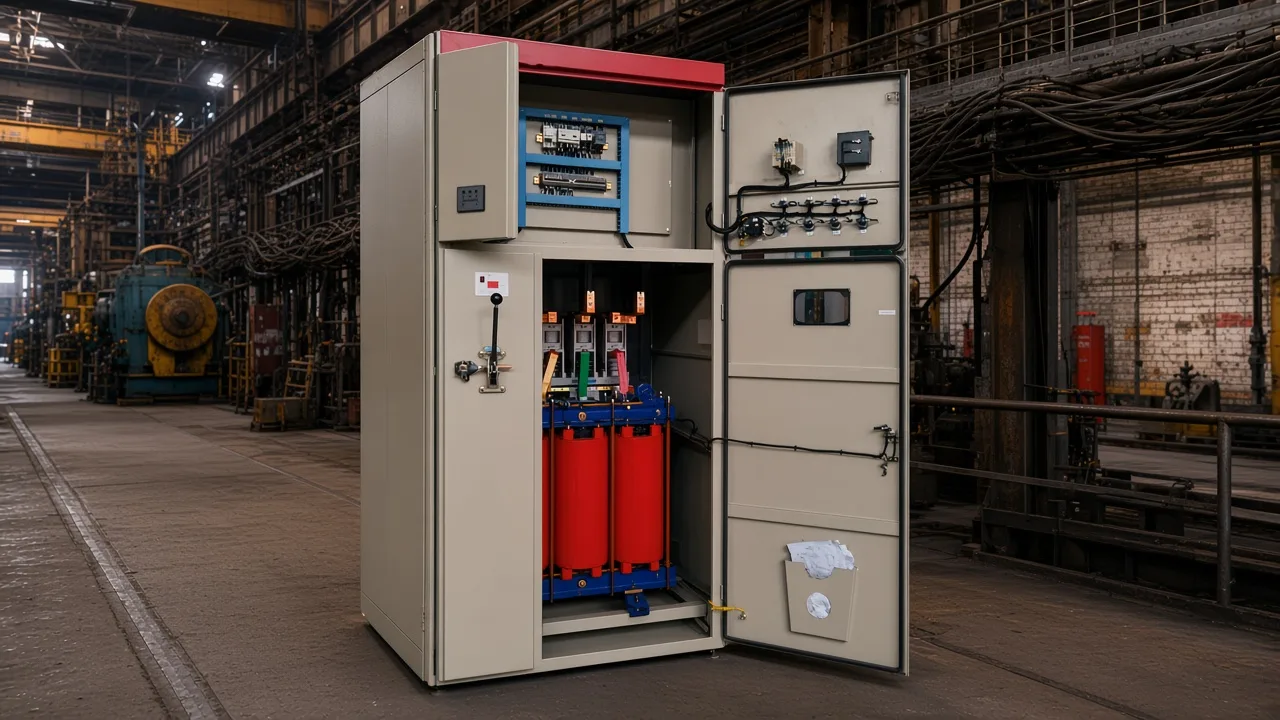
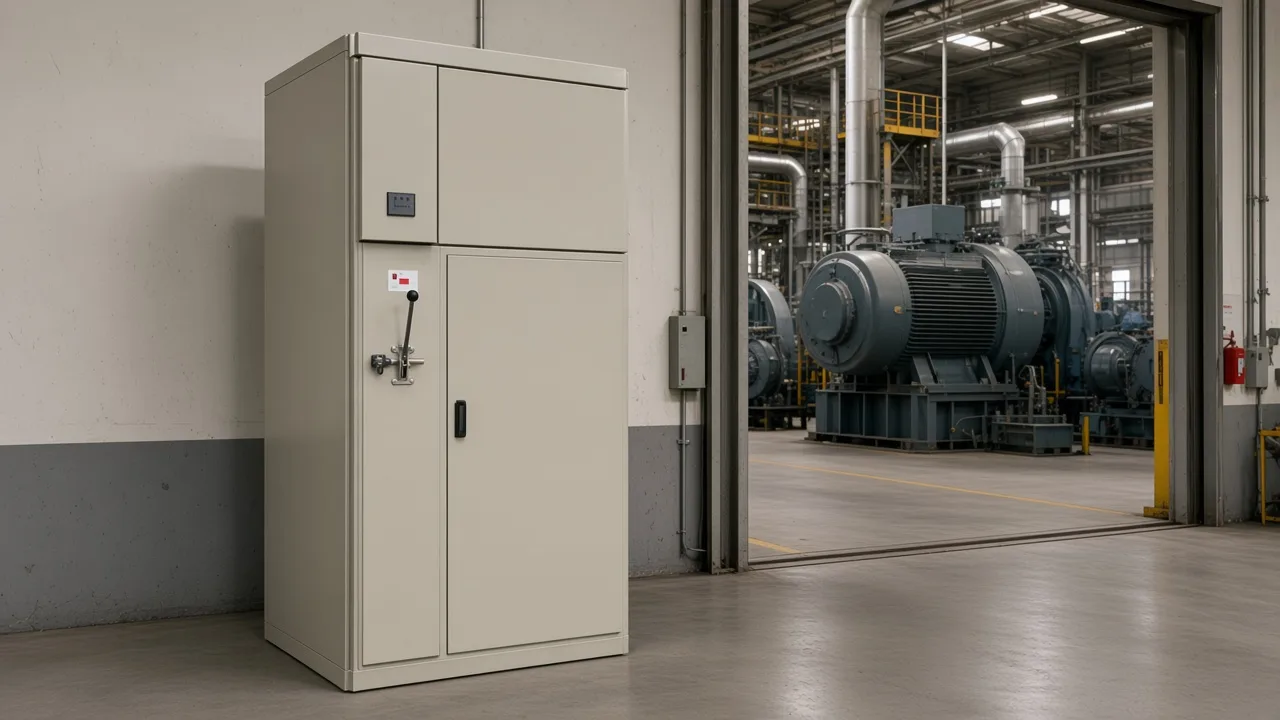
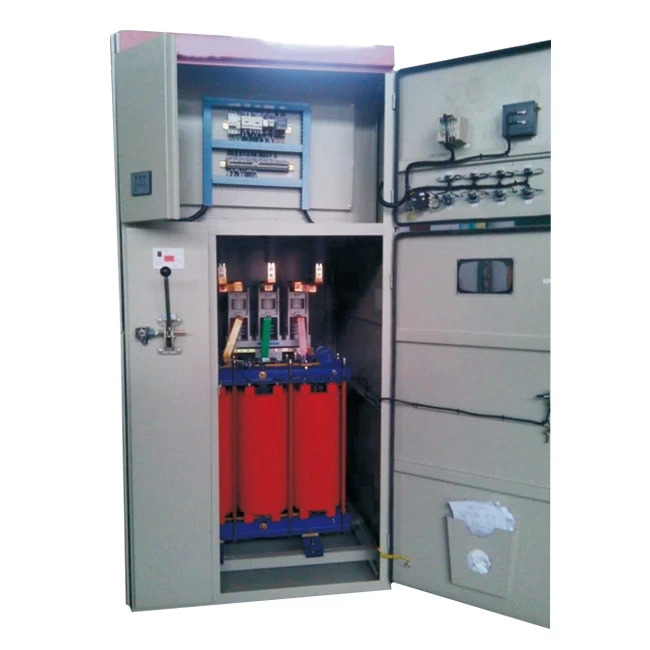
Those kilowatts are motor ratings for squirrel-cage or synchronous machines. Arc furnaces, rolling mills, and mining equipment are the impact loads named for the shunt cabinet, and a tall beige cabinet with red coils still gets mistaken for that gear. The high-voltage reactor starter cabinet page is the motor-start record.
| Job | High-voltage reactor starter cabinet | HYSVC |
|---|---|---|
| What it does | Soft-starts a motor | Shunt reactive power on the bus |
| What it is not | Not an SVC and not HYSVC | Not a motor starter |
| Published range | Soft starting from 75 kW to 10,000 kW | System rated voltage of 6–35 kV |
| How it moves | Limits inrush during acceleration | Thyristor-controlled reactor with a fixed capacitor and filter branches |
| Speed and angle | First seconds of a start | Response time of less than 10 ms; trigger-angle regulation ±0.1° |
| Harmonics | No published filter-order note | Filter note covers the 2nd–13th orders |
| What stays open | Motor kilowatts on the nameplate | kvar stays a project figure |
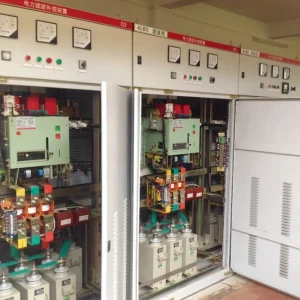
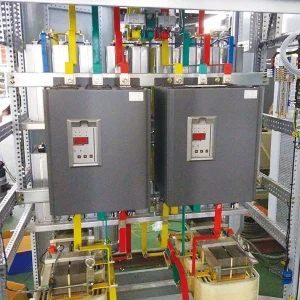
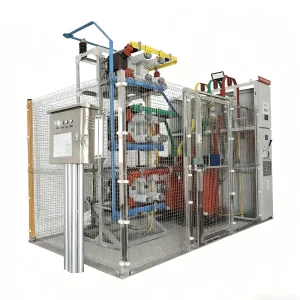
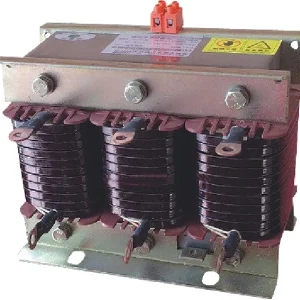
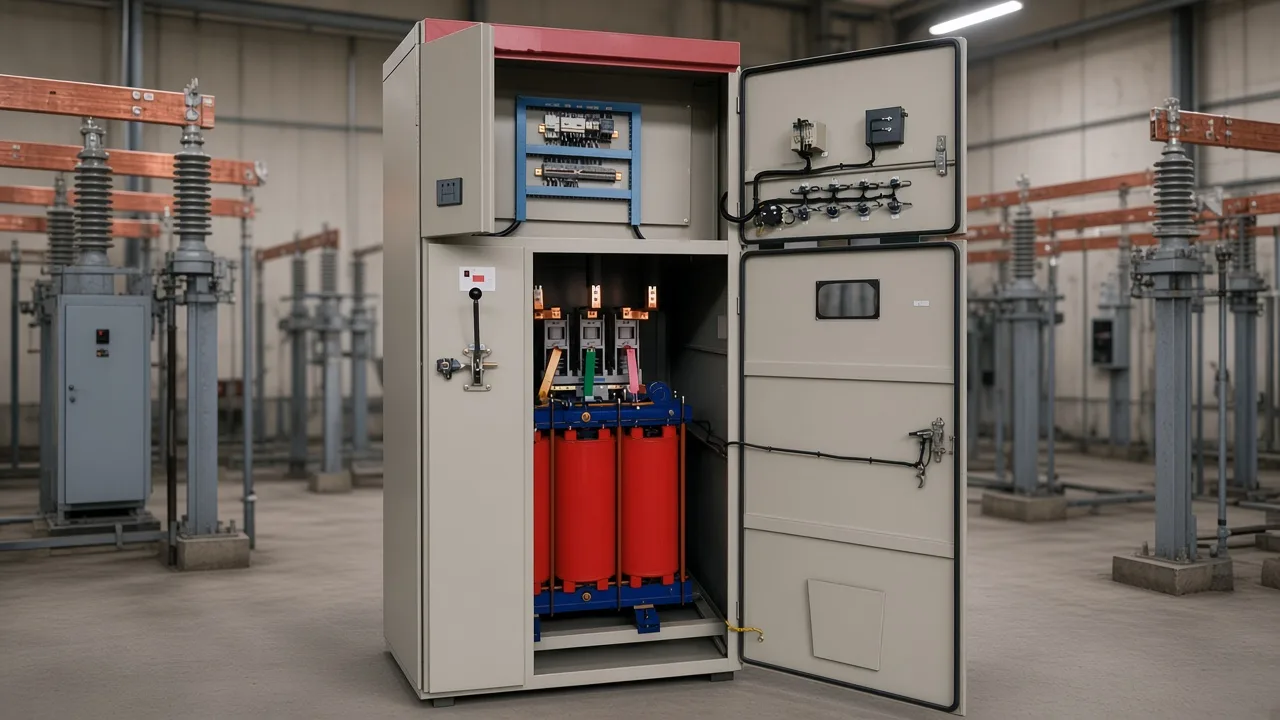
Open the door on that cabinet and the eye goes to the red coils and the operating handle. Those parts limit inrush while a motor comes up to speed. They do not watch bus voltage for the rest of the shift, and they do not swap vars after the motor is already running.
If the complaint is only the first seconds of a crusher or a fan, stay with the starter. If the complaint continues while the mill is in production, the shunt device is the conversation to have.
What the published HYSVC series actually states
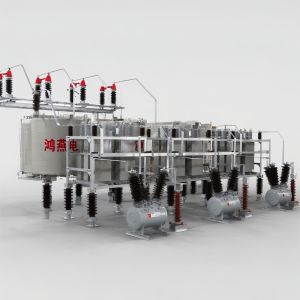
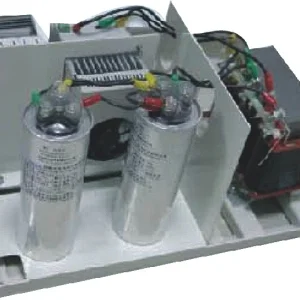
The published series pairs a thyristor-controlled reactor with a fixed capacitor and filter branches.
The published HYSVC page lists a system rated voltage of 6–35 kV.
That same page states a response time of less than 10 ms.
Trigger-angle regulation on the published page is ±0.1°. The published filter note covers the 2nd–13th orders. Control changes the trigger angle as the load moves, and the filter group stays fixed instead of being switched on every swing.
From the field: a forum writer put a thyristor-controlled reactor in parallel with a fixed capacitor for reactive power compensation, then said the firing-angle equation still failed in MATLAB — source: Physics Forums.
That miss belongs on a laptop. The bus still needs the shunt exchange, rather than a solved angle from a script.
Centralized units on the published page also mention optical-fiber triggering. Treat that as a page statement for this series. Do not carry it onto every cabinet in the aisle.
How to select the HYSVC product for shunt var support
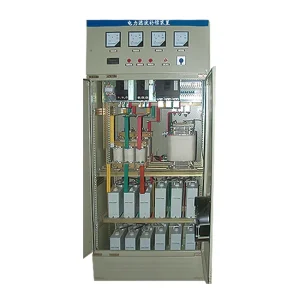
Select the HYSVC Series High Voltage Dynamic Reactive Power Compensation when the job is shunt reactive power on the bus.
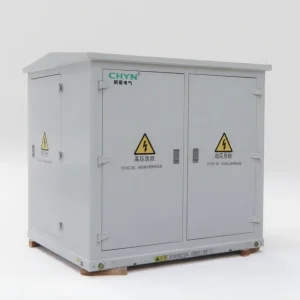
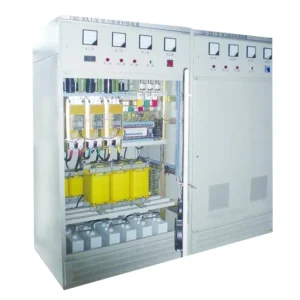
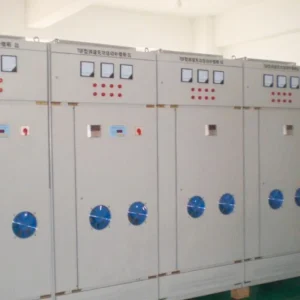
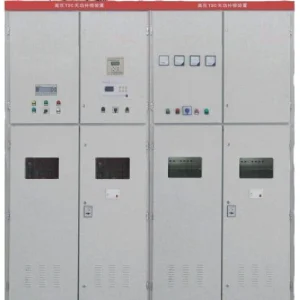
The cabinet in the photograph is a high-voltage reactor starter cabinet. Keep that cubicle for motor starting. Keep HYSVC for bus voltage support, harmonic branches, and impact loads such as furnaces, mills, and mine equipment.
Kvar on the capacitor branch and the reactor branch is still a project figure. The page leaves both capacities customized, so the fit is the device class. Leave the Mvar stamp for the load study.
What still has to be measured on the bus
Capacitor kvar and reactor kvar on the published page are left for the project, so a catalog screenshot cannot close the order.
Measure the bus voltage swing, the load that causes it, and whether the pain is a motor start or a continuous var swing. A planning model keeps an SVC coordinated with switched shunts. That grouping still leaves the motor-start cabinet outside the shunt job.
Bring the one-line, the voltage trace, and the load list to the HYSVC enquiry. The page already names arc furnaces, rolling mills, mining equipment, and other impact loads. It does not print a finished kvar pair, because that pair depends on the trace.
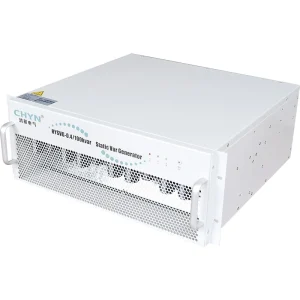
If the question is really a static var generator, use the static var generator note rather than stretching HYSVC into a second device name.
FAQ
What is the purpose of a static VAR compensator?
The purpose is shunt reactive support on the bus: supply vars when voltage sags and absorb vars when voltage rises. Furnace flicker and a weak substation bus are the usual reasons the exchange has to be fast.
What does a static var generator do on the same bus?
A static var generator also deals with vars, but it is a different device class with its own page. HYSVC remains the thyristor-and-capacitor series described above. The generator name stays on that other page.
What is the difference between a static VAR compensator (SVC) and a STATCOM?
An SVC swaps shunt reactive power through reactors and capacitors, so its current is tied to the voltage already on the bus. A STATCOM is the neighboring device people compare when voltage has already collapsed and that shunt current would shrink.
How does SVC work when the bus voltage is already high?
The inductive branch absorbs vars and pulls the bus down. Leading or very light load is the case for absorption, not another capacitor step.
What are the applications of compensators beside an arc furnace?
The published HYSVC list adds rolling mills, mining equipment, and other impact loads, either on the substation bus or next to the load. Motor soft-start is a separate application and belongs to the high-voltage reactor starter cabinet.
Can a high-voltage reactor starter cabinet do the shunt var job?
No. That cabinet is built to soft-start a large motor. Shunt var support on the bus is the HYSVC job.