
 Zhejiang Hongyan Electric Co., Ltd.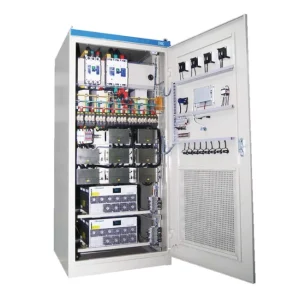
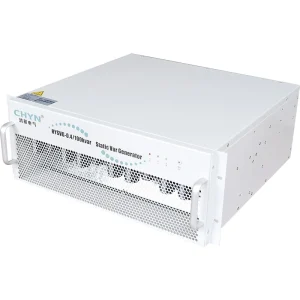
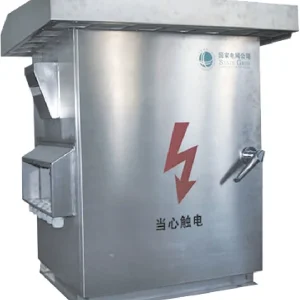
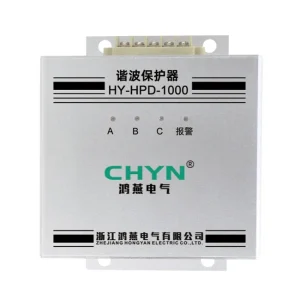
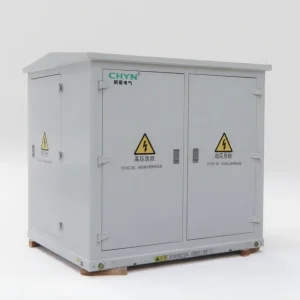
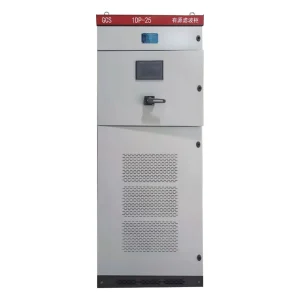
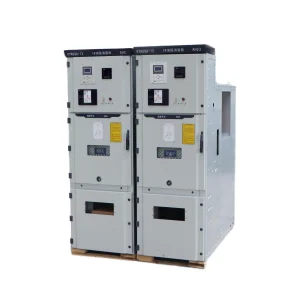
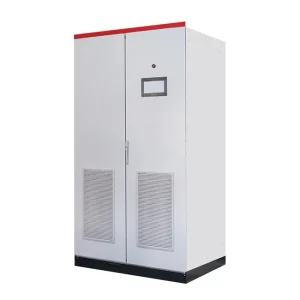
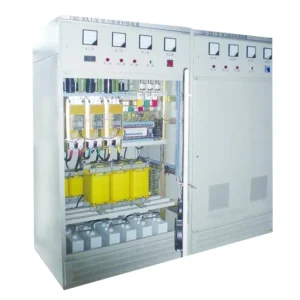
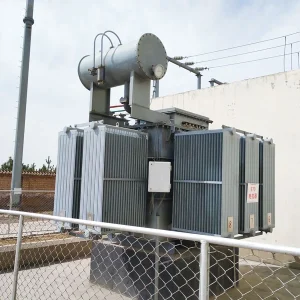
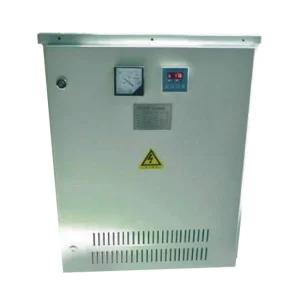
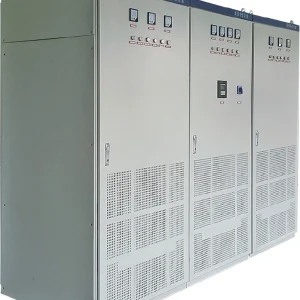
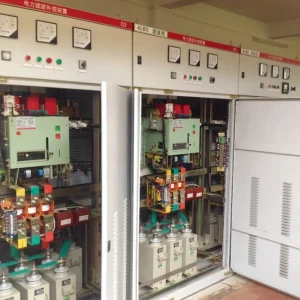
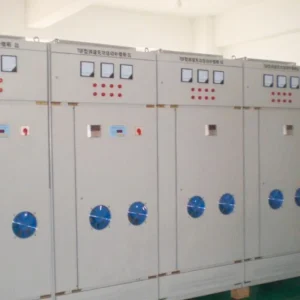
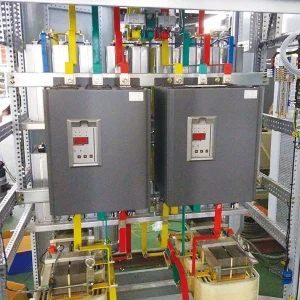
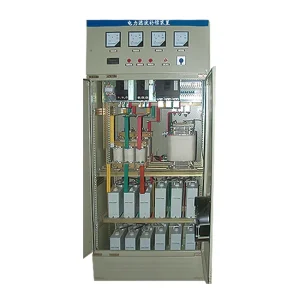
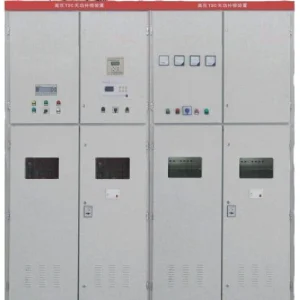
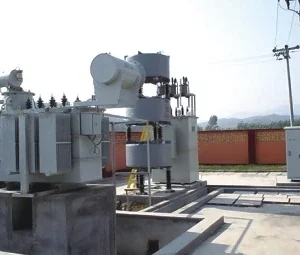
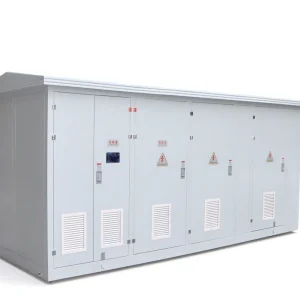
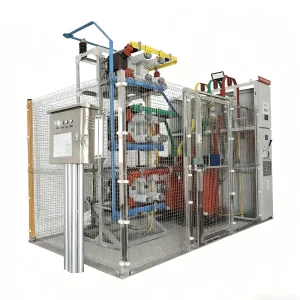
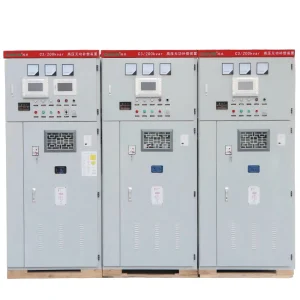
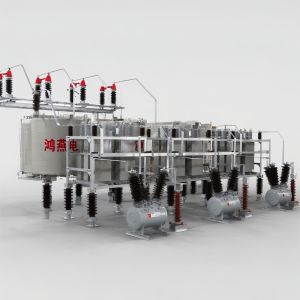
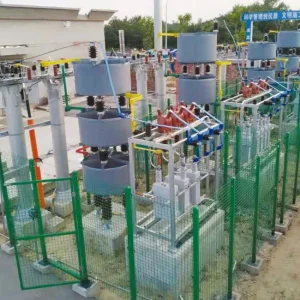
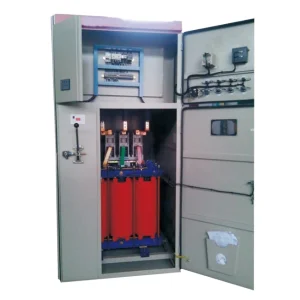
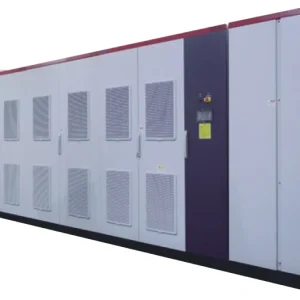
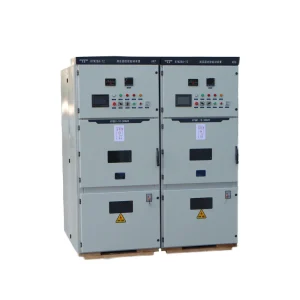
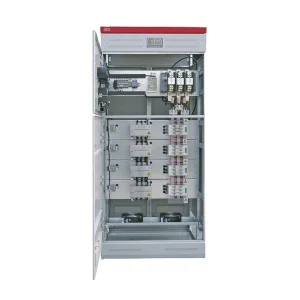
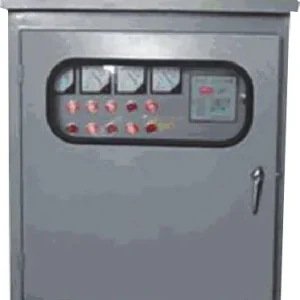
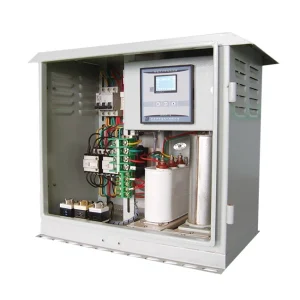
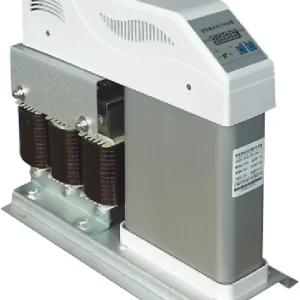
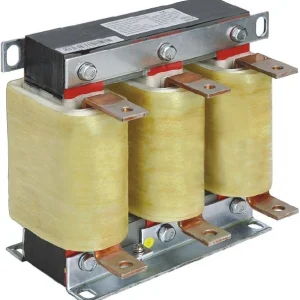
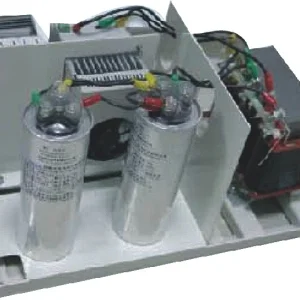
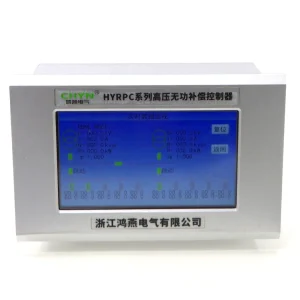
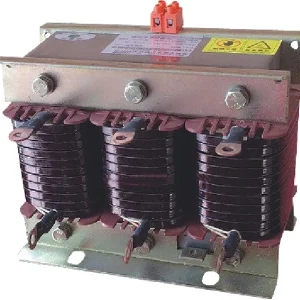
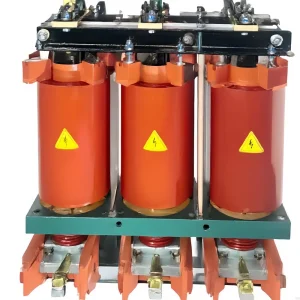
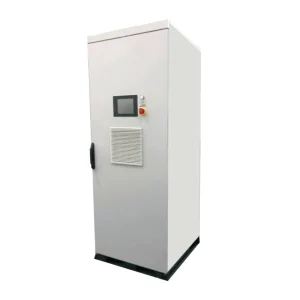
At a grid-connected plant, power conditioning equipment for grid connected systems is the PCC shortlist that keeps exported current and voltage inside the interconnect limits. The inverters do the conversion. Extra cabinets show up only when a study still shows a harmonic, var, flicker, or sag gap.
It is a hardware match for an inverter plant at the point of common coupling, not a definition of a power conditioner and not a shopping list for rack UPS units.
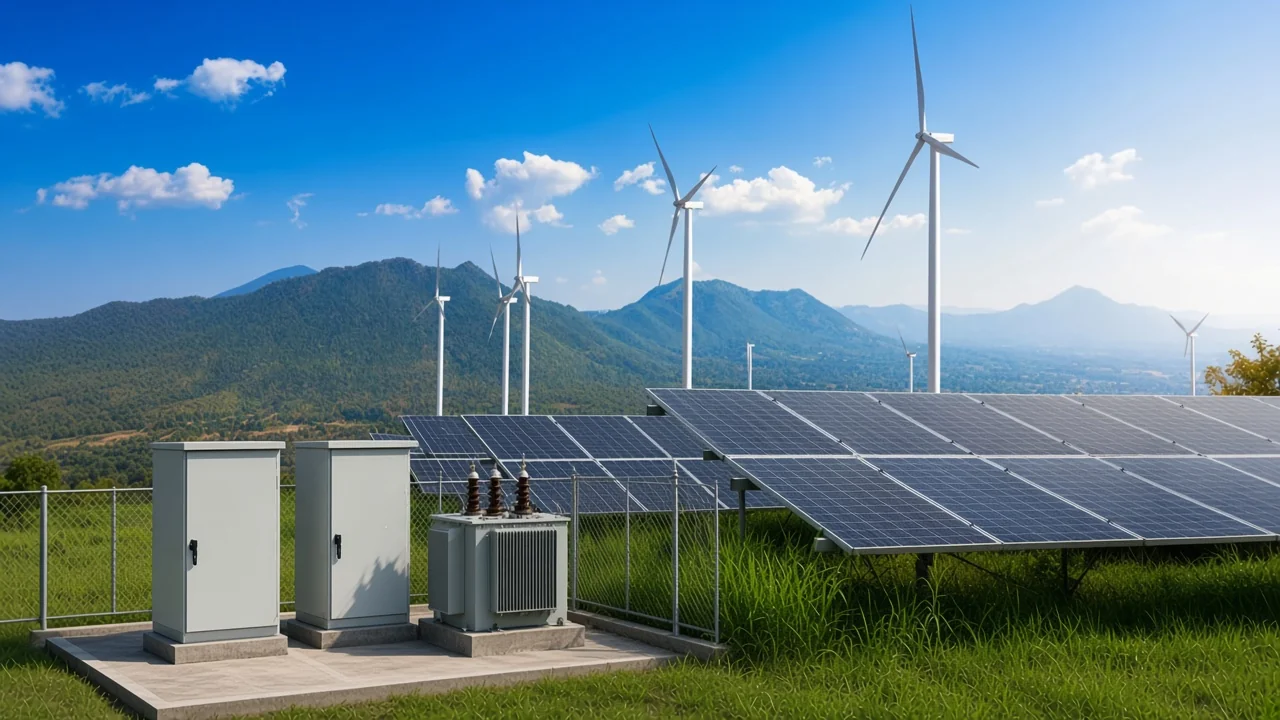
What This Equipment Does at a Grid-Connected PCC
At a grid-connected plant, this equipment is the PCC interface plus any extra shunt or series cabinets the study still needs.
NIST describes a power conditioning system as the power-electronics class that converts electric power from one form to another and conditions the quality required by the subsystems being integrated. In solar language that package is often called a PCU or simply the inverter.
Penn State’s commercial-solar course notes that the industry still says “inverter” even when the box also runs MPPT, DC/DC conversion, or an isolation transformer. Calling the box an inverter does not close the later harmonic study.
That conversion job is real. It is not the same shopping list as a utility load-side conditioner.
The names still collide: a grid-tied inverter / PCS / PCU converts the plant, while a line conditioner / UPS protects a load. Interconnect hardware is the first family.
Hawaiian Electric splits customer power conditioning into enhancers (surge suppressors, voltage regulators, isolation transformers) and synthesizers (motor-generators, standby supplies, UPS). Those devices protect sensitive loads inside a building. They do not size an AHF or an SVG at a plant POI.
US search results still mix the two meanings. If a quote is a TVSS strip, a ferroresonant regulator, or a home hybrid PCU, it is industrial power conditioning equipment in the loose marketing sense, not interconnect hardware.
The PCC is the electrical place the utility can still see other customers. Cabinets that only clean a control-room receptacle never change that bus.
If the interconnect agreement names harmonics, voltage, or flicker at the POI, the shortlist has to sit on that bus or on the collection system that feeds it.
A weak POI with a low short-circuit ratio makes both voltage flicker and harmonic voltage worse for the same plant current. Strength is a study input, not a cabinet brand.
Collection feeders, padmount transformers, and long AC cables all add impedance between inverters and the utility meter. Harmonic voltage at the POI is current times that impedance, so two plants with the same inverter model can need different filters.
Write the cable and transformer data on the same sheet as the spectrum. Do not assume a sister project’s AHF rating transfers without a new POI impedance.
How Inverter Plants Create Harmonics, Flicker, and Reactive Demand
Inverters already convert power; collection capacitors, a weak POI, and Q swings still create harmonic, flicker, and var work.
A PV or wind plant is a cluster of switched converters. Their current is not a perfect sine wave, and the collection system has cable capacitance, transformer impedance, and often shunt capacitors.
IEEE 519 sets steady-state voltage and current distortion goals at the point of common coupling, not at every inverter’s AC terminals. Harmonic current / TDD is the usual current-side score at that bus.
Passive LC banks used only for power factor can sit on a resonant frequency near characteristic harmonics. Independent SAPF research lists the usual limits of those banks: static compensation, resonance risk, and no help on load unbalance.
Variable inverter output makes a single tuned step even harder to keep honest. A filter tuned for one operating hour can be the wrong impedance the next hour.
Voltage flicker is a separate POI complaint. Cloud ramps and plant Q swings move RMS voltage.
An inverter’s own var function may already be busy holding active-power export. When the remaining Q or voltage band is still outside the interconnect study, a shunt SVG-class cabinet is the usual next device, not another capacitor stage.
Power quality improvement in distribution system work at a plant POI is therefore a three-job problem: current harmonics, dynamic vars/flicker, and residual sag on a sensitive feeder. Mixing those jobs into one “conditioner” SKU is how interconnect packages get mis-bought.
A Nature open-access study on a PV-fed shunt active filter makes the same split in hardware terms. The inverter can export watts at the PCC while the SAPF injects opposing harmonic current so nonlinear current does not enter the grid. That is two functions, even if they share a DC link in a research prototype.
Flicker is slower than switching harmonics and faster than a tap-changer. If the complaint is lights or RMS voltage moving with clouds, look at Q and short-circuit strength before you buy an AHF. If the complaint is transformer noise and TDD at the meter, look at the harmonic spectrum before you buy another capacitor.
Hardware Shortlist: AHF, SVG, DVR, and Inverter-Only Functions
Match AHF to current harmonics, SVG to dynamic vars, DVR to a sensitive feeder sag, and inverter-only when the study is already inside limits.
| Job at the POI | Typical hardware | What it actually does | Wrong use |
|---|---|---|---|
| Current harmonics / TDD at the PCC | Shunt AHF (HYAPF) | Injects equal-and-opposite harmonic current | Using it as the plant’s only var machine |
| Fast inductive and capacitive vars | SVG / STATCOM (HYSVG) | Sources or sinks reactive current without capacitor switching | Treating it as a series sag restorer |
| Sag on a protected load feeder | Series DVR (HYDVR) | Injects missing volts in series with that feeder | Using it as IEEE 519 current mitigation |
| Conversion, MPPT, anti-islanding | Plant inverters / PCS | Makes DC or variable AC look like grid AC | Assuming a listed inverter clears plant TDD by itself |
A STATCOM is a shunt-connected voltage-source converter that can source or sink reactive AC power in milliseconds.
CHYN’s LV HYSVG follows that class: continuous inductive and capacitive compensation, available capacities 50kvar, 75kvar, 100kvar, 200kvar with parallel expansion, current-loop response 40μs, and full compensation time 10ms.
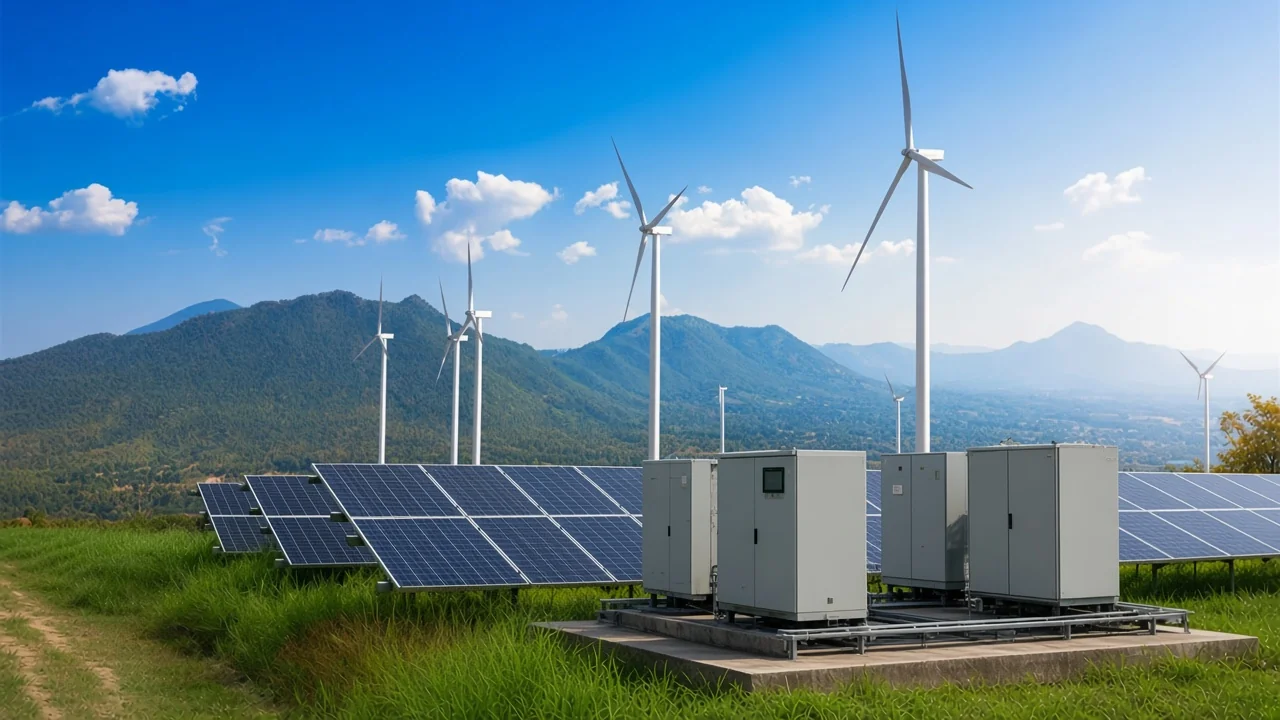
An active harmonic filter is the shunt cousin aimed at waveform shape. HYAPF measures load current and injects an opposite harmonic current. The published range is 2nd–51st order, response time under 10 ms, and control accuracy THD below 5% on 400 V / 690 V optional ratings.
From the field: commissioning an AHF at the PCC is a sequence job, not only an ampere rating. A controls thread that tried 180° inverted 5th and 7th current at the PCC also grew 11th and 13th components; the 5th harmonic is negative sequence and the 7th is positive sequence, so a sign flip on abc is not automatically “cancel.” — source: practitioner commissioning thread on sequence signs at the PCC.
A DVR is series hardware. It restores load-side voltage during a sag. It is not the plant’s main harmonic or var machine.
Inverter-only is a valid row. If the harmonic study, Q-voltage study, and sag exposure are already inside the interconnect envelope, extra cabinets add heat and controls for no POI gain.
Staged SVC or MSVC still belongs on some high-voltage collection buses when project capacity and operating strategy need switched or thyristor-staged compensation instead of, or beside, a converter SVG. That is a study result, not a default catalog add-on.

Measurements at the PCC That Decide the Shortlist
IEEE 519 lives at the PCC; bring SLD, harmonic spectrum, PF, voltage, and inverter topology before you size cabinets.
IEEE 519-2022 states that the interface between sources and loads is the point of common coupling, and that the voltage and current distortion steady-state limits apply at the user PCC. Transient events can still exceed those numbers. The standard is a system practice, not a nameplate on one inverter.
US electricians on Mike Holt’s forum keep repeating the same miss: specifiers ask for IEEE 519 at the line terminals of a drive. The 2014 text they quote says the recommended limits apply only at the PCC and should not be applied to individual pieces of equipment inside the facility.
One reply notes that forcing every VFD to “meet 519” at its own terminals either inflates the bid or leaves a last-minute PCC filter that should have been the plan. For an inverter plant the same trap is “every string inverter is 519-ready, so the POI is done.”
| Input | Why it changes the shortlist |
|---|---|
| Single-line, POI voltage, transformer and cable data | Sets short-circuit ratio and where the PCC actually is |
| Inverter count, topology, and plant output curve | Shows how Q and harmonics move with irradiance/wind |
| Harmonic study or logged spectrum at the POI | Chooses AHF vs tuned passive vs “inverter-only” |
| Power factor and voltage vs time | Chooses SVG vs switched capacitors |
| Sensitive-load list and sag logs | Chooses a feeder DVR versus relying on inverter ride-through |
| Plant-controller / SCADA interface | Needed if SVG or filters must follow plant Q commands |
CHYN’s renewable energy grid connection solution asks for those same inputs: grid-code target, point-of-connection voltage, inverter quantity and topology, plant output curve, cable and transformer parameters, harmonic study, ambient conditions, and control logic.
Do not size an AHF from a one-line inverter THD-below-5-percent datasheet note. Plant TDD at the PCC includes every converter, every capacitor, and background distortion from the utility.
Measure during representative plant output, not only at noon nameplate. Inverter harmonic current and var demand both move with power. A night-time or zero-export snapshot can hide the POI problem the utility will actually see.
If the utility already has high background voltage distortion, write that down. IEEE 519 is a shared interface. A plant filter cannot “clean the grid” upstream of the PCC, and a study that ignores background voltage will over-promise.
Inverter Ride-Through Versus Series Sag Hardware
Inverter ride-through keeps the plant online; a DVR restores volts on a protected load feeder.
Grid codes and DER interconnection rules ask the generating plant to stay connected through a voltage dip and then recover. That is a generator behavior.
It protects the bulk system from a sudden trip of many megawatts. It does not rebuild the voltage on a process PLC two feeders away.
A dynamic voltage restorer injects a voltage in series so the load-side waveform stays near the desired amplitude while the source sags. Encyclopedia summaries also warn that a DVR is a poor answer to a prolonged reactive-power shortage: it can hold a load voltage while the wider system is still collapsing.

HYDVR is CHYN’s series sag class. It sits in series with the protected feeder, detects an incoming disturbance, and injects compensating voltage. Published protection time is 0.4–30 s adjustable, with rated protection capacity 30–5000 kVA across 208 V, 400 V, 600 V, 6 kV, and 10 kV families.
Use that class when a specific feeder must keep running through a sag. Do not treat it as the plant’s SVG or as the harmonic filter for the POI.
A plant that rides through a feeder fault can still drop a nearby process if that process sits on a different transformer. Draw the sag path on the single-line before you mix FRT language into a DVR RFQ. If the load can coast for a second and the plant must stay online, you may need both behaviors, in two places.
When a Renewable-Interconnect Solution Belongs on the Bus
Use the renewable interconnect package when POI vars and harmonics need coordinated SVG and filtering, not a rack conditioner.
The remaining buy is a coordinated point-of-connection package when solar, wind, or storage output swings across a wide power range. CHYN’s Renewable Energy Grid Connection Solutions is written for that bus: SVG for fast inductive and capacitive reactive power, SVC or MSVC where project capacity needs staged high-voltage compensation, and passive or active filtering based on the measured or calculated harmonic spectrum.
That package also lists plant-controller, SCADA, and remote operating-command interfaces. Without those, a fast SVG can still fight the inverters instead of helping the POI.

Skip this package when the only need is a UPS for a control room, a TVSS at a panelboard, or a residential hybrid PCU. Those are still valid products. They are not PCC interconnect conditioning.
HYSVG overall efficiency is at least 97% for continuous Q support, but that figure does not replace a harmonic study. HYAPF is used on PV plants as the AHF row of the shortlist, not as a claim that every PV site needs one.
Take the PCC measurement pack to the renewable energy grid connection solution. Browse the products hub if the study later splits into a standalone AHF, SVG, or DVR SKU.
CHYN reviews capacity against the most demanding operating point, not a single rated kW on a sunny hour. Communication to the plant controller matters when the SVG must follow a Q-voltage schedule instead of a local PF setpoint. If those interfaces are missing from the bid, the cabinet may be electrically right and operationally wrong.
HYAPF, HYSVG, and HYDVR stay useful after that split. They are model-level detail, not a replacement for the POI study.
The utilities and new energy grid support solution is a different operating story. Use it for a utility or mixed DER feeder. Stay with the plant POI hardware when the job is the plant interconnect.
FAQ
What is a grid-connected PV inverter versus extra power-conditioning cabinets?
The inverter or PCU converts plant DC (or variable AC) into grid-synchronized AC and handles MPPT and anti-islanding. Extra cabinets are shunt or series PQ devices added when the PCC study still shows harmonics, vars, flicker, or a feeder sag.
If a vendor brochure calls every inverter a “power conditioner,” ask which of those four leftover jobs it actually closes.
Is a solar power conditioning unit the same as an active filter?
No. In solar catalogs a PCU is the conversion package. An active filter is a shunt cabinet that injects opposite harmonic current.
One box can include extra functions, but the names are not interchangeable.
Does IEEE 519 apply at the inverter or at the PCC?
IEEE 519’s steady-state voltage and current distortion goals apply at the user point of common coupling. Forum electricians still see specifications that push the same limits down to each drive’s terminals; that is a specifier tactic, not the standard’s measurement point.
A plant POI study still has to name the PCC on the single-line so the meter point and the filter point are the same conversation.
When is an SVG needed if inverters already have var functions?
When plant Q, voltage, or flicker at the POI still moves outside the interconnect envelope after inverter Q is used. An SVG-class shunt converter supplies inductive and capacitive current without capacitor-bank steps.
When is a DVR the wrong answer for a grid-tied plant?
When the job is plant TDD, background harmonics, or bulk reactive support. A DVR restores voltage on a protected feeder during a short sag. It is the wrong cabinet for IEEE 519 current at the POI.
Do I still need UPS or a line conditioner at the interconnect?
Usually not as the interconnect device. UPS and line conditioners belong on sensitive loads inside the plant, which is the Hawaiian Electric enhancer/synthesizer list. The POI still needs its own harmonic and var study.
Can untuned capacitors clear a solar plant’s harmonic clause?
They can raise power factor and they can also resonate with inverter harmonics. If the utility asked for IEEE 519 at the POI, treat capacitors as a filter design problem or move to an AHF, not as a free harmonic fix.
A tuned filter is still a design, with reactor ratings and a detuning point, not a catalog capacitor dropped on the bus.
What measurements belong in the interconnect package?
Single-line and POI voltage, transformer and cable data, inverter topology and plant output curve, harmonic spectrum, power factor and voltage traces, sag logs for sensitive feeders, and the plant-controller interface.
References
- NIST: Power Conditioning Systems for Renewables, Storage, and Microgrids
- IEEE SA: IEEE 519-2022
- Scientific Reports: PV-interfaced shunt active power filter at the PCC
- Wikipedia: Static synchronous compensator
- Wikipedia: Dynamic voltage restoration
- Penn State AE 868: Why Power Conditioning Units for PV
- Hawaiian Electric: Power Conditioning Equipment
- Mike Holt’s Forum: IEEE 519 harmonic limits for three-phase systems