
 Zhejiang Hongyan Electric Co., Ltd.
Most causes of power quality problems fall into three buckets: utility-side events, facility load behavior, and wiring or grounding defects. Matching the cause to the disturbance—and only then to a mitigation family—beats buying filters, compensators, or sag support from a single symptom.
The pages that follow map common types of power quality problems to root causes, plant symptoms, and solution families. The job is diagnosing first, not converting power factor to a phase angle, and not building a device shortlist for commercial floors.

What Actually Causes Power Quality Problems
Power quality problems appear when voltage or current leaves the magnitude, shape, or continuity your equipment needs, and operation suffers. The root is almost never “mysterious dirty power” as a single cause; it is a short list of physical mechanisms that repeat across plants and commercial buildings.
Typical cause families include:
- Utility faults, reclosing, lightning, and switching on the supply network
- Large motor starts, welders, arc processes, and other impact loads inside the facility
- Nonlinear loads such as VFDs, rectifiers, UPS converters, and dense switch-mode supplies
- Loose connections, incorrect bonding, weak neutrals, and related grounding mistakes
- Uneven phase loading and reactive demand that show up as unbalance or poor power factor
If you only chase the loudest symptom—a tripped drive, a warm transformer, a flickering bay—you can buy the wrong family of gear. Diagnose the mechanism first; then look at power quality problems and solutions by family in the matrix below.
Utility-Side Events vs Facility-Side Causes
Origin decides who owns the fix and which mitigation can even help. A feeder fault miles away, a recloser operation, or a lightning-induced sag can disturb your bus without any change in your plant load. Motor starting, capacitor switching, and nonlinear current inside the fence create local events that neighbors may never see.

A practical split:
- Utility-leaning clues: similar trips in neighboring facilities, events lined up with storms or known feeder work, sag with little or no local current surge at the start of the event
- Facility-leaning clues: events track a specific motor start, welder cycle, or furnace schedule; distortion rises with nonlinear load share; heat and nuisance trips concentrate on one feeder or transformer
Community investigations often show that even a very short utility-linked sag can stop process equipment. One industrial monitoring case reported sags lasting only a few hundred milliseconds that still produced failures—so “it came back quickly” does not mean “no mitigation needed.”
From the field: If monitors show a deep but brief sag and almost no local inrush at the start of the event, treat utility-side fault clearing or lightning as a leading hypothesis before you specify a harmonic filter. (Source: industrial monitoring discussion summarized in research community record F-02 / MAP-04.)
When you need sustained capture rather than a one-shot diagnosis, advantages of power quality monitoring covers that workflow.
Voltage Sags, Swells, and Short Interruptions
Voltage sags (dips) are short reductions in rms voltage; they are among the most reported industrial disturbances. Common causes are short circuits and fault clearing on the distribution system, large motor starting across the line, and sudden load additions that stress supply impedance.
Swells are short rms increases, often after abrupt load rejection, certain fault conditions, or switching. Momentary interruptions come from protective operations that open and reclose to clear a fault.
Plant symptoms include dimming, contactor dropout, VFD undervoltage trips, control resets, and scrap after a process restart. Longer undervoltages and sustained outages are a different job—backup generation or UPS architecture—rather than a one-cycle sag mitigator.
| Disturbance | Typical symptoms | Typical causes |
|---|---|---|
| Sag / dip | Contactor chatter or dropout, drive trips, dimming, PLC resets | Feeder faults and fault clearing, motor starting, large load steps, undersized circuits |
| Swell | Overvoltage alarms, stressed power supplies | Sudden load loss, some single-phase fault conditions, switching |
| Momentary interruption | Full equipment stop, lost program state | Recloser / breaker operations isolating a fault |
| Transient (spike) | Damaged electronics, unexplained lockups | Lightning, capacitor switching, arcing, re-energizing after outage |
When the confirmed cause is a short-duration sag on a sensitive feeder, series voltage support such as a dynamic voltage restorer is in a different family from harmonic filters. CHYN’s voltage sag compensation solutions describe that HYDVR-style path for sensitive process loads.
Harmonics from Nonlinear Loads
Harmonics are currents and voltages at integer multiples of the fundamental frequency that distort the intended sine wave. They are produced when loads draw non-sinusoidal current from a sinusoidal source—VFDs, DC drives, rectifiers, arc furnaces, welders, UPS converters, LED drivers, and dense IT power supplies are everyday examples.

Those pulsed currents create voltage drop across system impedance at harmonic frequencies, so every load on the shared bus can see a distorted voltage. Capacitor banks do not “create” harmonics by themselves, but they can participate in resonances that amplify an existing spectrum. Industry practice discussions such as IEEE 519 focus on limiting harmonic current at the point of common coupling while utilities avoid resonant conditions that inflate voltage distortion.
Symptoms include transformer and motor heating, neutral overload on shared neutrals with triplen-rich single-phase loads, capacitor stress, and nuisance trips. Practitioner discussions often note that chronic harmonic trouble concentrates where nonlinear load share is high—not in every building equally.
If you already know you need a device shortlist for large buildings rather than a cause map, use best power quality improvement devices for large buildings as a lateral chooser—not a substitute for diagnosis.
Wiring, Grounding, and Neutral Problems
Loose lugs, corroded terminations, extra neutral-to-ground bonds, missing or improvised equipment grounds, and undersized shared neutrals create impulses, dropouts, ground currents, and high neutral-to-ground voltage. These defects sit inside the facility and often masquerade as “utility power quality.”

Before you buy mitigation hardware:
- Thermally and mechanically inspect terminations under load where safe and permitted
- Confirm neutral-ground bonding only where the system design requires it
- Look for shared neutrals feeding dense single-phase nonlinear loads
- Separate “noise on ground” complaints from true supply sags with a recorder, not only a spot DMM reading
Many customer-side investigations end when a connection is tightened or an incorrect bond is removed. Filters and compensators cannot replace a sound wiring baseline.
Flicker, Unbalance, Transients, and Poor Power Factor
Flicker is the lighting perception of rapid, small voltage amplitude changes, commonly linked to arc furnaces, large welders, and other fast-cycling loads. Phase unbalance from uneven single-phase loading, open-delta arrangements, or supply asymmetry overheats three-phase motors and transformers. Transients are brief impulsive or oscillatory excursions from lightning, capacitor bank switching, contact arcing, and re-energizing after an outage.
Poor power factor is usually a reactive-power story—induction motors and other inductive loads demand vars, which raises apparent current for the same real work. Treat it as a related operating problem with its own compensation families. Converting power factor into a phase angle is a separate calculation topic, not the job of a cause map.
Power conditioning, as a broader equipment category, is covered in what is power conditioning equipment—link there for definitions, not for retelling cause diagnosis.
Cause-to-Mitigation Family Matrix
Power quality problems and solutions line up by mechanism. Use the matrix after you have a cause hypothesis and, ideally, a short monitoring capture.
| Cause class | Disturbance you often see | Mitigation family (after diagnosis) | Do not buy this first if… |
|---|---|---|---|
| Utility fault / lightning / reclosing | Sag, momentary interruption, some transients | Sag support (DVR), ride-through design, surge protection as appropriate | You only measured high current THD with no sag log |
| Across-the-line motor starting | Local sag on shared transformer | Soft start / controlled starting, supply stiffening, process sequencing | You assume every dimming event is “harmonics” |
| Nonlinear loads (VFD, rectifiers, SMPS, arc) | Harmonic distortion, heating, nuisance trips | Active filter, passive tuned filter, hybrid filtering + study | Wiring defects and resonance are unexamined |
| Incorrect bonding / loose connections | Impulses, intermittent dropouts, ground currents | Repair wiring/grounding | Any electronic mitigator “instead of” torque and bonding work |
| Rapidly fluctuating arc / weld loads | Flicker, voltage fluctuation | Dynamic reactive support, process/electrical study | You only add fixed capacitors without a fluctuation study |
| Uneven phase loading | Voltage/current unbalance, motor heating | Load balancing, imbalance-capable compensators | You treat unbalance as a pure harmonic order problem |
| Inductive reactive demand | Low PF, high apparent current | PFC / SVG / hybrid reactive compensation | You use PF correction to “fix” deep utility sags |
Commercial building chooser context lives on best power quality solutions for commercial buildings—keep that page for selection framing after this cause map.
Which Power Quality Products Fit After You Confirm the Cause
Once the cause class is clear, pick the family that counters that mechanism—not the product that appears first in a catalog search.

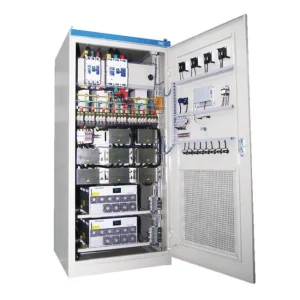
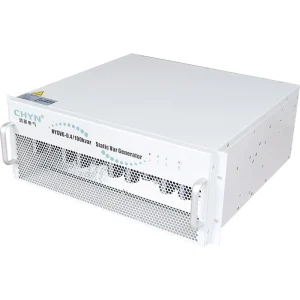
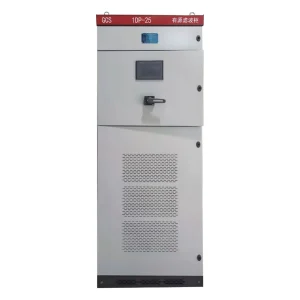
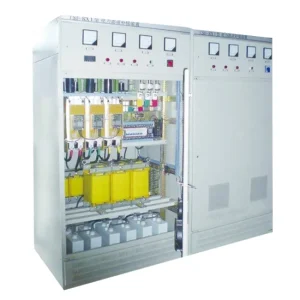
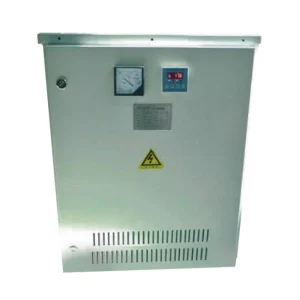
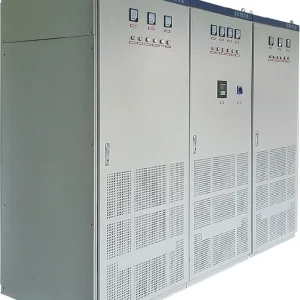
- Confirmed harmonics from nonlinear loads: An active power filter such as the HYAPF Series Active Power Filter measures load current and injects an opposing harmonic current on low-voltage networks. Passive tuned filters remain relevant when a study shows stable, dominant orders.
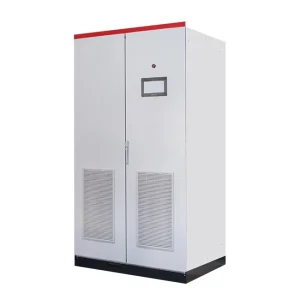
- Confirmed short sags on sensitive feeders: Review voltage sag compensation solutions for series HYDVR-style injection timed to short disturbances.
- Reactive demand, voltage support, or three-phase imbalance: SVG and hybrid dynamic compensation families on the products hub address vars and imbalance jobs that a harmonic-only filter will not solve alone.
Skip these paths when the root is still an unfixed lug, an illegal extra bond, or an unknown event with no waveform evidence. Bring the disturbance type—and preferably a short log—to any product conversation.
FAQ
What are the most common causes of power quality problems?
Utility events (faults, lightning, switching), facility loads (motor starts, nonlinear electronics, arc processes), and wiring or grounding defects cover most field cases. Start by sorting which of those three is most plausible.
What usually causes voltage sags?
Short circuits and fault clearing, large motor starting, and sudden load additions are the usual drivers. Storm-linked utility events are common outside the plant fence.
Do VFDs cause harmonics?
Yes. VFDs and other nonlinear loads draw pulsed current that injects harmonics into the network. Trouble scales with nonlinear load share and can worsen if capacitors create a resonant path.
Can wiring or grounding mistakes look like a utility power quality problem?
Yes. Loose connections, extra neutral-ground bonds, and weak neutrals create impulses, dropouts, and noise that feel like “dirty utility power” until the facility side is inspected.
What causes flicker?
Rapidly fluctuating loads—especially arc furnaces and large welders—produce small, repetitive voltage changes that lighting makes visible. LED drivers can also contribute to perceived flicker in some installations.
How can I tell if a disturbance comes from the utility or from inside my facility?
Compare timing with storms or feeder work, check whether neighbors see the same event, and look at current at the start of the disturbance. A recorder at the service and at suspect feeders beats a single spot reading.
Is poor power factor the same as converting power factor to a phase angle?
No. Poor power factor here means reactive demand and operating current on the system. Converting power factor to a phase angle is a separate calculation topic and is not the job of this cause map.
When should I choose an active filter versus a voltage-sag mitigator?
Choose an active filter when harmonics from nonlinear loads are confirmed. Choose sag mitigation when short rms voltage reductions (often utility-linked or motor-start related) are confirmed. They are not interchangeable.