
 Zhejiang Hongyan Electric Co., Ltd.
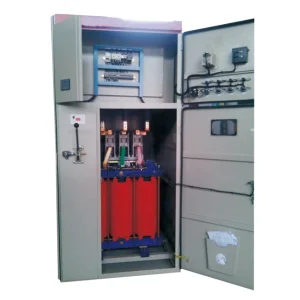
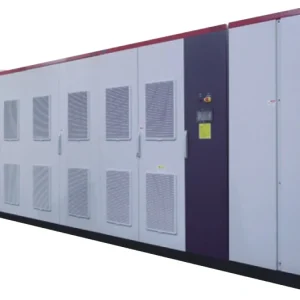
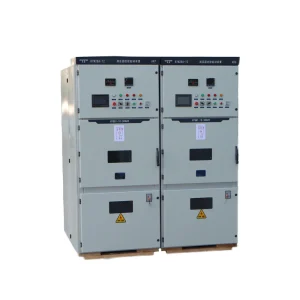
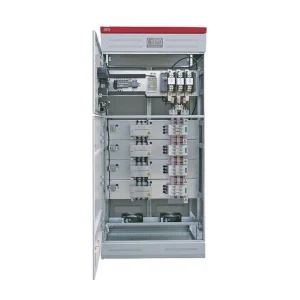
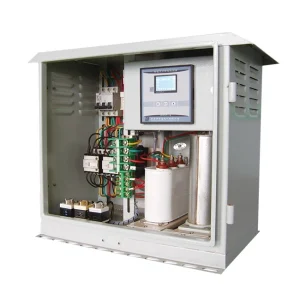
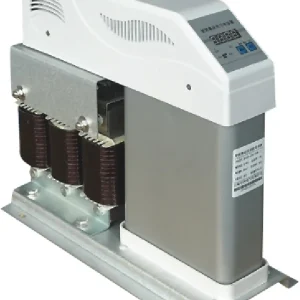
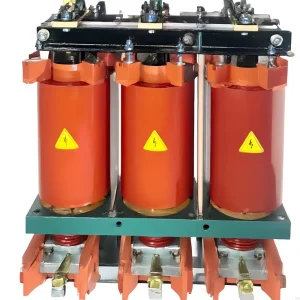
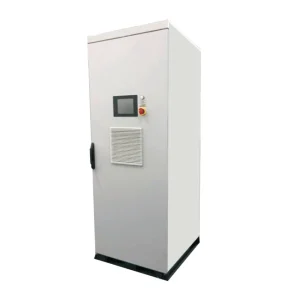
A medium voltage soft starter bypass contactor normally provides the running-current path around the controlled semiconductor section after a successful start. Its suitability depends on the complete start, run, stop and fault sequence. Review the contactor command, position feedback, protection coverage and permitted transition conditions together. A closed indication alone does not prove that the motor current has transferred correctly, and a bypass function does not make the starter safe to access or authorize direct-on-line emergency starting.
This guide is a specification and commissioning review for plant engineers and buyers. It is not a generic wiring instruction. Medium-voltage assemblies vary in topology, sensing and interlocking, so the selected manufacturer’s approved circuit and operating instructions control the actual sequence.
Define which bypass arrangement the proposal includes
Start with the power diagram. Identify the incoming switching device, semiconductor section, normal running bypass path, motor connection and current sensors. Ask whether the word “bypass” refers to routine operation after acceleration or to a separately engineered alternative operating arrangement. Those functions may involve different equipment and restrictions; the quotation should not leave the meaning ambiguous.
The Government of India’s electrician training material illustrates the basic parallel bypass concept for a soft starter. That educational example does not establish medium-voltage insulation, interlocks, ratings or protection for another assembly. Use it to understand the function, then request the actual project drawings and documented sequence.
Record what happens if normal bypass is unavailable. Does the selected starter trip, remain in a permitted semiconductor-running mode, or follow another documented response? Do not assume one answer applies to every design. If continuous non-bypassed operation is proposed, request explicit equipment and thermal approval for that duty.
Describe the start-to-run handover as a sequence
Ask the supplier to describe the conditions that permit a start and the evidence used to recognize successful acceleration. The sequence should identify when the bypass close command is issued, what confirmation is required and how the controller handles missing or contradictory feedback. The relevant criteria may be equipment-specific; do not replace them with an arbitrary timer copied from another installation.
Separate the controller’s command from the contactor’s reported position and the observed electrical result. These are three different pieces of evidence. A command can be present while a coil supply is unavailable. An auxiliary indication can require investigation if it disagrees with the actual current behavior. The acceptance record should make these relationships visible without requiring unsafe access to energized equipment.
Request the expected current and voltage behavior through the handover, including the allowed instrument method and interpretation. A final steady-state reading may miss a transition problem. The goal is to establish that the approved sequence completes as intended under the agreed load and source conditions, not merely that the motor eventually reaches its running state.
Use a state table to review commands and evidence
The following table is a review framework, not a control program or a prescribed switching sequence. Fill it using the selected assembly’s documentation. The responsible engineer should resolve every state before commissioning, including how the equipment returns to a known safe condition after an unsuccessful operation.
| Operating state | Question for the supplier | Evidence to retain |
|---|---|---|
| Ready to start | Which permissives and position checks must be satisfied? | Approved state description, interlock list and pre-start verification record |
| Acceleration | How is starting progress evaluated and an unsuccessful start handled? | Current and status trend, configured criteria and event record |
| Transition to bypass | What initiates transfer and confirms completion? | Time-related command, feedback and electrical observations |
| Normal bypassed running | Which sensing and protection functions remain active? | Protection coverage drawing, settings and approved functional test results |
| Normal stop or soft stop | How does the arrangement move out of the running state? | Documented stop sequence and applicable transition evidence |
| Missing or conflicting feedback | What response prevents unintended continued operation? | Approved failure-response test and recorded alarm or trip behavior |
Use consistent state names across the supplier manual, control-system signals and operator display. If two systems use “running” to mean different things, an operator may misinterpret a failed handover. Agree which indication represents a command, a confirmed device position or a proven operating condition.
Prove that protection remains effective during running
Locate the current sensors on the approved power diagram and ask which path they measure when bypass is closed. Then obtain a protection coverage statement for acceleration, normal running and stopping. Do not assume that a function available during semiconductor starting necessarily remains effective after the current path changes.
The review should identify the responsible protective devices and the evidence required to confirm their configuration. Ask how motor overload, relevant phase conditions and assembly faults are addressed in each operating state. Detailed settings and test methods belong to the coordinated protection study and selected equipment instructions, not to a generic blog table.
For a retrofit, compare the existing protection and sensor arrangement with the proposed replacement. A contactor that physically fits can still change the documented system. Retain the original drawings and mark every revised path, signal and setting so the acceptance scope follows the actual modification.
Review stopping and unsuccessful transitions separately
A start-to-run pass does not establish a correct stop. Ask for separate descriptions of normal stop, any supported soft stop and required fault-stop behavior. If soft stopping requires a transfer back through the controlled section, the actual order and verification must come from the selected design. Do not improvise the contactor timing to achieve a smoother-looking trend.
Define the approved response to a bypass device that fails to close, fails to open or reports an inconsistent position. These cases need a design-level answer. The commissioning team should not defeat a protection input to force a test to continue. Resolve the cause, document the correction and repeat the affected checks under an approved plan.
For the broader application distinction, see medium-voltage soft starter versus VFD. A routine bypass around a soft starter should not be described as providing variable-speed operation. Keep the requested operating functions explicit when comparing proposed motor-control solutions.
Prepare a test plan that captures the transition
Before energization, agree the records needed and the safe methods for obtaining them. Include the motor and driven-load condition, source configuration, control supply, relevant settings and instrument identification. Confirm which functional checks can be performed with power circuits isolated using the manufacturer’s approved methods. Any energized measurements require the project’s qualified personnel and safety arrangements.
For an approved operating test, retain synchronized or otherwise clearly time-related command, feedback and current records through acceleration and bypass handover. Record the operating condition alongside the result. A successful no-load demonstration should not silently become acceptance for a materially different process load.
Repeat only the tests required by the approved plan and documented findings. Avoid repeated trial starts while investigating an unexplained event. Starting duty remains limited by the motor and starter; use the separate starts-per-hour review to define repetition and thermal-state requirements. Log unsuccessful attempts so the supplier can assess them.
Distinguish bypass from safe isolation and emergency operation
HSE’s safe-working guidance calls for secure isolation of energy sources and appropriate verification before work. A controller stop command or a bypass status is not that verification. Follow the assembly’s access, interlocking and stored-energy instructions, including any separate control or auxiliary sources.
If the owner needs emergency direct-on-line operation, state that as a separate project requirement. Ask for an engineered assessment of the motor, source, driven load, switching arrangement and protection. Do not equate a normal running bypass with permission to start across the line after a soft-starter fault. Source voltage disturbance also deserves review; see motor-starting voltage drop.
Document who can authorize operation after a fault and what investigation must precede a reset. An operator instruction should identify the approved route for escalation instead of encouraging repeated commands. Retain the event history and avoid changing several settings at once, which can obscure the evidence needed to explain the problem.
Request configuration-specific confirmation from CHYN
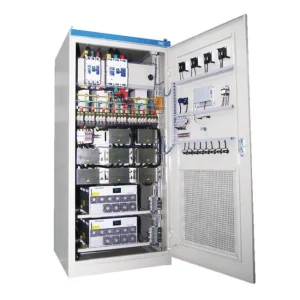
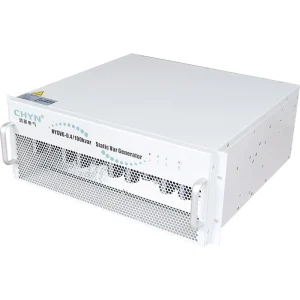
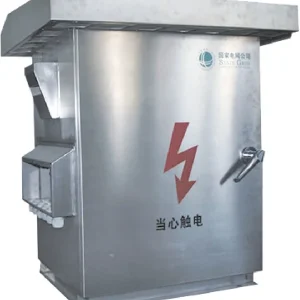
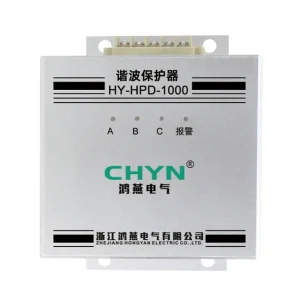
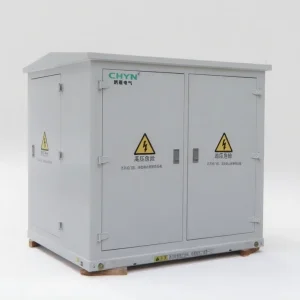
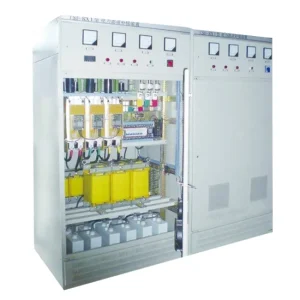
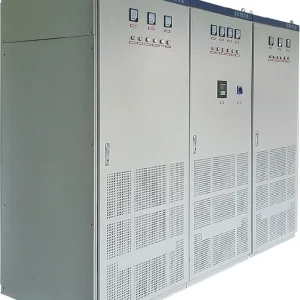
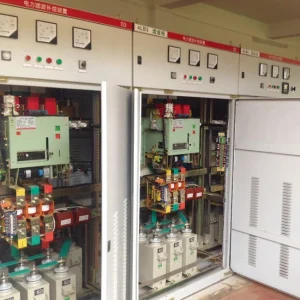
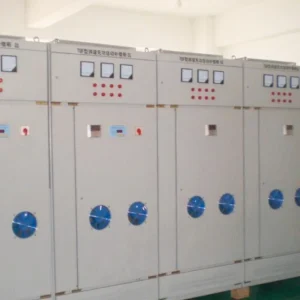
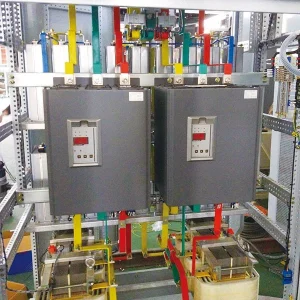
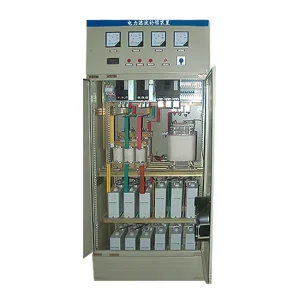
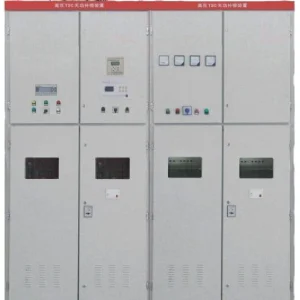
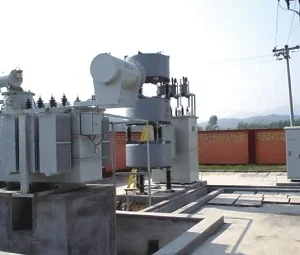
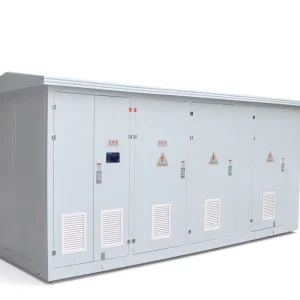
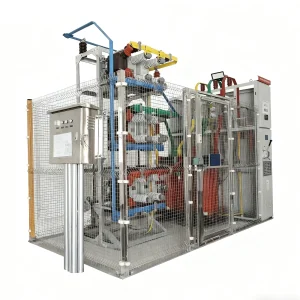
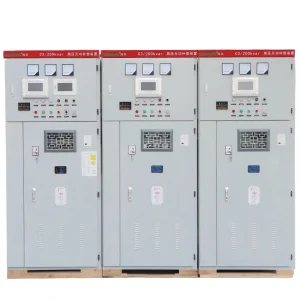
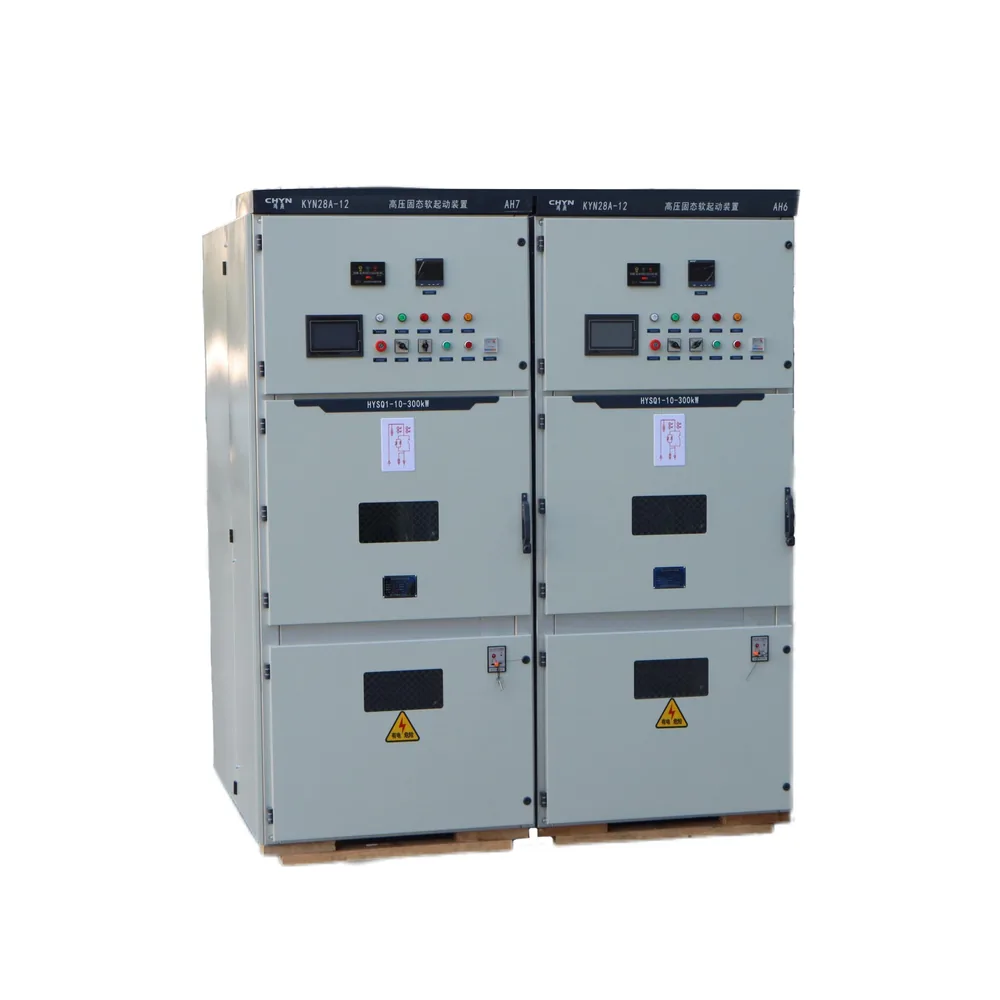
The CHYN HYSQ1 high-voltage solid-state soft starter is the relevant product reference. Provide motor data, starting requirements, operating cycle, source information and the intended control interface. Ask for the offered bypass arrangement, ratings, protection coverage and start/stop sequence. Its exterior photograph does not establish internal contactor details.
Make the final submission list part of the purchase agreement: approved power and control drawings, signal definitions, device schedule, relevant settings, operation instructions and acceptance records. Identify the conditions that require a new application review, such as changed motor duty, a different source or a revised protection arrangement. This keeps handover evidence useful after installation.
Further learning: induction-motor starting
This NPTEL IIT Delhi lecture explains induction-motor starting and speed-control principles. It offers independent educational background for the starting stage. The project-specific bypass sequence must still come from the selected assembly’s approved documentation.
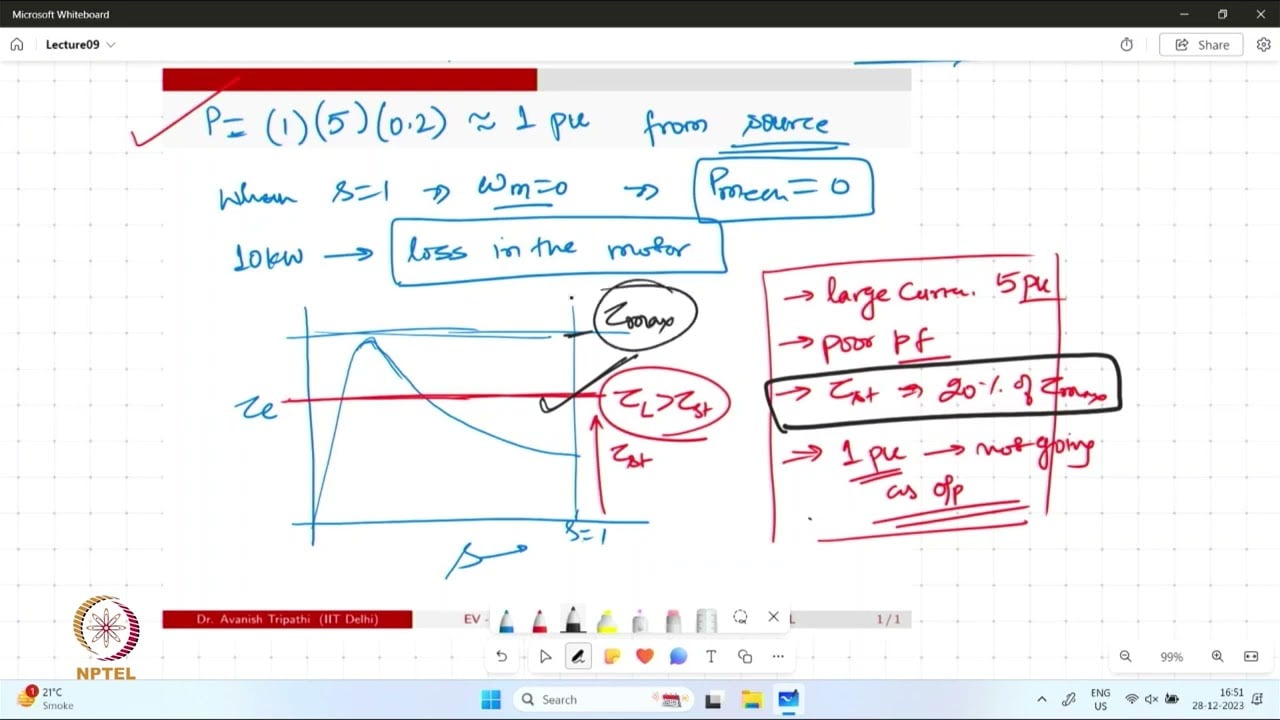
Watch Starting and Speed Control of Induction Motor on YouTube.
Frequently asked questions
Is normal running bypass the same as emergency direct-on-line starting?
No. Normal bypass is part of the approved soft-start operating sequence. Emergency direct-on-line operation is a separate requirement needing an engineered assessment of the motor, source, load, switching arrangement and protection. Do not infer that permission from the presence of a bypass contactor.
Does a bypass closed indication prove successful handover?
Not by itself. Review the command, documented position feedback and electrical observations together under the approved test plan. Investigate contradictions rather than treating one indication as conclusive. Retain time-related records and the tested operating condition so the supplier can explain whether the intended transfer actually occurred.
Can every soft starter run indefinitely without bypass?
No such assumption should be made. The permitted response to unavailable bypass depends on the selected equipment and duty. Obtain explicit approval for any proposed continuous semiconductor-running mode, including thermal conditions and protection. Otherwise follow the documented failure response instead of improvising continued operation.
Can repeated starts be used to investigate a bypass fault?
Only within an approved investigation plan that respects motor and starter duty limits. Retain failed-start records and obtain the authorized retry conditions. Repeated trial commands can add thermal stress and obscure the original event. Resolve the cause and repeat the affected acceptance checks deliberately.