
 Zhejiang Hongyan Electric Co., Ltd.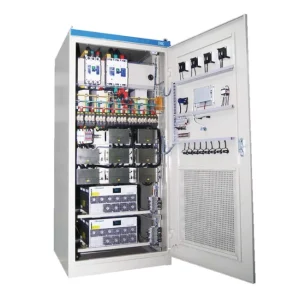
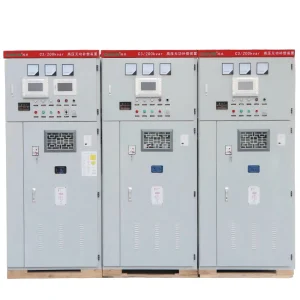
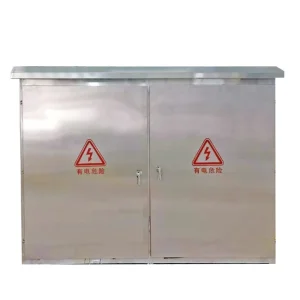
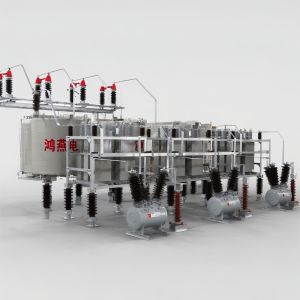
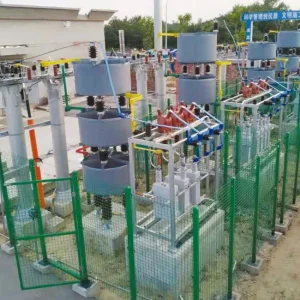
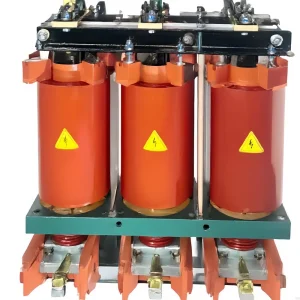
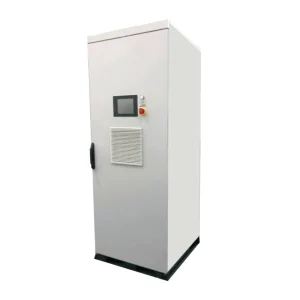
Harmonic filter vs capacitor bank is a plant decision, not two labels for one cabinet. The bank's job is leading kvar. The filter's job is a harmonic the source should stop carrying.
The sections below separate those jobs, then place detuning between them. Active-filter selection already has its own page, active or passive filtering, and is not repeated here. Kvar sizing without this harmonic gate is covered on reactive compensation with capacitor banks.
What Each Asset Changes on the Bus
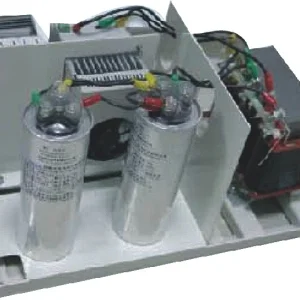
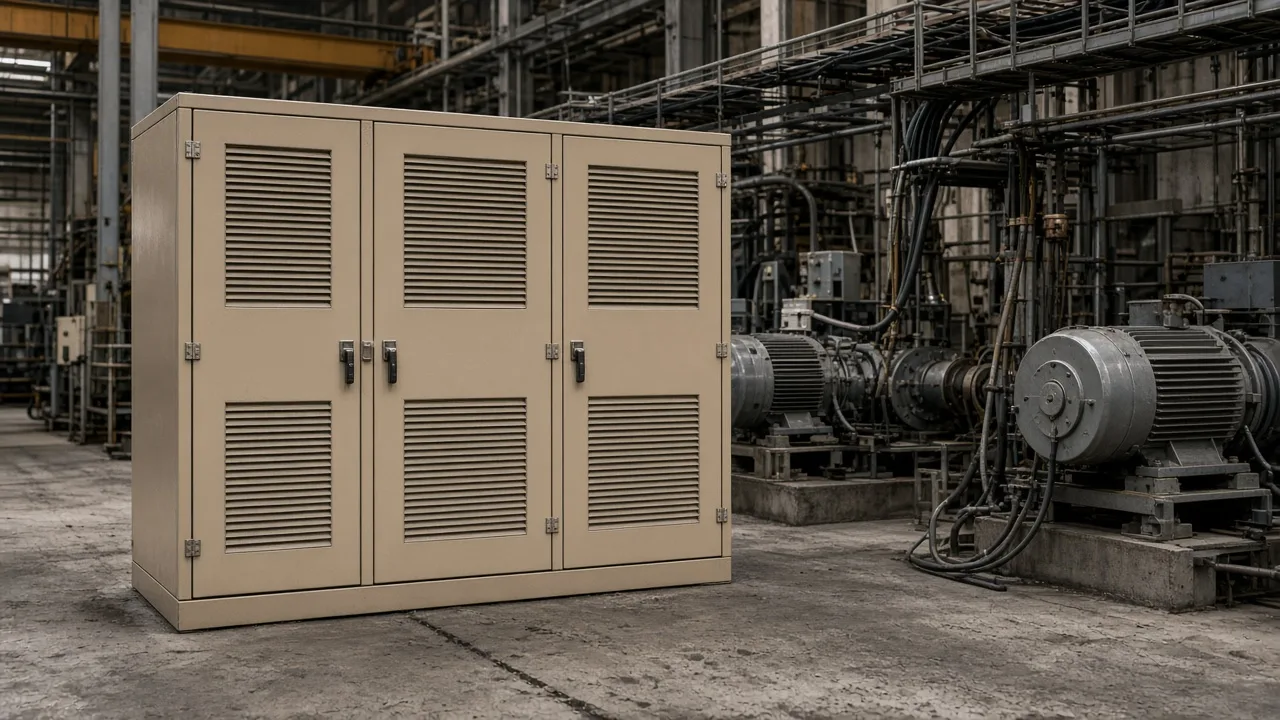
On a lagging bus, the shunt bank supplies the leading vars the motors ask for. Shaft power and process heat still come from the grid. The meter moves because the feeder carries less reactive current, not because the bank made new watts.
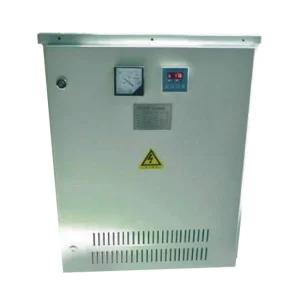
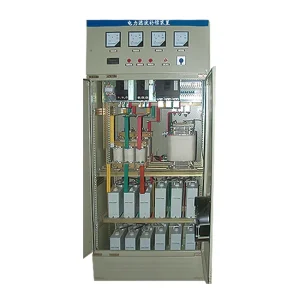
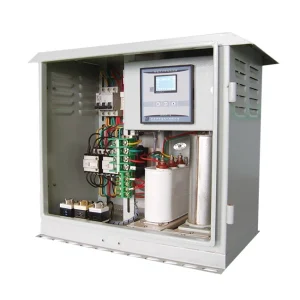
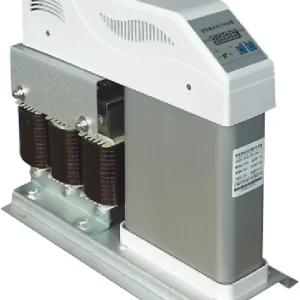
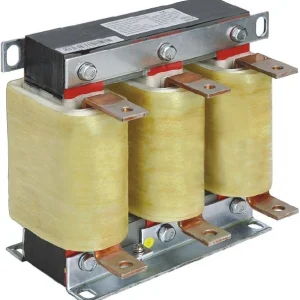
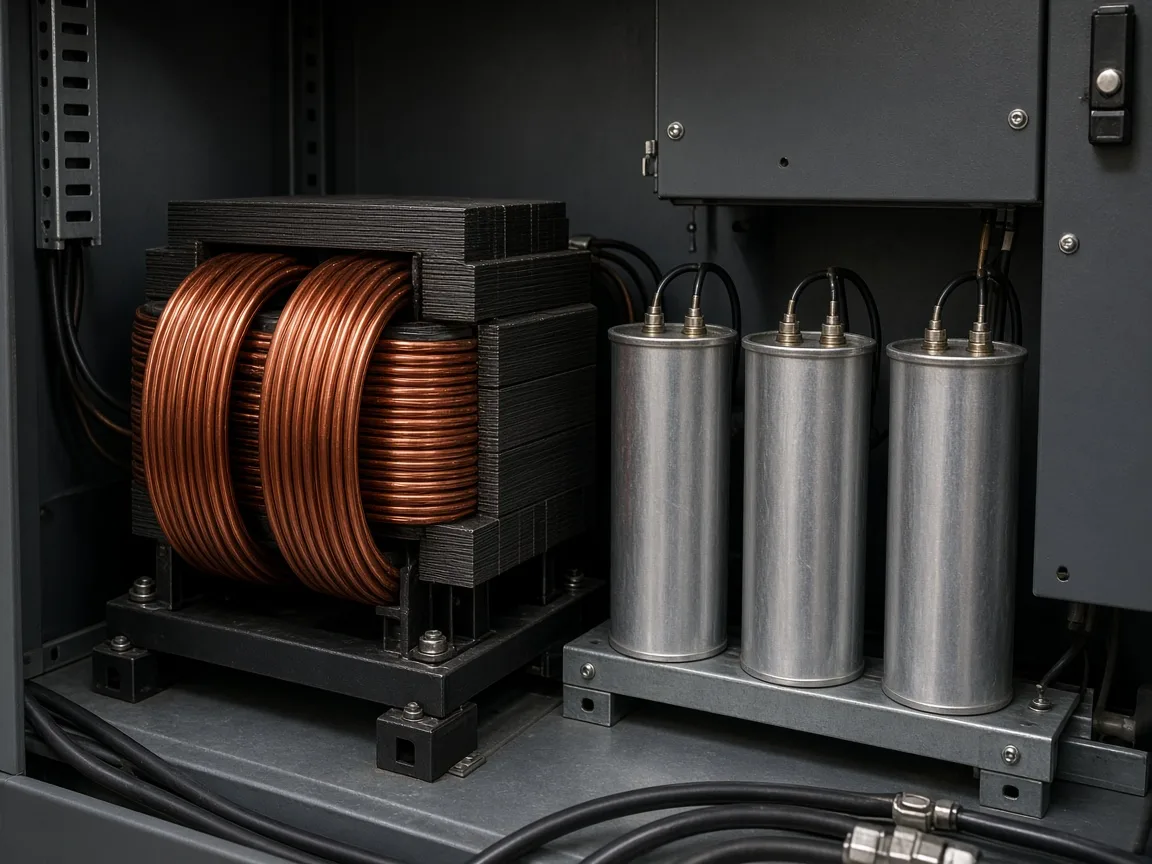
A detuned bank keeps that kvar job and puts a series reactor with the capacitors. Above its tuning point the branch behaves as an inductor, so the usual drive harmonics see a path that does not welcome resonance. That is still a power-factor asset with a guard, not a promise that every harmonic disappears.
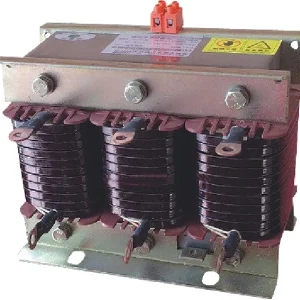
A tuned branch does the opposite at one frequency. It offers a low-impedance shunt so that harmonic prefers the filter over the source impedance. A public reference puts the same split in plain language: filters made from capacitors and inductors can keep harmonic current out of the supplying system.
Filters built from capacitors and inductors can keep harmonic current from entering the supplying system. A kvar-only bank is not specified for that job.
| Symptom on the bus | Closer asset | What you are not buying |
|---|---|---|
| Lagging power factor and a quiet spectrum | Plain capacitor bank | Harmonic absorption |
| Kvar still needed, and drives share the bus | Detuned capacitor bank | A guarantee that distortion falls to a limit |
| One measured harmonic must come down | Tuned harmonic filter | A generic power-factor cabinet |
| Mill line with both kvar and a known spectrum | Filter that also compensates | A study skipped because the name sounds right |
The harmonic mitigation solutions hub is the cluster for this choice. It does not replace the spectrum.
When a Plain Bank Is the Wrong Primary Choice
Leave the bank plain when the load is mostly motors, measured distortion stays low, and no resonance sits on a harmonic the plant actually produces. That is a real case. It is just smaller than the sales conversation implies.
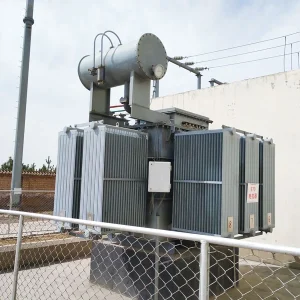
Move off that choice when drives, rectifiers, or a furnace share the bus. Transformer inductance and the new capacitors can form a circuit that a load harmonic excites, overloading both branches and lifting voltage on everything in parallel.
Tip: A straight capacitor bank on a modern drive plant is the case practitioners tell you to treat carefully — the comment is about power factor, harmonic control, and voltage together, not about a rare textbook fault.
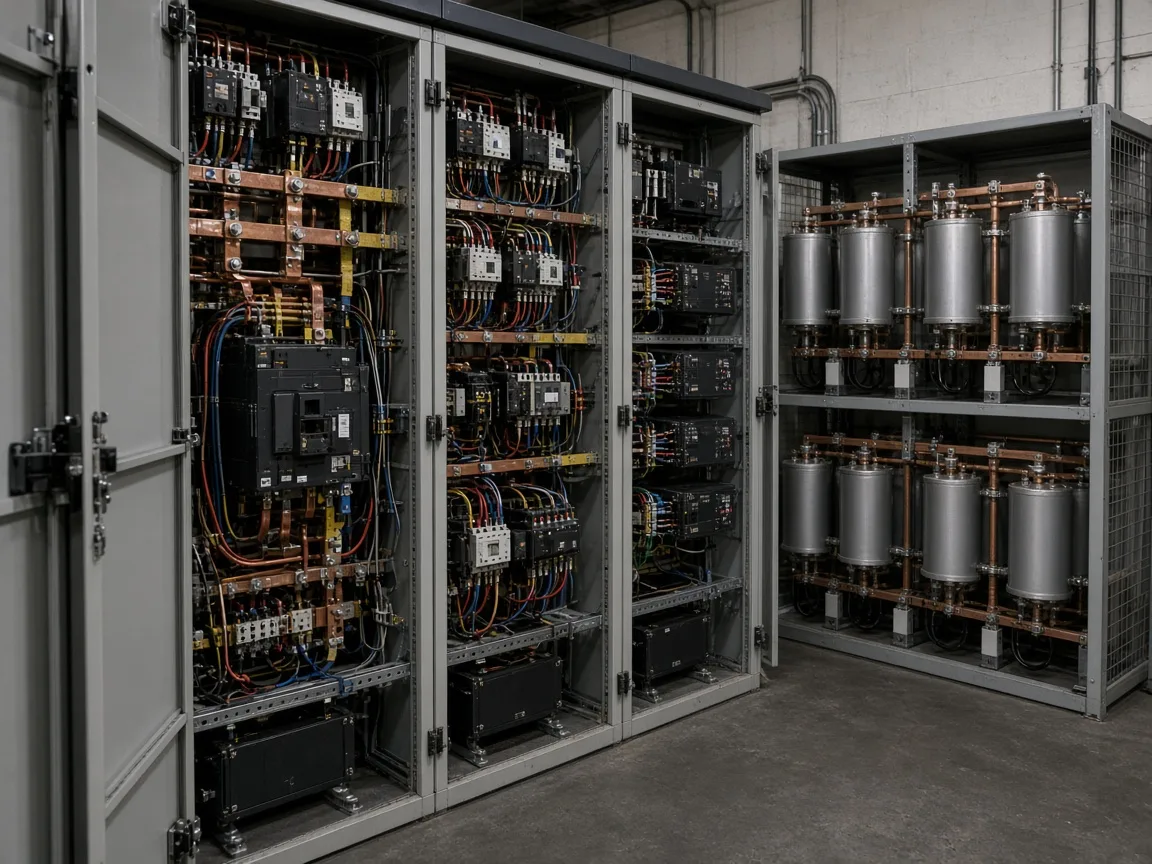
Ask for a snapshot with the capacitors disconnected and the nonlinear load running before anyone adds kvar "to be safe." A quiet motor bus can still take a plain bank. A mixed bus should not guess.
Detuned Banks Versus Tuned Branches
Detuning sets the reactor-capacitor resonance under the lowest harmonic you are trying not to absorb. Schneider's rule puts that resonance under 90% of the dominant harmonic.
The same note separates that guard from a tuned filter. The tuned filter is aimed at one frequency and needs a tighter design. A bank with no reactor can amplify the current instead.
Important: Detuning avoids a harmonic; a tuned branch attracts it — do not write both outcomes into one line item.
If the plant load swings through the day, a switched arrangement follows the kvar that is actually present. A fixed detuned step that stays online at light load is a different problem, already covered by the reactive-compensation article, and it does not become a filter by staying closed.
What a Misapplied Bank Does on a Drive Bus
A straight bank on that bus can magnify the current the drives already inject. The Physics Forums comment treats that as the default risk on modern plants, not a rare textbook case.
Six-pulse drives are where many of those filters get aimed, because the fifth is often the large one. That is a design habit from the thread, not a rule that every plant's fifth is the problem. Measure it.
Placement matters once several banks already exist. One utility-customer thread records an upstream switched bank whose resonant order sat near the ninth, with other fixed and switched banks on the same circuit. Adding another plain step without looking at those neighbors repeats the same blind spot.
How to Read the Measurement Before the Order
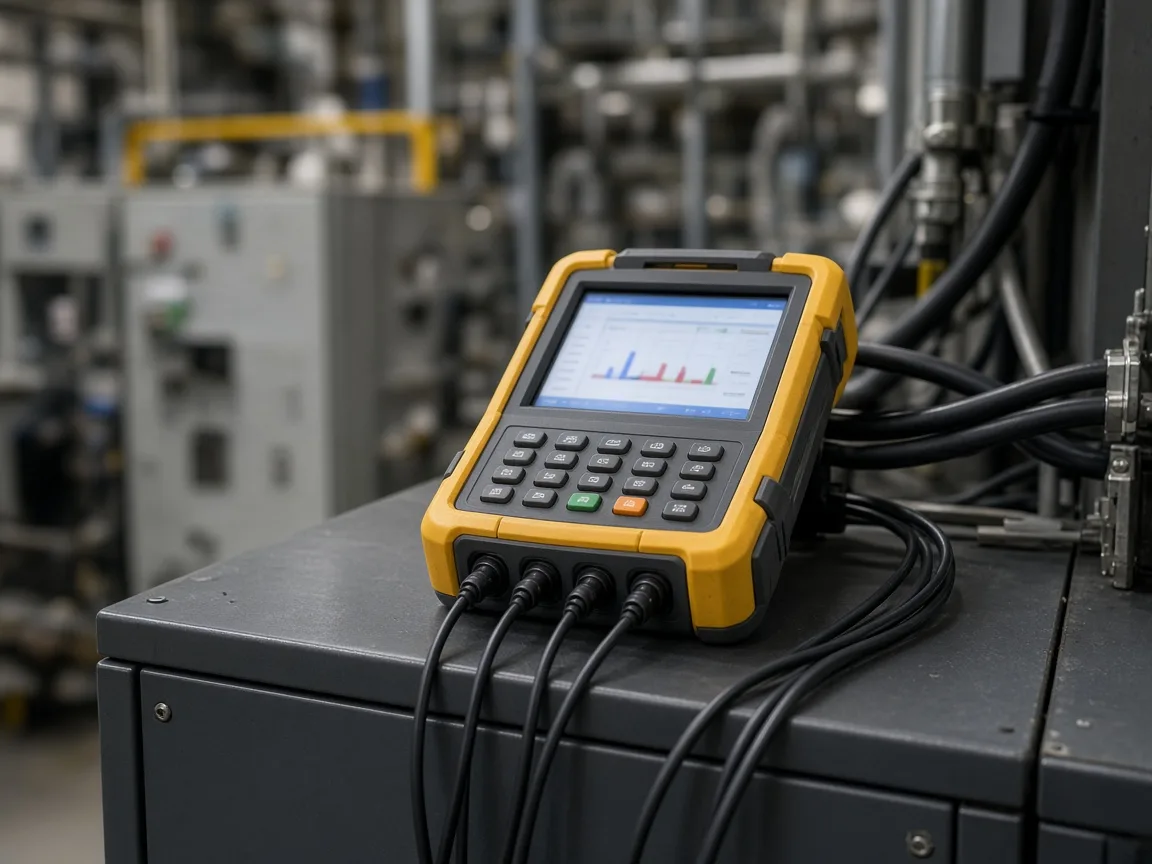
No blog percentage replaces a spectrum taken with the capacitors out and the nonlinear load running. A detuned reactor is not automatically a harmonic filter, even when the catalogue uses both words.
Read three things before the order: the kvar the feeder still needs, the lowest harmonic with real amplitude, and whether that harmonic must be absorbed or only avoided. If the goal is absorption, price a tuned branch and the current it will pull, including current from loads you did not mean to include.
A bus-level tuned branch can collect harmonic current from several sources and run hotter than the study for one drive. Put that branch near the load it was calculated for, or redo the duty for the whole bus.
A passive harmonic filter is the name to use when the branch is capacitors and reactors with no active converter. Say that in the enquiry so the quote does not come back as a plain bank with a reactor tacked on, or as an active unit this page is not specifying.
When to Select a Rolling-Mill Passive Filter
Select the rolling-mill passive filter when the line is a mill or a similar heavy-impact load and the published harmonic list matches the measured spectrum.
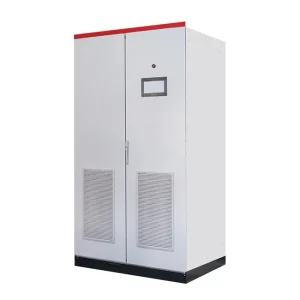
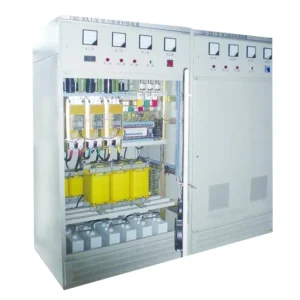
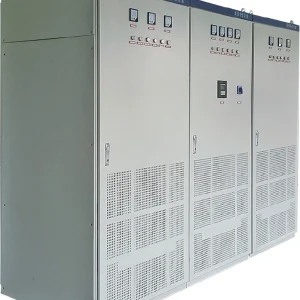
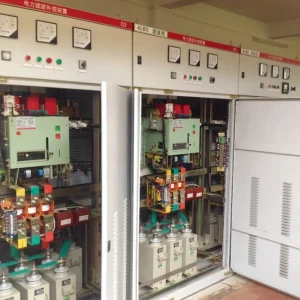
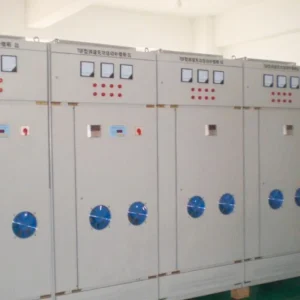
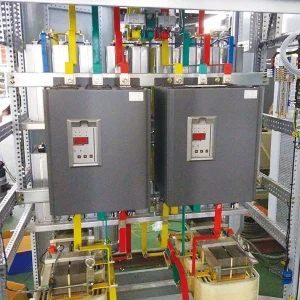
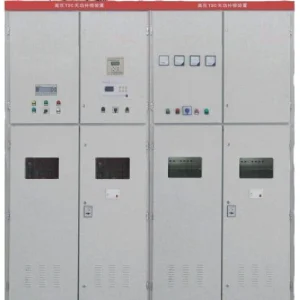
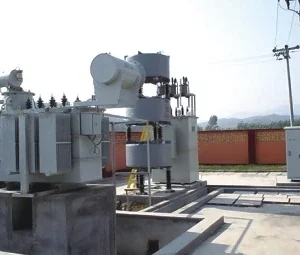
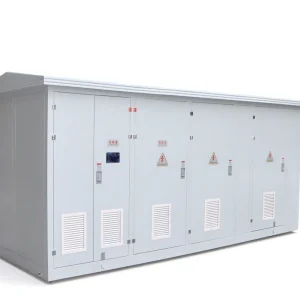
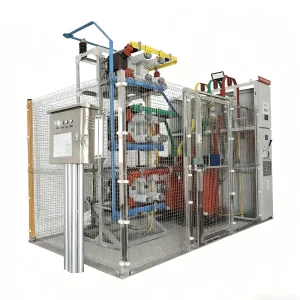
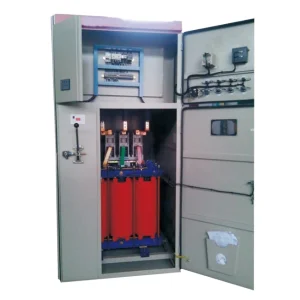
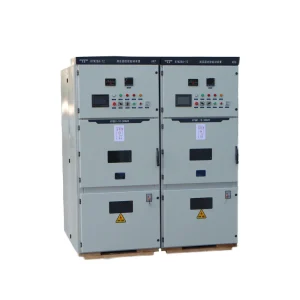
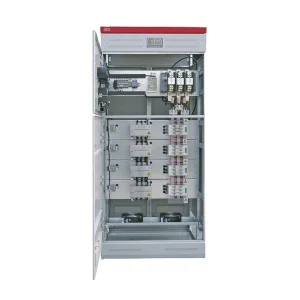
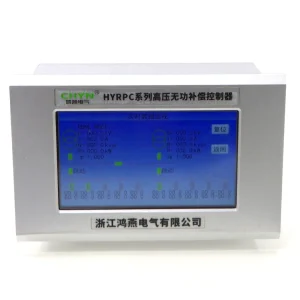
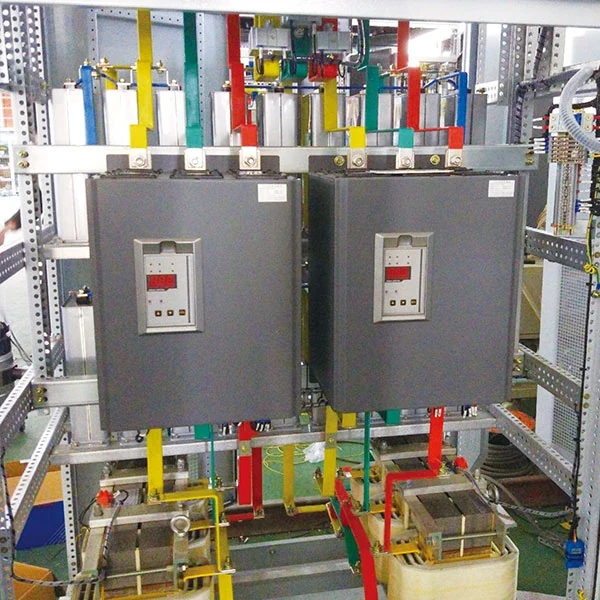
Rolling-mill passive filter — the HYFC-ZJ rolling-mill filter — is built for cold rolling, hot rolling, aluminum oxidation, and electrophoresis lines that need both harmonic control and reactive power. It is not a quiet-bus power-factor box, and it is not an active filter.
| Published item | Page value |
|---|---|
| Duty | Rolling mills and heavy-impact loads |
| Voltage class noted on the page | Below 10 kV for the low-voltage dynamic system |
| Harmonics named | 5th, 7th, 11th, 13th, and other typical mill orders |
| Controller reaction | Under 20 ms |
| Power factor | COSΦ at or above 0.92, or higher with an optimized configuration |
| Modes | Common, phase-separated, or mixed |
| Capacitor voltages | 210 V, 315 V, 400 V, 600 V, 900 V, 1300 V |
| Page THD table | 5.0% at 0.38 kV; 4.0% at 6/10 kV; 2.0% at 35 kV |
The HYFC-ZJ rolling-mill filter is the shortlist item when those page limits cover the line. A motor-only bus with a quiet spectrum does not start here.
Bring system voltage, the mill type, the measured harmonic picture, and the compensation mode. Those inputs do not replace the spectrum or the neighbor-bank check above.
FAQ
What does a harmonic filter change that a capacitor bank does not?
The filter is built to pull a named harmonic off the source impedance. The bank supplies leading kvar and does not, by itself, absorb that harmonic.
When is a plain capacitor bank still enough?
When the load is mostly linear, measured distortion stays low, and resonance is not sitting on a harmonic the plant produces.
What does detuning change compared with a tuned branch?
Detuning moves the branch resonance under the harmonic you want to avoid. A tuned branch is aimed at a harmonic you want to attract.
Why can a capacitor bank make distortion worse?
The bank and the supply inductance can resonate at a harmonic the load already injects, so voltage and current on that frequency rise.
Where should a tuned branch sit relative to the nonlinear load?
Close to the load it was calculated for. On a common bus it can pull harmonic current from other loads and run beyond that duty.
Does a detuned bank remove every harmonic?
No. It changes the impedance so the capacitors are less likely to soak up the dominant harmonic. Removal of a named order is a filter objective.
Can one power-factor number choose between these assets?
No. Power factor can look bad because of kvar, because of distortion, or because of both. The spectrum decides which asset is first.
What should the buyer bring before ordering a rolling-mill filter?
System voltage, mill type, the measured harmonics, and whether compensation should be common, phase-separated, or mixed.
References
- Odd harmonics in power system reduction — Physics Forums
- LV harmonic filters for utility customers — Physics Forums
- Power factor — Wikipedia